
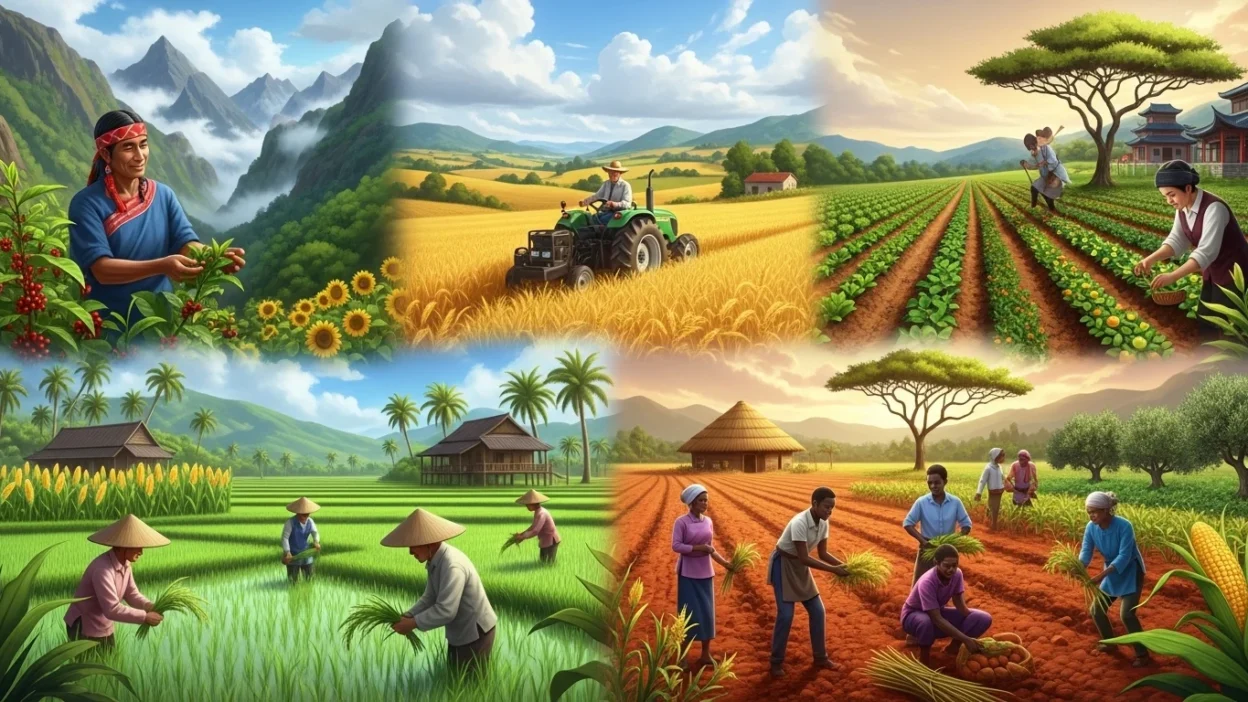
The word agriculture represents farming, cultivation, and the production of food and resources. People use it in education, business, environment, and daily life discussions.
Because agriculture connects every culture through food and land, learning agriculture in different languages helps you communicate about farming, sustainability, and global development more effectively. Moreover, it builds awareness of how different societies relate to land and food systems.
When you explore how to say agriculture in different languages, you will notice that many languages use similar roots derived from Latin or local farming traditions, while others use unique native words.
In addition, cultural and environmental factors influence how agriculture is described. Therefore, understanding agriculture translations around the world improves both vocabulary and global knowledge.
As a result, learning agriculture in all languages strengthens your ability to discuss farming, sustainability, and food systems worldwide.
| Language | Native Phrase | Example Sentence |
|---|---|---|
| English | Agriculture | Agriculture supports our daily needs. |
| Spanish | Agricultura | La agricultura apoya nuestras necesidades diarias. |
| French | Agriculture | L’agriculture soutient nos besoins quotidiens. |
| German | Landwirtschaft | Die Landwirtschaft unterstützt unseren Alltag. |
| Italian | Agricoltura | L’agricoltura sostiene i nostri bisogni quotidiani. |
| Portuguese | Agricultura | A agricultura apoia nossas necessidades diárias. |
| Dutch | Landbouw | Landbouw ondersteunt onze dagelijkse behoeften. |
| Danish | Landbrug | Landbrug støtter vores daglige behov. |
| Swedish | Jordbruk | Jordbruk stöder våra dagliga behov. |
| Norwegian | Landbruk | Landbruk støtter våre daglige behov. |
| Finnish | Maatalous | Maatalous tukee päivittäisiä tarpeitamme. |
| Icelandic | Landbúnaður | Landbúnaður styður daglegar þarfir okkar. |
| Russian | Сельское хозяйство | Сельское хозяйство поддерживает наши потребности. |
| Ukrainian | Сільське господарство | Сільське господарство підтримує наші потреби. |
| Polish | Rolnictwo | Rolnictwo wspiera nasze codzienne potrzeby. |
| Czech | Zemědělství | Zemědělství podporuje naše každodenní potřeby. |
| Slovak | Poľnohospodárstvo | Poľnohospodárstvo podporuje naše potreby. |
| Hungarian | Mezőgazdaság | A mezőgazdaság támogatja szükségleteinket. |
| Romanian | Agricultură | Agricultura susține nevoile noastre zilnice. |
| Bulgarian | Земеделие | Земеделието подкрепя ежедневните ни нужди. |
| Greek | Γεωργία | Η γεωργία υποστηρίζει τις καθημερινές μας ανάγκες. |
| Turkish | Tarım | Tarım günlük ihtiyaçlarımızı destekler. |
| Arabic | الزراعة | الزراعة تدعم احتياجاتنا اليومية. |
| Hebrew | חקלאות | חקלאות תומכת בצרכים היומיומיים שלנו. |
| Persian | کشاورزی | کشاورزی نیازهای روزانه ما را تأمین میکند. |
| Urdu | زراعت | زراعت ہماری روزمرہ ضروریات کو پورا کرتی ہے۔ |
| Hindi | कृषि | कृषि हमारी दैनिक आवश्यकताओं को पूरा करती है। |
| Bengali | কৃষি | কৃষি আমাদের দৈনন্দিন চাহিদা পূরণ করে। |
| Punjabi | زراعت | زراعت ساڈیاں روزانہ دیاں لوڑاں پوریاں کردی اے۔ |
| Gujarati | કૃષિ | કૃષિ અમારી દૈનિક જરૂરિયાતોને પૂર્ણ કરે છે. |
| Marathi | शेती | शेती आपली दैनंदिन गरज भागवते. |
| Tamil | வேளாண்மை | வேளாண்மை நம் தேவைகளை பூர்த்தி செய்கிறது. |
| Telugu | వ్యవసాయం | వ్యవసాయం మన అవసరాలను నెరవేర్చుతుంది. |
| Kannada | ಕೃಷಿ | ಕೃಷಿ ನಮ್ಮ ಅಗತ್ಯಗಳನ್ನು ಪೂರೈಸುತ್ತದೆ. |
| Malayalam | കൃഷി | കൃഷി നമ്മുടെ ആവശ്യങ്ങൾ നിറവേറ്റുന്നു. |
| Sinhala | කෘෂිකර්මය | කෘෂිකර්මය අපගේ අවශ්යතා සපුරාලයි. |
| Thai | การเกษตร | การเกษตรสนับสนุนความต้องการประจำวันของเรา. |
| Vietnamese | Nông nghiệp | Nông nghiệp đáp ứng nhu cầu hàng ngày. |
| Indonesian | Pertanian | Pertanian memenuhi kebutuhan harian kita. |
| Malay | Pertanian | Pertanian memenuhi keperluan harian kita. |
| Filipino | Agrikultura | Ang agrikultura ay sumusuporta sa ating pangangailangan. |
| Chinese | 农业 | 农业满足我们的日常需求。 |
| Japanese | 農業 | 農業は私たちの生活を支えます。 |
| Korean | 농업 | 농업은 우리의 필요를 충족시킵니다. |
| Mongolian | Хөдөө аж ахуй | Хөдөө аж ахуй бидний хэрэгцээг хангадаг. |
| Khmer | កសិកម្ម | កសិកម្មបំពេញតម្រូវការរបស់យើង។ |
| Lao | ກະສິກຳ | ກະສິກຳສະໜອງຄວາມຕ້ອງການ. |
| Burmese | စိုက်ပျိုးရေး | စိုက်ပျိုးရေးသည် လိုအပ်ချက်များ ဖြည့်ဆည်းပေးသည်။ |
| Nepali | कृषि | कृषि हाम्रो आवश्यकताहरू पूरा गर्छ। |
| Tibetan | ཞིང་ལས | ཞིང་ལས་ང་ཚོའི་དགོས་མཁོ་སྤྲོད། |
| Swahili | Kilimo | Kilimo kinatimiza mahitaji yetu. |
| Zulu | Ezolimo | Ezolimo zisekela izidingo zethu. |
| Xhosa | Ezolimo | Ezolimo zixhasa iimfuno zethu. |
| Afrikaans | Landbou | Landbou voorsien in ons behoeftes. |
| Somali | Beeraha | Beeraha daboolaa baahiyahayaga. |
| Amharic | ግብርና | ግብርና ፍላጎታችንን ያሟላል። |
| Yoruba | Ogbin | Ogbin n pese aini wa. |
| Igbo | Ugbo | Ugbo na-egbo mkpa anyị. |
| Hausa | Noma | Noma yana biyan bukatunmu. |
| Malagasy | Fambolena | Fambolena mamaly ny filantsika. |
| Maori | Ahuwhenua | Ahuwhenua e whakatutuki ana i ō tātou hiahia. |
| Samoan | Faifaatoaga | Faifaatoaga e faamalieina manaoga. |
| Tongan | Ngoue | Ngoue ʻoku fakakakato ʻa e fiemaʻu. |
| Fijian | Qele ni teitei | Qele ni teitei e vakayacora na noda gagadre. |
| Hawaiian | Mahiai | Mahiai e kōkua i ko mākou pono. |
| Latvian | Lauksaimniecība | Lauksaimniecība apmierina mūsu vajadzības. |
| Lithuanian | Žemės ūkis | Žemės ūkis tenkina mūsų poreikius. |
| Estonian | Põllumajandus | Põllumajandus rahuldab meie vajadused. |
| Albanian | Bujqësi | Bujqësia plotëson nevojat tona. |
| Croatian | Poljoprivreda | Poljoprivreda zadovoljava naše potrebe. |
| Serbian | Пољопривреда | Пољопривреда задовољава наше потребе. |
| Bosnian | Poljoprivreda | Poljoprivreda zadovoljava naše potrebe. |
| Slovenian | Kmetijstvo | Kmetijstvo izpolnjuje naše potrebe. |
| Macedonian | Земјоделство | Земјоделството ги задоволува нашите потреби. |
| Maltese | Agrikoltura | Agrikoltura tissodisfa l-bżonnijiet tagħna. |
| Irish | Talmhaíocht | Talmhaíocht freastalaíonn ar ár riachtanais. |
Why Learning “Agriculture” in Different Languages Matters
- It helps discuss farming and food systems globally.
- It improves academic and professional communication.
- It strengthens environmental awareness.
- It supports global collaboration in sustainability.
- It enhances multilingual vocabulary.
Cultural Insights About “Agriculture”
- Many languages use Latin-based roots.
- Others reflect local farming traditions.
- Climate and geography influence terminology.
- Agriculture often connects with culture and identity.
Final Thought
Learning agriculture in different languages shows how a vital human activity connects cultures worldwide.
Although words differ, the meaning remains universal.
Therefore, understanding these translations helps you communicate about food, sustainability, and global development more effectively.
FAQs
How do you say agriculture in different languages?
Languages use words like agricultura, landwirtschaft, tarım, and pertanian.
Is agriculture the same worldwide?
Yes. The concept is universal, but practices differ.
Why learn agriculture in multiple languages?
It helps in global communication and education.
Are agriculture terms similar across languages?
Many share similar roots, especially in Europe.
Does culture influence agriculture vocabulary?
Yes. Local practices shape terminology.

Nick Orsan is a contributor at Lingonast.com, writing about modern language use and communication.
He covers topics related to language trends and everyday expressions.
His work is informative, direct, and reader focused.