
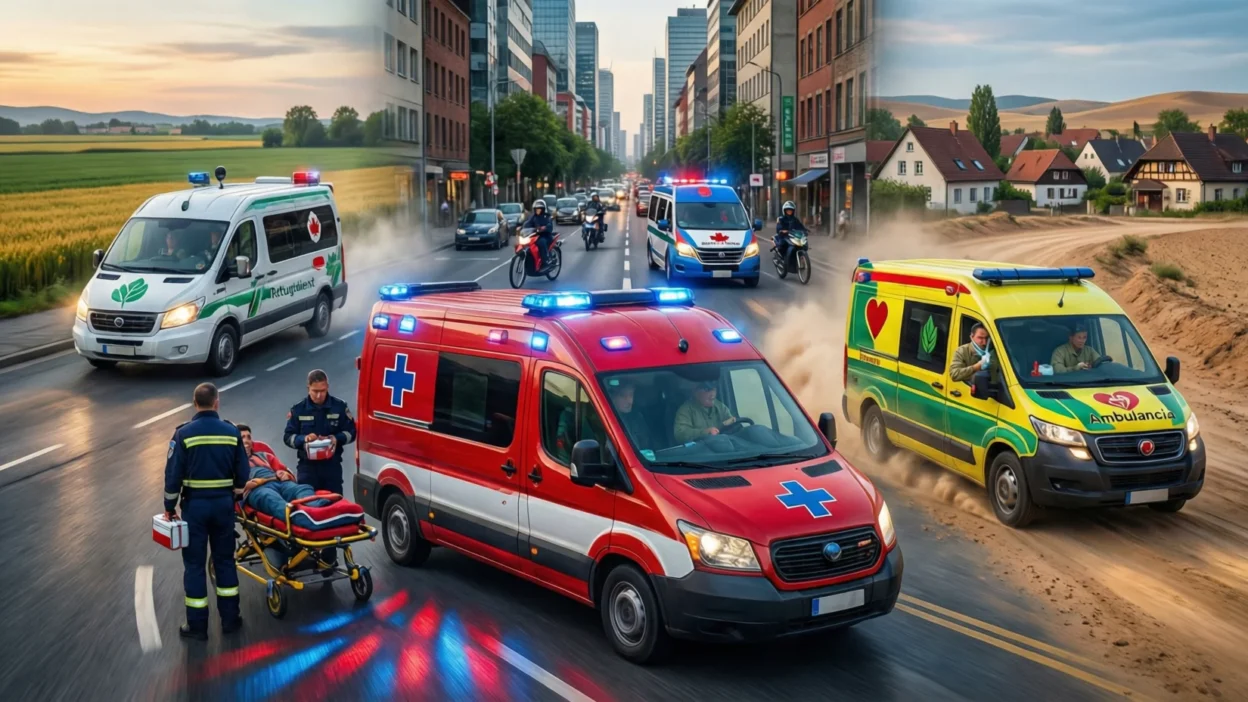
An ambulance represents urgency, care, and lifesaving support across the world. Therefore, the word appears frequently in emergencies, travel situations, news reports, and everyday conversations.
Moreover, different cultures describe ambulances using native terms shaped by history, healthcare systems, and language structure. As a result, learning ambulance in different languages improves understanding in critical moments.
Additionally, travelers may need to recognize or request emergency help quickly. Likewise, language learners benefit from practical vocabulary that saves time and confusion.
Furthermore, writers, translators, and educators require accurate terms for clarity. Consequently, knowing how people refer to ambulances worldwide strengthens communication. Ultimately, this knowledge connects language learning with real-life safety and awareness.
| Language | Native Phrase | Example Sentence |
|---|---|---|
| English | Ambulance | The ambulance arrived quickly. |
| Spanish | Ambulancia | La ambulancia llegó rápido. |
| French | Ambulance | L’ambulance est arrivée. |
| German | Krankenwagen | Der Krankenwagen kam. |
| Italian | Ambulanza | L’ambulanza è arrivata. |
| Portuguese | Ambulância | A ambulância chegou. |
| Dutch | Ambulance | De ambulance kwam. |
| Swedish | Ambulans | Ambulansen kom snabbt. |
| Norwegian | Ambulanse | Ambulansen ankom. |
| Danish | Ambulance | Ambulancen kom. |
| Finnish | Ambulanssi | Ambulanssi saapui. |
| Russian | Скорая помощь | Скорая помощь приехала. |
| Ukrainian | Швидка допомога | Швидка приїхала. |
| Polish | Karetka | Karetka przyjechała. |
| Czech | Sanitka | Sanitka dorazila. |
| Slovak | Sanitka | Sanitka prišla. |
| Hungarian | Mentőautó | A mentő megérkezett. |
| Romanian | Ambulanță | Ambulanța a sosit. |
| Greek | Ασθενοφόρο | Το ασθενοφόρο ήρθε. |
| Turkish | Ambulans | Ambulans geldi. |
| Arabic | سيارة إسعاف | وصلت سيارة الإسعاف. |
| Hebrew | אמבולנס | האמבולנס הגיע. |
| Persian | آمبولانس | آمبولانس رسید. |
| Urdu | ایمبولینس | ایمبولینس آ گئی۔ |
| Hindi | एंबुलेंस | एंबुलेंस आ गई। |
| Bengali | অ্যাম্বুলেন্স | অ্যাম্বুলেন্স এলো। |
| Punjabi | ਐਂਬੂਲੈਂਸ | ਐਂਬੂਲੈਂਸ ਆ ਗਈ। |
| Tamil | ஆம்புலன்ஸ் | ஆம்புலன்ஸ் வந்தது. |
| Telugu | అంబులెన్స్ | అంబులెన్స్ వచ్చింది. |
| Kannada | ಆಂಬ್ಯುಲೆನ್ಸ್ | ಆಂಬ್ಯುಲೆನ್ಸ್ ಬಂತು. |
| Malayalam | ആംബുലൻസ് | ആംബുലൻസ് എത്തി. |
| Marathi | रुग्णवाहिका | रुग्णवाहिका आली. |
| Gujarati | એમ્બ્યુલન્સ | એમ્બ્યુલન્સ આવી. |
| Chinese (Simplified) | 救护车 | 救护车来了。 |
| Chinese (Traditional) | 救護車 | 救護車到了。 |
| Japanese | 救急車 | 救急車が来た。 |
| Korean | 구급차 | 구급차가 왔다. |
| Thai | รถพยาบาล | รถพยาบาลมาแล้ว |
| Vietnamese | Xe cứu thương | Xe cứu thương đến. |
| Indonesian | Ambulans | Ambulans tiba. |
| Malay | Ambulans | Ambulans sampai. |
| Filipino | Ambulansya | Dumating ang ambulansya. |
| Swahili | Ambulansi | Ambulansi imefika. |
| Afrikaans | Ambulans | Ambulans het gekom. |
| Somali | Ambalaas | Ambalaas ayaa yimid. |
| Hausa | Motar asibiti | Motar asibiti ta zo. |
| Yoruba | Ambulansi | Ambulansi dé. |
| Igbo | Ụgbọ mberede | Ụgbọ mberede bịara. |
| Zulu | I-ambulensi | I-ambulensi ifikile. |
| Amharic | አምቡላንስ | አምቡላንስ መጣ። |
| Nepali | एम्बुलेन्स | एम्बुलेन्स आयो। |
| Sinhala | ගිලන් රථය | ගිලන් රථය ආවා. |
| Lao | ລົດພາຍບານ | ລົດພາຍບານມາ |
| Khmer | រថយន្តសង្គ្រោះ | រថយន្តមកដល់ |
| Mongolian | Түргэн тусламж | Түргэн ирлээ. |
| Kazakh | Жедел жәрдем | Жедел жәрдем келді. |
| Uzbek | Tez yordam | Tez yordam keldi. |
| Tajik | Ёрии таъҷилӣ | Ёрии таъҷилӣ омад. |
| Pashto | امبولانس | امبولانس راغی. |
| Kurdish | Ambulans | Ambulans hat. |
| Armenian | Շտապօգնություն | Շտապօգնությունը եկավ։ |
| Georgian | სასწრაფო | სასწრაფო მოვიდა. |
| Albanian | Ambulancë | Ambulanca erdhi. |
| Bosnian | Hitna pomoć | Hitna je stigla. |
| Croatian | Hitna pomoć | Hitna je došla. |
| Serbian | Хитна помоћ | Хитна је стигла. |
| Bulgarian | Линейка | Линейката дойде. |
| Slovenian | Reševalno vozilo | Vozilo je prišlo. |
| Lithuanian | Greitoji | Greitoji atvyko. |
| Latvian | Ātrā palīdzība | Palīdzība ieradās. |
| Estonian | Kiirabi | Kiirabi saabus. |
| Icelandic | Sjúkrabíll | Sjúkrabíll kom. |
| Irish | Otharcharr | Tháinig an t-otharcharr. |
| Welsh | Ambiwlans | Daeth yr ambiwlans. |
| Basque | Anbulantzia | Anbulantzia heldu da. |
| Catalan | Ambulància | L’ambulància va arribar. |
| Galician | Ambulancia | A ambulancia chegou. |
| Esperanto | Ambulanco | Ambulanco alvenis. |
| Latin | Ambulantia | Ambulantia advenit. |
Why Learning Ambulance in Different Languages Matters
First, emergencies often happen unexpectedly. Therefore, recognizing the local word for ambulance can save valuable time. Moreover, travelers feel safer when they understand emergency vocabulary. Additionally, healthcare workers and volunteers benefit from multilingual awareness. Consequently, communication improves during urgent situations. Ultimately, language knowledge supports faster help.
Cultural Meaning of Ambulances Around the World
In many cultures, ambulances symbolize hope and rapid response. Meanwhile, some regions associate them with specific siren sounds or colors. Furthermore, healthcare systems influence how people talk about ambulances. As a result, language reflects medical structure and public trust. Therefore, vocabulary also carries cultural meaning.
Final Thought
In conclusion, learning ambulance in different languages goes beyond vocabulary building. Moreover, it connects language with real-life safety and awareness.
Therefore, this knowledge supports travelers, learners, and professionals alike. Additionally, understanding native terms reduces confusion during emergencies.
Consequently, communication becomes faster and clearer. Furthermore, even one word can carry global importance. As a result, language learning feels practical and meaningful. Ultimately, words linked to care remind us of shared human needs worldwide.
FAQs
Is ambulance the same word worldwide?
Many languages use similar forms, but others use descriptive phrases.
Why is ambulance vocabulary important?
It helps in emergencies and improves safety.
Do all languages have a native word for ambulance?
Yes, though some use borrowed terms.
Is ambulance used in daily conversation?
Mostly in emergencies, news, and healthcare contexts.
Should travelers learn emergency words first?
Yes, they are highly practical and important.

Nicodemo Thorley is a cultural writer at Lingonast.com, focusing on language and heritage.
He explores how language connects with culture and history.
His articles offer structured and insightful perspectives.