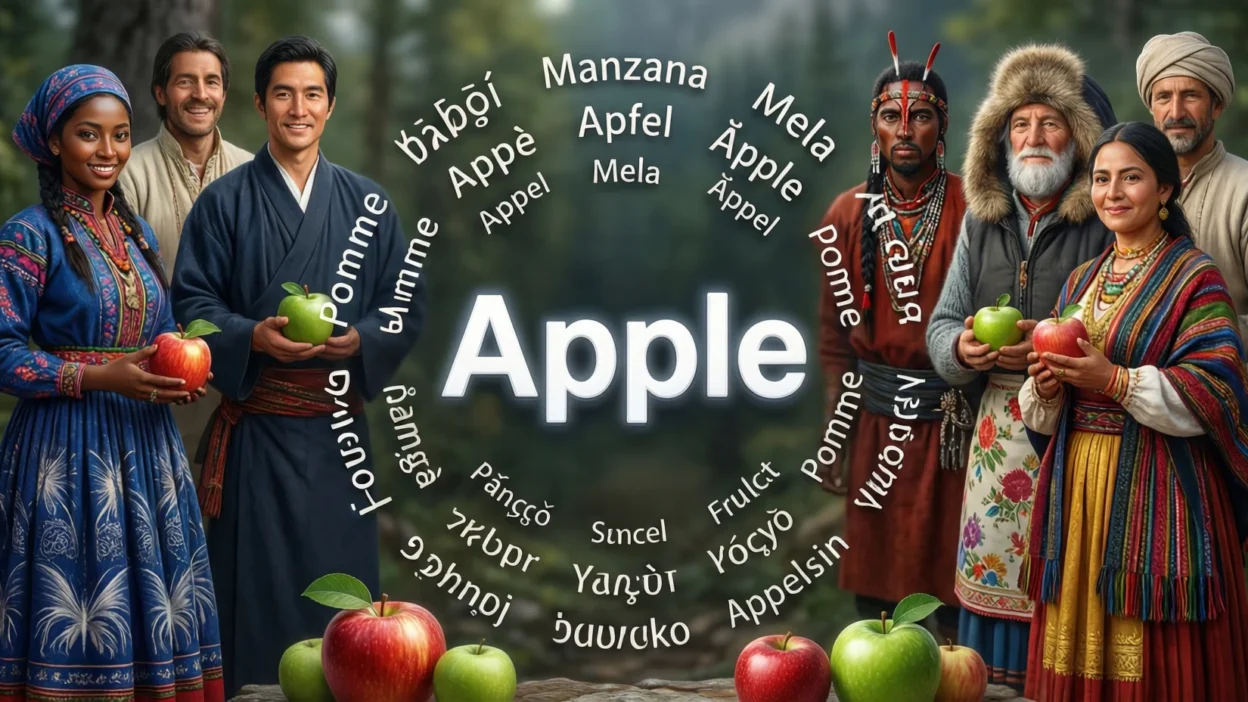
An apple is one of the most familiar and widely recognized fruits in the world. Because it appears in daily meals, traditions, education, health discussions, and even stories, the word “apple” is often one of the first nouns people learn in a new language.
Therefore, learning how to say apple in different languages is both practical and educational.
Moreover, apples hold symbolic meaning in many cultures. They can represent health, knowledge, nature, simplicity, or tradition.
As a result, this small word appears in conversations, classrooms, markets, and literature across the globe.
Additionally, understanding its name in different languages helps language learners build confidence, improve vocabulary, and communicate more naturally in everyday situations.
Apple in Different Languages
How is the word “apple” said around the world?
| Language | Native Word | Example Sentence |
|---|---|---|
| English | Apple | I eat an apple every day. |
| Spanish | Manzana | La manzana es roja. |
| French | Pomme | La pomme est fraîche. |
| German | Apfel | Der Apfel ist süß. |
| Italian | Mela | La mela è buona. |
| Portuguese | Maçã | A maçã está madura. |
| Dutch | Appel | De appel is lekker. |
| Russian | Яблоко | Яблоко полезное. |
| Ukrainian | Яблуко | Яблуко смачне. |
| Polish | Jabłko | Jabłko jest zdrowe. |
| Czech | Jablko | Jablko je čerstvé. |
| Slovak | Jablko | Jablko chutí dobre. |
| Hungarian | Alma | Az alma finom. |
| Romanian | Măr | Mărul este dulce. |
| Bulgarian | Ябълка | Ябълката е вкусна. |
| Greek | Μήλο | Το μήλο είναι φρέσκο. |
| Turkish | Elma | Elma çok lezzetli. |
| Arabic | تفاح | التفاح صحي. |
| Hebrew | תפוח | התפוח טעים. |
| Persian | سیب | سیب تازه است. |
| Urdu | سیب | سیب اچھا ہے۔ |
| Hindi | सेब | सेब मीठा है। |
| Bengali | আপেল | আপেল ভালো। |
| Punjabi | ਸੇਬ | ਸੇਬ ਤਾਜ਼ਾ ਹੈ। |
| Marathi | सफरचंद | सफरचंद गोड आहे. |
| Gujarati | સફરજન | સફરજન મીઠું છે. |
| Tamil | ஆப்பிள் | ஆப்பிள் நல்லது. |
| Telugu | ఆపిల్ | ఆపిల్ తీపిగా ఉంది. |
| Kannada | ಆಪಲ್ | ಆಪಲ್ ರುಚಿಯಾಗಿದೆ. |
| Malayalam | ആപ്പിൾ | ആപ്പിൾ നല്ലതാണ്. |
| Sinhala | ඇපල් | ඇපල් හොඳයි. |
| Nepali | स्याउ | स्याउ मिठो छ। |
| Japanese | りんご | りんごが好きです。 |
| Chinese | 苹果 | 苹果很好吃。 |
| Korean | 사과 | 사과가 맛있어요. |
| Vietnamese | Táo | Táo rất ngon. |
| Thai | แอปเปิ้ล | แอปเปิ้ลอร่อย |
| Indonesian | Apel | Apel segar. |
| Malay | Epal | Epal ini manis. |
| Filipino | Mansanas | Masarap ang mansanas. |
| Swahili | Tufaha | Tufaha ni zuri. |
| Zulu | I-apula | I-apula imnandi. |
| Afrikaans | Appel | Die appel is vars. |
| Norwegian | Eple | Eplet er godt. |
| Swedish | Äpple | Äpplet är gott. |
| Danish | Æble | Æblet er friskt. |
| Finnish | Omena | Omena on makea. |
| Icelandic | Epli | Eplið er gott. |
| Irish | Úll | Tá an úll úr. |
| Welsh | Afal | Mae’r afal yn felys. |
| Scottish Gaelic | Ubhal | Tha an ubhal math. |
| Basque | Sagar | Sagarra gozoa da. |
| Catalan | Poma | La poma és dolça. |
| Galician | Mazá | A mazá é boa. |
| Serbian | Јабука | Јабука је слатка. |
| Croatian | Jabuka | Jabuka je zdrava. |
| Bosnian | Jabuka | Jabuka je ukusna. |
| Slovenian | Jabolko | Jabolko je sveže. |
| Estonian | Õun | Õun on magus. |
| Latvian | Ābols | Ābols ir svaigs. |
| Lithuanian | Obuolys | Obuolys skanus. |
| Armenian | Խնձոր | Խնձորը թարմ է։ |
| Georgian | ვაშლი | ვაშლი გემრიელია. |
| Albanian | Mollë | Mollë është e mirë. |
| Maltese | Tuffieħ | It-tuffieħ frisk. |
How does this help language learners?
Firstly, food words are used daily. Moreover, they help beginners build real life vocabulary quickly.
Additionally, learning simple nouns improves sentence formation and confidence. Therefore, knowing this word in different languages is extremely practical.
Final Thought
In the end, learning how to say apple in different languages proves that even the simplest words can open doors to global communication.
Although an apple is a basic fruit, its name connects cultures, languages, and daily life across the world.
By learning these translations, you strengthen your vocabulary, improve cultural awareness, and make language learning feel more natural and enjoyable. Small words, when learned globally, create big understanding.

Nick Orsan is a contributor at Lingonast.com, writing about modern language use and communication.
He covers topics related to language trends and everyday expressions.
His work is informative, direct, and reader focused.