
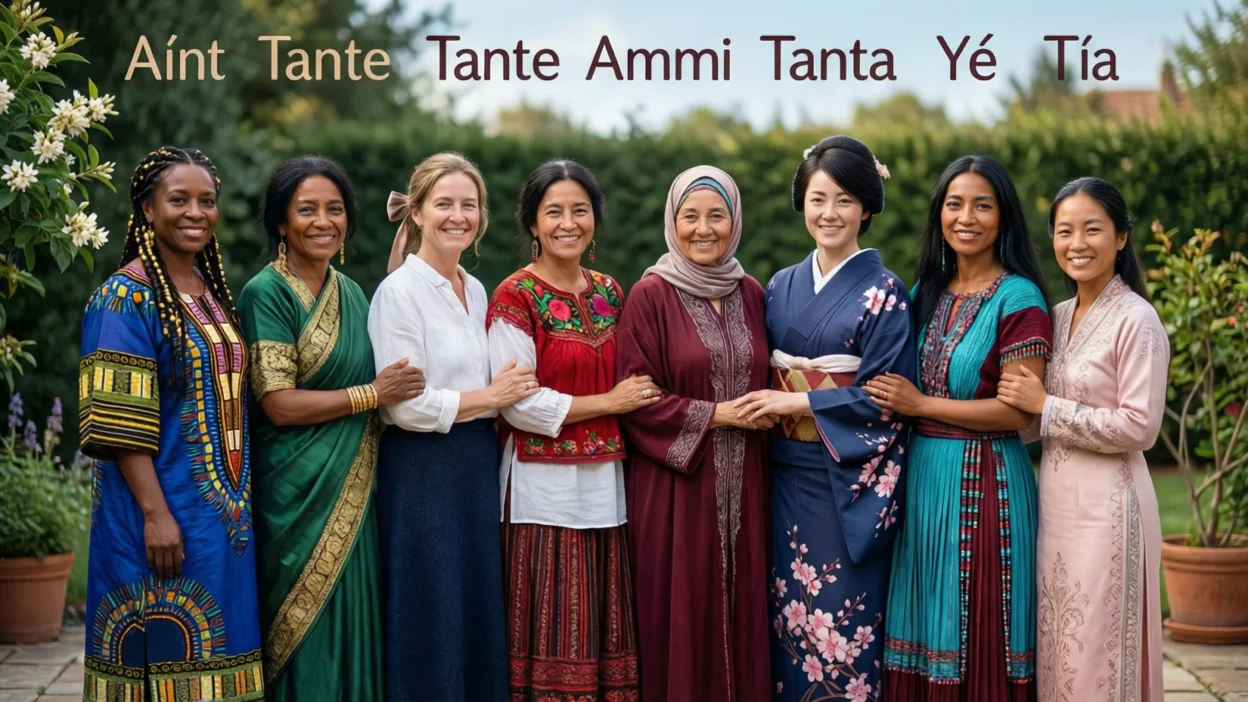
An aunt is more than just a family title. In many homes, an aunt is a guide, a helper, and sometimes a second mother.
Because families are important everywhere, the word “aunt” also holds strong emotional value across cultures.
Therefore, learning how to say aunt in different languages helps you understand family relationships better.
Moreover, some languages use one word for all aunts, while others use different words depending on whether the aunt is from the mother’s or father’s side.
As a result, these words tell us a lot about traditions and family systems. Additionally, knowing these terms makes conversations easier, especially when meeting people from other cultures. So, this guide keeps everything simple, clear, and useful for everyone.
Aunt in Different Languages
| Language | Native Word | Example Sentence |
|---|---|---|
| English | Aunt | My aunt visits us often. |
| Spanish | Tía | Mi tía vive aquí. |
| French | Tante | Ma tante arrive aujourd’hui. |
| German | Tante | Meine Tante ist nett. |
| Italian | Zia | Mia zia cucina bene. |
| Portuguese | Tia | Minha tia chegou. |
| Dutch | Tante | Mijn tante lacht. |
| Russian | Тётя | Моя тётя дома. |
| Ukrainian | Тітка | Тітка прийшла. |
| Polish | Ciocia | Ciocia mnie kocha. |
| Czech | Teta | Teta vaří oběd. |
| Slovak | Teta | Teta nás navštívila. |
| Hungarian | Néni | A néni segített. |
| Romanian | Mătușă | Mătușa zâmbește. |
| Bulgarian | Леля | Леля ми дойде. |
| Greek | Θεία | Η θεία μου ήρθε. |
| Turkish | Teyze | Teyzem geldi. |
| Arabic | عمة | عمتي هنا. |
| Hebrew | דודה | הדודה באה. |
| Persian | خاله | خالهام آمد. |
| Urdu | خالہ | میری خالہ آئی۔ |
| Hindi | मौसी | मेरी मौसी आई। |
| Bengali | খালা | আমার খালা এলেন। |
| Punjabi | ਮਾਸੀ | ਮੇਰੀ ਮਾਸੀ ਆਈ। |
| Marathi | मावशी | मावशी आली. |
| Gujarati | માસી | મારી માસી આવી. |
| Tamil | அத்தை | அத்தை வந்தார். |
| Telugu | అత్త | అత్త వచ్చారు. |
| Kannada | ಅತ್ತೆ | ಅತ್ತೆ ಬಂದರು. |
| Malayalam | അമ്മായി | അമ്മായി വന്നു. |
| Sinhala | නැන්දා | නැන්දා ආවා. |
| Nepali | माइजू | माइजू आइन्। |
| Japanese | おば | おばが来ました。 |
| Chinese | 阿姨 | 阿姨来了。 |
| Korean | 이모 | 이모가 왔어요. |
| Vietnamese | Dì | Dì đến rồi. |
| Thai | ป้า | ป้ามาแล้ว |
| Indonesian | Bibi | Bibi datang. |
| Malay | Makcik | Makcik datang. |
| Filipino | Tita | Dumating ang tita. |
| Swahili | Shangazi | Shangazi alikuja. |
| Zulu | Anti | Anti ufikile. |
| Afrikaans | Tannie | Tannie kom. |
| Norwegian | Tante | Tanten kom. |
| Swedish | Tant | Min tant ler. |
| Danish | Tante | Tanten kom i dag. |
| Finnish | Täti | Täti tuli. |
| Estonian | Tädi | Tädi naerab. |
| Latvian | Tante | Tante atnāca. |
| Lithuanian | Teta | Teta atėjo. |
| Icelandic | Frænka | Frænkan kom. |
| Irish | Aintín | Tháinig m’aintín. |
| Welsh | Modryb | Daeth fy modryb. |
| Basque | Izeba | Izeba etorri da. |
| Catalan | Tieta | La tieta arriba. |
| Galician | Tía | A tía chegou. |
| Serbian | Тетка | Тетка је дошла. |
| Croatian | Tetka | Tetka je ovdje. |
| Slovenian | Teta | Teta prihaja. |
Why Learning Family Words Like “Aunt” Is Important
How does it help in daily life?
Firstly, family words improve basic communication. Moreover, they help you speak politely and naturally. Additionally, they show respect for culture. Therefore, learning such words builds better understanding and stronger connections.
Frequently Asked Questions
Is the word “aunt” the same in all languages?
No, the word changes by language, and sometimes by family side, depending on cultural traditions.
Do some languages have more than one word for aunt?
Yes, many languages use different words for a mother’s sister and a father’s sister.
Is “aunt” used formally or casually?
Usually, it is used in a warm and casual way, especially within families.
Why are family words important when learning languages?
Because they help you connect emotionally and speak more naturally with native speakers.
Can learning family terms help with cultural understanding?
Yes, family words often reflect how societies value relationships and respect.
Final Thought
In the end, learning how to say aunt in different languages is a small step with a big impact.
Although the words sound different, the love and care behind them are the same everywhere.
Therefore, by understanding these family terms, you not only improve your language skills but also build deeper cultural respect and human connection.

Nick Orsan is a contributor at Lingonast.com, writing about modern language use and communication.
He covers topics related to language trends and everyday expressions.
His work is informative, direct, and reader focused.