
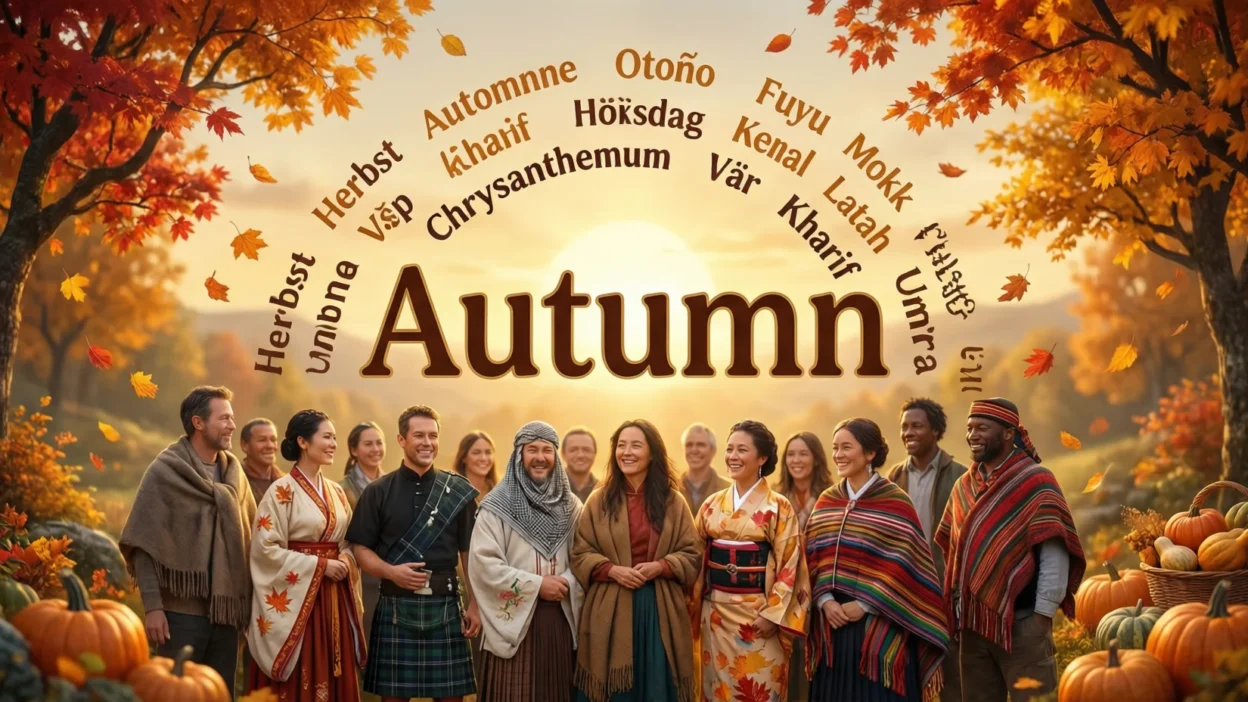
Autumn is a season that people across the world recognize instantly, even though they describe it differently.
It represents change, balance, harvest, reflection, and the slow transition from warmth to cold. Because of this, the word autumn carries emotional and cultural value in almost every language.
Therefore, learning how to say autumn in different languages helps you understand not only vocabulary, but also how different cultures view the same season.
Moreover, for language learners, writers, travelers, and educators, seasonal words are some of the most useful terms to know.
They appear in conversations, books, poems, travel plans, and daily speech. As a result, knowing the native word for autumn allows you to communicate more naturally.
Additionally, it helps you recognize patterns across languages, since some connect autumn with harvest, while others focus on falling leaves or cooling air.
Autumn in Different Languages
How is the season of autumn expressed around the world?
| Language | Native Word | Example Sentence |
|---|---|---|
| English | Autumn / Fall | Autumn begins in September. |
| Spanish | Otoño | El otoño es fresco. |
| French | Automne | L’automne arrive doucement. |
| German | Herbst | Der Herbst ist schön. |
| Italian | Autunno | L’autunno è tranquillo. |
| Portuguese | Outono | O outono começou. |
| Dutch | Herfst | De herfst is hier. |
| Russian | Осень | Осень холодная. |
| Ukrainian | Осінь | Осінь настала. |
| Polish | Jesień | Jesień jest krótka. |
| Czech | Podzim | Podzim přišel. |
| Slovak | Jeseň | Jeseň je chladná. |
| Hungarian | Ősz | Az ősz szép. |
| Romanian | Toamnă | Toamna este rece. |
| Bulgarian | Есен | Есен започна. |
| Greek | Φθινόπωρο | Το φθινόπωρο ήρθε. |
| Turkish | Sonbahar | Sonbahar geldi. |
| Arabic | الخريف | الخريف جميل. |
| Hebrew | סתיו | הסתיו כאן. |
| Persian | پاییز | پاییز شروع شد. |
| Urdu | خزاں | خزاں آ گئی۔ |
| Hindi | पतझड़ | पतझड़ शुरू हुआ। |
| Bengali | শরৎ | শরৎ এসেছে। |
| Punjabi | ਪਤਝੜ | ਪਤਝੜ ਆ ਗਈ। |
| Marathi | शरद | शरद ऋतु आली. |
| Gujarati | શરદ | શરદ ઋતુ છે. |
| Tamil | இலையுதிர் | இலையுதிர் வந்தது. |
| Telugu | శరదృతువు | శరదృతువు వచ్చింది. |
| Kannada | ಶರದೃತು | ಶರದೃತು ಆರಂಭವಾಯಿತು. |
| Malayalam | ശരത്കാലം | ശരത്കാലം തുടങ്ങി. |
| Sinhala | ශරත් | ශරත් කාලයයි. |
| Nepali | शरद | शरद ऋतु आयो। |
| Japanese | 秋 | 秋が来ました。 |
| Chinese | 秋天 | 秋天到了。 |
| Korean | 가을 | 가을이 왔어요. |
| Vietnamese | Mùa thu | Mùa thu đến rồi. |
| Thai | ฤดูใบไม้ร่วง | ฤดูใบไม้ร่วงมาแล้ว |
| Indonesian | Musim gugur | Musim gugur tiba. |
| Malay | Musim luruh | Musim luruh bermula. |
| Filipino | Taglagas | Taglagas na. |
| Swahili | Vuli | Vuli imefika. |
| Zulu | Ikwindla | Ikwindla iqalile. |
| Afrikaans | Herfs | Die herfs is koel. |
| Norwegian | Høst | Høst er her. |
| Swedish | Höst | Hösten är kall. |
| Danish | Efterår | Efteråret begyndte. |
| Finnish | Syksy | Syksy alkoi. |
| Icelandic | Haust | Haustið kom. |
| Irish | Fómhar | Tá an fómhar ann. |
| Welsh | Hydref | Mae hydref yma. |
| Scottish Gaelic | Foghar | Tha am foghar ann. |
| Basque | Udazkena | Udazkena iritsi da. |
| Catalan | Tardor | La tardor comença. |
| Galician | Outono | O outono chegou. |
| Serbian | Jesen | Jesen je stigla. |
| Croatian | Jesen | Jesen dolazi. |
| Bosnian | Jesen | Jesen počinje. |
| Slovenian | Jesen | Jesen se začne. |
| Estonian | Sügis | Sügis algas. |
| Latvian | Rudens | Rudens sākās. |
| Lithuanian | Ruduo | Ruduo atėjo. |
| Armenian | Աշուն | Աշունը եկավ։ |
| Georgian | შემოდგომა | შემოდგომა მოვიდა. |
| Albanian | Vjeshtë | Vjeshta erdhi. |
| Maltese | Ħarifa | Il-ħarifa bdiet. |
| Luxembourgish | Hierscht | Den Hierscht ass do. |
| Macedonian | Есен | Есен дојде. |
| Montenegrin | Jesen | Jesen je stigla. |
| Belarusian | Восень | Восень прыйшла. |
| Kazakh | Күз | Күз басталды. |
| Uzbek | Kuz | Kuz boshlandi. |
| Azerbaijani | Payız | Payız gəldi. |
| Tajik | Тирамоҳ | Тирамоҳ омад. |
| Mongolian | Намар | Намар ирлээ. |
| Lao | ລະດູໃບໄມ້ຫຼົ່ນ | ລະດູໃບໄມ້ຫຼົ່ນມາແລ້ວ |
| Khmer | រដូវស្លឹកឈើជ្រុះ | រដូវនេះបានមកដល់ |
| Burmese | ဆောင်းဦး | ဆောင်းဦး ရောက်ပြီ |
How does it help communication and understanding?
Firstly, seasonal words appear frequently in daily conversations. Moreover, they are used in literature, travel planning, and education. Additionally, knowing these words helps you understand cultural references more easily. Therefore, learning them improves both language skills and cultural awareness.
Final Thought
In the end, learning how to say autumn in different languages goes far beyond vocabulary memorization.
It allows you to see how people around the world experience the same season in slightly different ways.
Although the weather changes everywhere, each language reflects its own traditions, emotions, and history.
By learning these words, you strengthen your global understanding, enrich your communication skills, and develop a deeper appreciation for how language connects nature and culture across the world.

Nick Orsan is a contributor at Lingonast.com, writing about modern language use and communication.
He covers topics related to language trends and everyday expressions.
His work is informative, direct, and reader focused.