
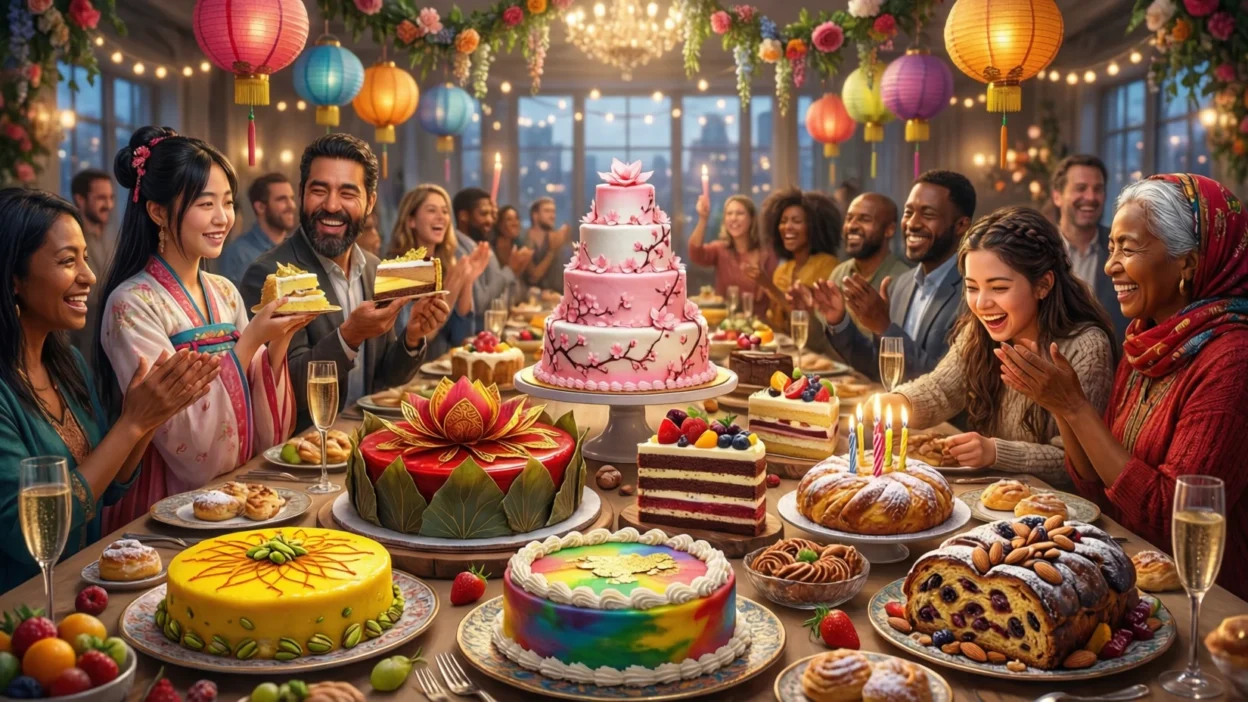
Cake is more than just a dessert. It represents celebration, happiness, and togetherness across cultures.
People enjoy cake during birthdays, weddings, festivals, and personal milestones. Therefore, learning how to say cake in different languages helps you understand cultural traditions and food vocabulary worldwide.
Moreover, cake appears often in travel, cooking, hospitality, and everyday conversations. As a result, knowing its native names improves communication and cultural appreciation.
In addition, some languages use unique words for cake, while others adapt foreign terms. Consequently, these translations reflect local cuisine and traditions.
Furthermore, cake symbolizes joy in many societies. Ultimately, learning cake in different languages connects people through shared celebrations and tastes.
| Language | Native Phrase | Example Sentence |
|---|---|---|
| English | Cake | I baked a cake today. |
| Spanish | Pastel | El pastel está delicioso. |
| French | Gâteau | Le gâteau est prêt. |
| German | Kuchen | Der Kuchen ist süß. |
| Italian | Torta | La torta è buona. |
| Portuguese | Bolo | O bolo está quente. |
| Dutch | Taart | De taart is vers. |
| Swedish | Tårta | Tårtan är klar. |
| Norwegian | Kake | Kaken smaker godt. |
| Danish | Kage | Kagen er frisk. |
| Finnish | Kakku | Kakku on makea. |
| Icelandic | Kaka | Kakan er fersk. |
| Russian | Торт | Торт готов. |
| Ukrainian | Торт | Торт смачний. |
| Polish | Ciasto | Ciasto jest dobre. |
| Czech | Dort | Dort je sladký. |
| Slovak | Koláč | Koláč je chutný. |
| Hungarian | Torta | A torta finom. |
| Romanian | Tort | Tortul este bun. |
| Greek | Τούρτα | Η τούρτα είναι έτοιμη. |
| Turkish | Kek | Kek çok güzel. |
| Arabic | كعكة | الكعكة لذيذة. |
| Hebrew | עוגה | העוגה טעימה. |
| Persian | کیک | کیک آماده است. |
| Urdu | کیک | کیک مزیدار ہے۔ |
| Hindi | केक | केक स्वादिष्ट है। |
| Bengali | কেক | কেক সুস্বাদু। |
| Punjabi | ਕੇਕ | ਕੇਕ ਚੰਗਾ ਹੈ। |
| Tamil | கேக் | கேக் சுவையாக உள்ளது. |
| Telugu | కేక్ | కేక్ బాగుంది. |
| Kannada | ಕೇಕ್ | ಕೇಕ್ ರುಚಿಯಾಗಿದೆ. |
| Malayalam | കേക്ക് | കേക്ക് നല്ലതാണ്. |
| Marathi | केक | केक छान आहे. |
| Gujarati | કેક | કેક સ્વાદિષ્ટ છે. |
| Nepali | केक | केक मीठो छ। |
| Sinhala | කේක් | කේක් රසයි. |
| Chinese (Simplified) | 蛋糕 | 蛋糕很好吃。 |
| Chinese (Traditional) | 蛋糕 | 蛋糕很好吃。 |
| Japanese | ケーキ | ケーキは甘い。 |
| Korean | 케이크 | 케이크가 맛있다. |
| Thai | เค้ก | เค้กอร่อย |
| Vietnamese | Bánh ngọt | Bánh ngọt rất ngon. |
| Indonesian | Kue | Kue ini manis. |
| Malay | Kek | Kek ini sedap. |
| Filipino | Keyk | Masarap ang keyk. |
| Swahili | Keki | Keki ni tamu. |
| Afrikaans | Koek | Die koek is vars. |
| Somali | Keeg | Keeg waa macaan. |
| Hausa | Keke | Keken yana dadi. |
| Yoruba | Akara oyinbo | Akara oyinbo dun. |
| Igbo | Keki | Keki dị ụtọ. |
| Zulu | Ikhekhe | Ikhekhe limnandi. |
| Amharic | ኬክ | ኬክ ጣፋጭ ነው። |
| Lao | ເຄັກ | ເຄັກຫວານ |
| Khmer | នំខេក | នំខេកឆ្ងាញ់។ |
| Mongolian | Бялуу | Бялуу амттай. |
| Kazakh | Торт | Торт дәмді. |
| Uzbek | Tort | Tort mazali. |
| Tajik | Торт | Торт болаззат аст. |
| Pashto | کيک | کيک خوندور دی. |
| Kurdish | Kek | Kek xweş e. |
| Armenian | Տորթ | Տորթը համեղ է։ |
| Georgian | ტორტი | ტორტი გემრიელია. |
| Albanian | Tortë | Torta është e mirë. |
| Bosnian | Torta | Torta je slatka. |
| Croatian | Torta | Torta je ukusna. |
| Serbian | Торта | Торта је укусна. |
| Bulgarian | Торта | Тортата е вкусна. |
| Slovenian | Torta | Torta je dobra. |
| Lithuanian | Tortas | Tortas skanus. |
| Latvian | Kūka | Kūka ir garšīga. |
| Estonian | Kook | Kook on magus. |
| Irish | Cáca | Tá an cáca réidh. |
| Welsh | Cacen | Mae’r gacen yn flasus. |
| Basque | Pastela | Pastela ona da. |
| Catalan | Pastís | El pastís és bo. |
| Galician | Bolo | O bolo está bo. |
| Maltese | Kejk | Il-kejk tajjeb. |
| Esperanto | Kuko | La kuko estas bona. |
| Latin | Placenta | Placenta dulcis est. |
Why Cake Is Loved Worldwide
Cake represents joy and celebration everywhere. Moreover, each culture adds unique flavors and traditions.
Therefore, the word cake carries emotional meaning. In addition, it connects people during special moments.
Cake in Daily Life and Culture
Cake appears in homes, bakeries, and celebrations. Furthermore, people use it to show love and appreciation.
Consequently, learning cake in different languages enriches cultural knowledge.
FAQs
What does cake mean in most languages?
It usually refers to a sweet baked dessert.
Do all cultures celebrate with cake?
Many do, though styles and recipes vary.
Is cake always sweet?
In most cultures, yes, but some versions are savory.
Why is cake important culturally?
It symbolizes celebration and happiness.
Is cake vocabulary useful for travelers?
Yes, especially for food and cultural experiences.
Final Thought
Cake brings people together across cultures. Therefore, learning cake in different languages helps you understand global traditions.
Moreover, it enriches communication and food vocabulary. Additionally, these translations show cultural diversity. As a result, language and food connect emotionally.
Furthermore, cake remains a universal symbol of joy. Ultimately, words for cake reflect shared human celebration.

Foster Hollis is a language and culture writer with a strong interest in how people communicate across borders. At Lingonast, he focuses on cultural insights and language based articles that help readers understand global traditions in a simple, engaging way.