
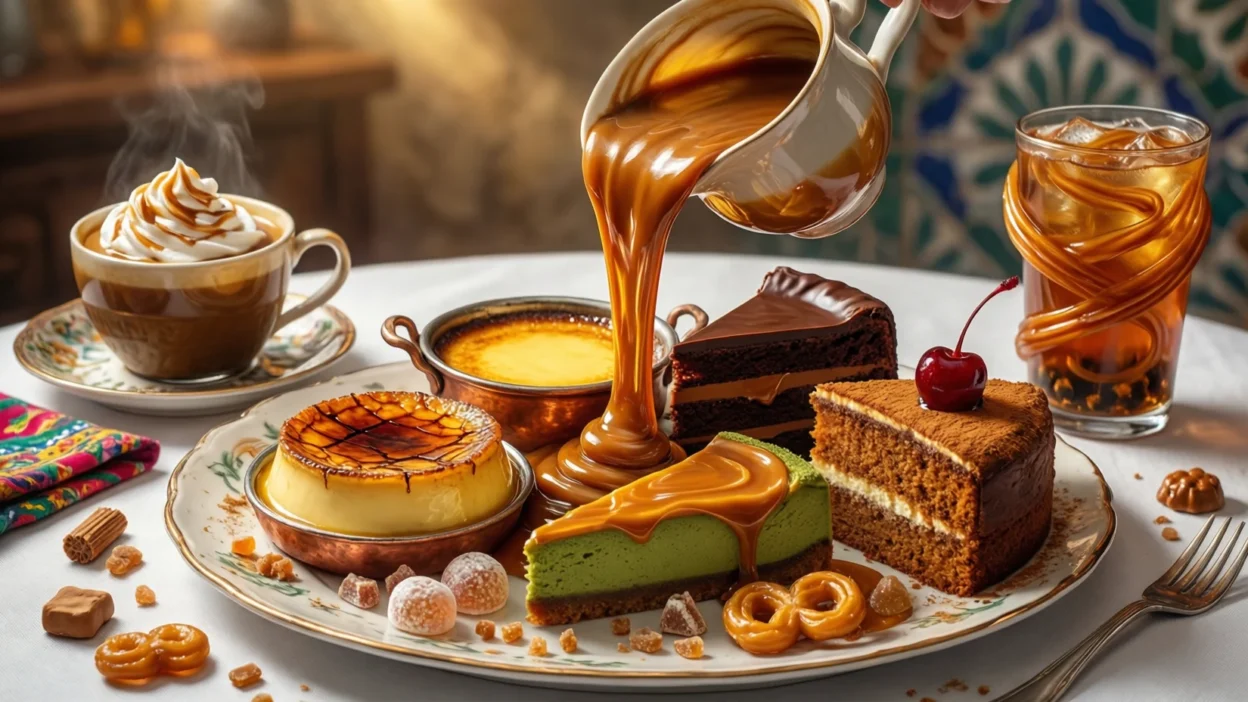
Caramel is a beloved flavor enjoyed around the world. It appears in desserts, candies, drinks, sauces, and baked goods.
Moreover, people associate caramel with sweetness, warmth, and comfort. Therefore, learning caramel in different languages helps food lovers, travelers, chefs, and writers communicate more clearly.
Additionally, many cultures use caramel in traditional sweets, while others adapt the word into their own language.
As a result, some terms sound similar, while others change completely. Furthermore, understanding native words avoids confusion when reading menus or recipes.
Consequently, this simple food term becomes a useful part of everyday vocabulary. Ultimately, caramel connects taste, culture, and language across borders.
| Language | Native Phrase | Example Sentence |
|---|---|---|
| English | Caramel | I love caramel sauce. |
| Spanish | Caramelo | El caramelo es dulce. |
| French | Caramel | Le caramel fond vite. |
| German | Karamell | Karamell schmeckt süß. |
| Italian | Caramello | Il caramello è caldo. |
| Portuguese | Caramelo | O caramelo derrete. |
| Dutch | Karamel | Karamel is zacht. |
| Swedish | Karamell | Karamell är söt. |
| Norwegian | Karamell | Karamell smelter. |
| Danish | Karamel | Karamel er sød. |
| Finnish | Karamelli | Karamelli maistuu hyvältä. |
| Icelandic | Karamella | Karamella er sæt. |
| Russian | Карамель | Карамель сладкая. |
| Ukrainian | Карамель | Карамель смачна. |
| Polish | Karmel | Karmel jest słodki. |
| Czech | Karamel | Karamel je sladký. |
| Slovak | Karamel | Karamel chutí dobre. |
| Hungarian | Karamella | A karamella édes. |
| Romanian | Caramel | Caramelul este dulce. |
| Greek | Καραμέλα | Η καραμέλα λιώνει. |
| Turkish | Karamel | Karamel tatlıdır. |
| Arabic | كراميل | الكراميل لذيذ. |
| Hebrew | קרמל | קרמל מתוק. |
| Persian | کارامل | کارامل شیرین است. |
| Urdu | کیرامل | کیرامل میٹھا ہے۔ |
| Hindi | कैरामेल | कैरामेल मीठा है। |
| Bengali | ক্যারামেল | ক্যারামেল মিষ্টি। |
| Punjabi | ਕੈਰਾਮੈਲ | ਕੈਰਾਮੈਲ ਮਿੱਠੀ ਹੈ। |
| Tamil | காரமெல் | காரமெல் இனிப்பு. |
| Telugu | కారామెల్ | కారామెల్ తీపిగా ఉంటుంది. |
| Kannada | ಕಾರಮೆಲ್ | ಕಾರಮೆಲ್ ಸಿಹಿ. |
| Malayalam | കാരമൽ | കാരമൽ മധുരമാണ്. |
| Marathi | कॅरामेल | कॅरामेल गोड आहे. |
| Gujarati | કેરામેલ | કેરામેલ મીઠું છે. |
| Nepali | क्यारामेल | क्यारामेल मीठो छ। |
| Sinhala | කැරමල් | කැරමල් මිහිරි. |
| Chinese (Simplified) | 焦糖 | 焦糖很甜。 |
| Chinese (Traditional) | 焦糖 | 焦糖很香。 |
| Japanese | キャラメル | キャラメルが甘い。 |
| Korean | 캐러멜 | 캐러멜은 달다. |
| Thai | คาราเมล | คาราเมลหวาน |
| Vietnamese | Caramen | Caramen ngọt. |
| Indonesian | Karamel | Karamel manis. |
| Malay | Karamel | Karamel sedap. |
| Filipino | Karamelo | Matamis ang karamelo. |
| Swahili | Karameli | Karameli ni tamu. |
| Afrikaans | Karamel | Karamel is soet. |
| Somali | Karamel | Karamel waa macaan. |
| Hausa | Karamel | Karamel mai dadi ne. |
| Yoruba | Karameli | Karameli dun. |
| Igbo | Karamel | Karamel dị ụtọ. |
| Zulu | Ikharameli | Ikharameli imnandi. |
| Amharic | ካራመል | ካራመል ጣፋጭ ነው። |
| Lao | ຄາຣາເມວ | ຄາຣາເມວຫວານ |
| Khmer | ការ៉ាមែល | ការ៉ាមែលផ្អែម |
| Mongolian | Карамель | Карамель амттай. |
| Kazakh | Карамель | Карамель тәтті. |
| Uzbek | Karamel | Karamel shirin. |
| Tajik | Карамел | Карамел ширин аст. |
| Pashto | کارامل | کارامل خوږ دی. |
| Kurdish | Karamel | Karamel şîrîn e. |
| Armenian | Կարամել | Կարամելը քաղցր է։ |
| Georgian | კარამელი | კარამელი ტკბილია. |
| Albanian | Karamel | Karameli është i ëmbël. |
| Bosnian | Karamel | Karamel je sladak. |
| Croatian | Karamela | Karamela je slatka. |
| Serbian | Карамела | Карамела је слатка. |
| Bulgarian | Карамел | Карамелът е сладък. |
| Slovenian | Karamela | Karamela je sladka. |
| Lithuanian | Karamelė | Karamelė saldi. |
| Latvian | Karamele | Karamele ir salda. |
| Estonian | Karamell | Karamell on magus. |
| Irish | Caramal | Tá caramal milis. |
| Welsh | Caramel | Mae caramel yn felys. |
| Basque | Karamelua | Karamelua gozoa da. |
| Catalan | Caramel | El caramel és dolç. |
| Galician | Caramelo | O caramelo é doce. |
| Maltese | Karamella | Il-karamella ħelwa. |
| Esperanto | Karamelo | Karamelo estas dolĉa. |
| Latin | Caramelum | Caramelum dulce est. |
Why Caramel Is Known Worldwide
First, caramel appears in many global desserts. Therefore, cultures adopt the word easily. Moreover, sugar based cooking exists everywhere.
Additionally, trade and media spread food terms quickly. Consequently, caramel becomes internationally recognized.
Cultural Use of Caramel Across Countries
In many regions, caramel flavors sweets and drinks. Meanwhile, some cuisines pair it with salt or butter.
Furthermore, local desserts adapt caramel uniquely. As a result, the word gains cultural depth beyond taste.
Final Thought
In conclusion, learning caramel in different languages shows how food unites people globally.
Moreover, this sweet flavor crosses cultural boundaries. Therefore, knowing native terms improves travel and cooking experiences.
Additionally, it helps readers understand menus and recipes. Consequently, communication becomes smoother.
Furthermore, food vocabulary adds joy to language learning. As a result, even one word can reflect shared tastes.
Ultimately, caramel represents sweetness in both language and life.
FAQs
Is caramel spelled the same everywhere?
No, spelling and pronunciation vary by language.
Is caramel used in traditional desserts worldwide?
Yes, many cultures use it differently.
Do some languages borrow the English word?
Yes, especially in modern usage.
Is caramel always sweet?
Mostly, but some cuisines add salt or bitterness.
Why learn caramel in different languages?
It helps with travel, cooking, and cultural understanding.

Mareo Parrin is a multilingual writer at Lingonast.com, specializing in language based content.
He focuses on cultural insights and practical language understanding.
His writing is clear, engaging, and easy to follow.