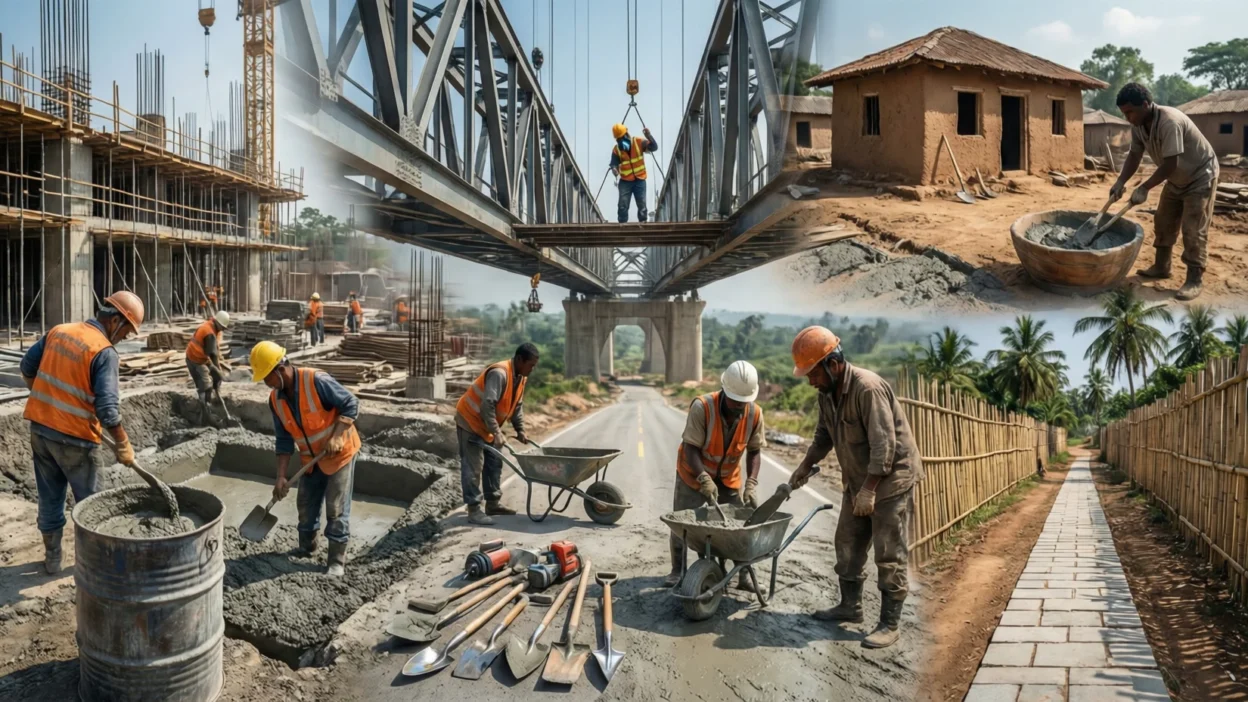
Cement is a fundamental material used in construction, infrastructure, housing, and modern development.
People rely on it to build homes, roads, bridges, schools, and cities. Therefore, learning how to say cement in different languages helps engineers, builders, students, travelers, and writers communicate clearly across borders.
Moreover, construction terminology often appears in contracts, manuals, and real life conversations.
As a result, knowing the correct native word improves accuracy and understanding. In addition, different cultures use cement in unique architectural styles.
Consequently, language reflects both function and tradition. Furthermore, global projects require shared vocabulary. Ultimately, one simple word supports progress worldwide.
| Language | Native Phrase | Example Sentence |
|---|---|---|
| English | Cement | Cement is very strong. |
| Spanish | Cemento | El cemento es duro. |
| French | Ciment | Le ciment sèche vite. |
| German | Zement | Zement ist schwer. |
| Italian | Cemento | Il cemento regge bene. |
| Portuguese | Cimento | O cimento endurece. |
| Dutch | Cement | Cement is nat. |
| Swedish | Cement | Cementen torkar. |
| Norwegian | Sement | Sementen er klar. |
| Danish | Cement | Cementen hærder. |
| Finnish | Sementti | Sementti kuivuu. |
| Icelandic | Sement | Sementið harðnar. |
| Russian | Цемент | Цемент крепкий. |
| Ukrainian | Цемент | Цемент твердий. |
| Polish | Cement | Cement wiąże. |
| Czech | Cement | Cement je pevný. |
| Slovak | Cement | Cement tvrdne. |
| Hungarian | Cement | A cement erős. |
| Romanian | Ciment | Cimentul ține. |
| Greek | Τσιμέντο | Το τσιμέντο στεγνώνει. |
| Turkish | Çimento | Çimento serttir. |
| Arabic | أسمنت | الأسمنت قوي. |
| Hebrew | מלט | המלט חזק. |
| Persian | سیمان | سیمان سفت است. |
| Urdu | سیمنٹ | سیمنٹ مضبوط ہے۔ |
| Hindi | सीमेंट | सीमेंट मजबूत है। |
| Bengali | সিমেন্ট | সিমেন্ট শক্ত। |
| Punjabi | ਸੀਮੈਂਟ | ਸੀਮੈਂਟ ਮਜ਼ਬੂਤ ਹੈ। |
| Tamil | சிமெண்டு | சிமெண்டு உறுதியானது. |
| Telugu | సిమెంట్ | సిమెంట్ బలంగా ఉంటుంది. |
| Kannada | ಸಿಮೆಂಟ್ | ಸಿಮೆಂಟ್ ಗಟ್ಟಿಯಾಗಿದೆ. |
| Malayalam | സിമന്റ് | സിമന്റ് കട്ടിയാകുന്നു. |
| Marathi | सिमेंट | सिमेंट मजबूत आहे. |
| Gujarati | સિમેન્ટ | સિમેન્ટ મજબૂત છે. |
| Nepali | सिमेन्ट | सिमेन्ट बलियो छ। |
| Sinhala | සිමෙන්ති | සිමෙන්ති තදයි. |
| Chinese (Simplified) | 水泥 | 水泥很坚固。 |
| Chinese (Traditional) | 水泥 | 水泥很硬。 |
| Japanese | セメント | セメントが固まる。 |
| Korean | 시멘트 | 시멘트가 굳는다. |
| Thai | ซีเมนต์ | ซีเมนต์แข็งแรง |
| Vietnamese | Xi măng | Xi măng rất cứng. |
| Indonesian | Semen | Semen mengeras. |
| Malay | Simen | Simen kuat. |
| Filipino | Semento | Matibay ang semento. |
| Swahili | Saruji | Saruji ni imara. |
| Afrikaans | Sement | Sement is sterk. |
| Somali | Sibidh | Sibidh waa adag. |
| Hausa | Siminti | Siminti yana da ƙarfi. |
| Yoruba | Simenti | Simenti lagbara. |
| Igbo | Siminti | Siminti siri ike. |
| Zulu | Usimende | Usimende uqinile. |
| Amharic | ሲሚንቶ | ሲሚንቶ ጠንካራ ነው። |
| Lao | ຊີມັງ | ຊີມັງແຂງ |
| Khmer | ស៊ីម៉ង់ | ស៊ីម៉ង់រឹង |
| Mongolian | Цемент | Цемент бат бөх. |
| Kazakh | Цемент | Цемент берік. |
| Uzbek | Sement | Sement mustahkam. |
| Tajik | Семент | Семент сахт аст. |
| Pashto | سیمنټ | سیمنټ کلک دی. |
| Kurdish | Çimento | Çimento xurt e. |
| Armenian | Ցեմենտ | Ցեմենտը ամուր է։ |
| Georgian | ცემენტი | ცემენტი მტკიცეა. |
| Albanian | Çimento | Çimento është i fortë. |
| Bosnian | Cement | Cement je čvrst. |
| Croatian | Cement | Cement se stvrdne. |
| Serbian | Цемент | Цемент је јак. |
| Bulgarian | Цимент | Циментът е здрав. |
| Slovenian | Cement | Cement je trden. |
| Lithuanian | Cementas | Cementas kietėja. |
| Latvian | Cements | Cements ir stiprs. |
| Estonian | Tsement | Tsement kõvastub. |
| Irish | Stroighin | Tá stroighin láidir. |
| Welsh | Sment | Mae sment yn galed. |
| Basque | Zementu | Zementua gogorra da. |
| Catalan | Ciment | El ciment endurix. |
| Galician | Cemento | O cemento seca. |
| Maltese | Siments | Is-siments hu b’saħħtu. |
| Esperanto | Cemento | Cemento fortas. |
| Latin | Caementum | Caementum durum est. |
| Belarusian | Цэмент | Цэмент трывалы. |
| Macedonian | Цемент | Цемент е цврст. |
| Luxembourgish | Zement | Zement ass staark. |
| Faroese | Sement | Sement er hart. |
| Māori | Sementi | He pakari te sementi. |
| Samoan | Simenti | Simenti e malosi. |
| Tongan | Simenti | Simenti ʻoku mālohi. |
| Hawaiian | Simenta | Paʻa ka simenta. |
| Xhosa | Isamente | Isamente yomelele. |
| Shona | Simende | Simende yakasimba. |
| Kinyarwanda | Simanti | Simanti irakomeye. |
| Kirundi | Simante | Simante irakomeye. |
| Oromo | Sementii | Sementiin jabaa dha. |
Why Cement Has Similar Names Worldwide
First, cement spread globally through trade and construction. Therefore, many languages borrowed or adapted the term.
Moreover, industrial development unified technical vocabulary. As a result, similarities appear across regions.
Cement in Daily and Professional Use
In daily life, people mention cement during home repairs.
Meanwhile, professionals use it in engineering and design. Consequently, correct usage improves clarity in both contexts.
Final Thought
In conclusion, learning cement in different languages highlights how essential this material is to human progress.
Moreover, the word appears in daily conversations and major projects alike. Therefore, knowing native terms improves communication. Additionally, it supports global collaboration.
As a result, misunderstandings decrease. Furthermore, language learning becomes more practical.
Ultimately, one strong material carries many names but serves the same purpose worldwide.
FAQs
Is cement the same as concrete?
No, cement is an ingredient of concrete.
Do all languages use a similar word for cement?
Many do, but some differ.
Is cement used in everyday speech?
Yes, especially in construction contexts.
Can cement have symbolic meaning?
Yes, it can imply strength or permanence.
Why learn cement in different languages?
It helps with travel, work, and technical communication.

Nick Orsan is a contributor at Lingonast.com, writing about modern language use and communication.
He covers topics related to language trends and everyday expressions.
His work is informative, direct, and reader focused.