
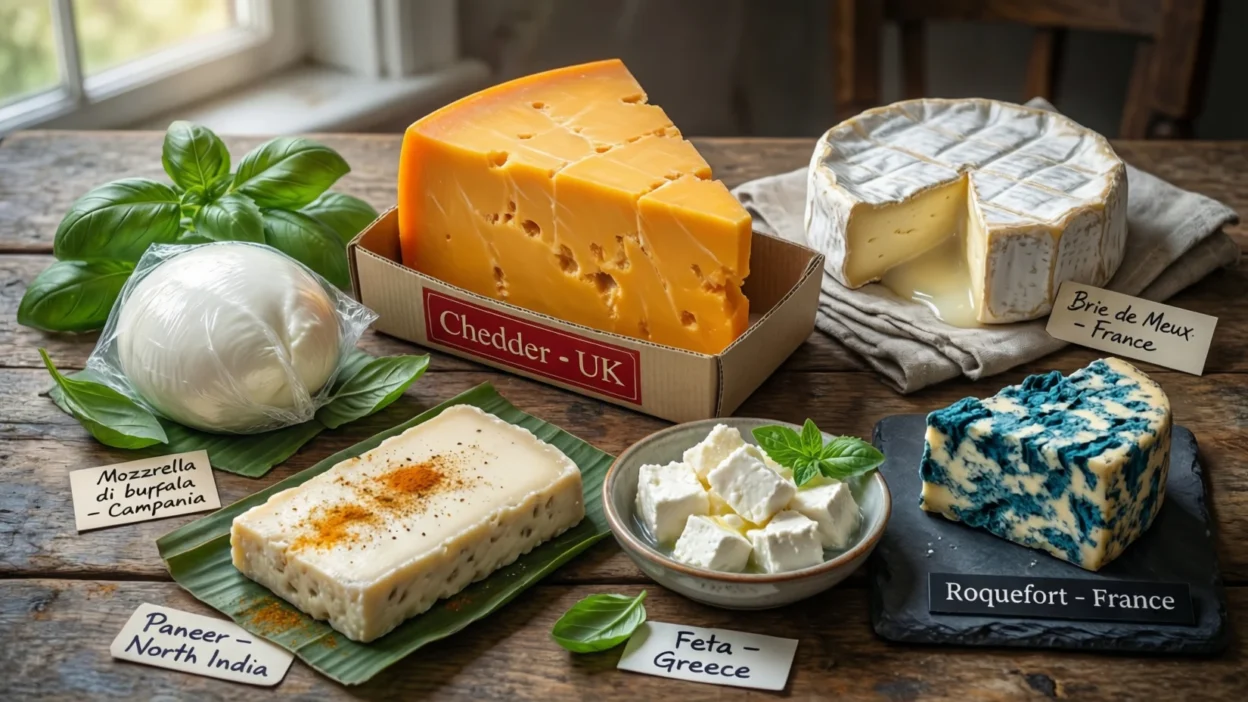
Cheese is one of the most loved foods worldwide. People enjoy it in breakfasts, snacks, main dishes, and traditional recipes. Moreover, cheese appears in many cultures with unique flavors, textures, and preparation styles.
Therefore, learning how to say cheese in different languages helps travelers, food lovers, chefs, students, and language learners communicate more naturally. In addition, food vocabulary improves cultural understanding and daily conversations.
Because cheese connects cuisines across the globe, knowing its name in multiple languages adds practical value. Below, you will find cheese in all languages presented clearly with native phrases and real example sentences for easy understanding.
| Language | Native Phrase | Example Sentence |
|---|---|---|
| English | Cheese | I like cheese on my sandwich. |
| Spanish | Queso | Me gusta el queso. |
| French | Fromage | J’adore le fromage. |
| German | Käse | Ich esse Käse. |
| Italian | Formaggio | Il formaggio è buono. |
| Portuguese | Queijo | Eu comprei queijo. |
| Dutch | Kaas | Ik eet kaas. |
| Swedish | Ost | Jag gillar ost. |
| Norwegian | Ost | Jeg spiser ost. |
| Danish | Ost | Osten er lækker. |
| Finnish | Juusto | Rakastan juustoa. |
| Russian | Сыр | Я ем сыр. |
| Ukrainian | Сир | Я люблю сир. |
| Polish | Ser | Jem ser. |
| Czech | Sýr | Mám rád sýr. |
| Slovak | Syr | Syr chutí dobre. |
| Hungarian | Sajt | Szeretem a sajtot. |
| Romanian | Brânză | Îmi place brânza. |
| Greek | Τυρί | Μου αρέσει το τυρί. |
| Turkish | Peynir | Peynir çok güzel. |
| Arabic | جبن | أحب الجبن. |
| Hebrew | גבינה | אני אוהב גבינה. |
| Persian | پنیر | من پنیر دوست دارم. |
| Urdu | پنیر | مجھے پنیر پسند ہے۔ |
| Hindi | पनीर | मुझे पनीर पसंद है। |
| Bengali | চিজ | আমি চিজ পছন্দ করি। |
| Punjabi | ਪਨੀਰ | ਮੈਨੂੰ ਪਨੀਰ ਪਸੰਦ ਹੈ। |
| Gujarati | પનીર | મને પનીર ગમે છે. |
| Marathi | चीज | मला चीज आवडते. |
| Tamil | சீஸ் | எனக்கு சீஸ் பிடிக்கும். |
| Telugu | చీజ్ | నాకు చీజ్ ఇష్టం. |
| Kannada | ಚೀಸ್ | ನನಗೆ ಚೀಸ್ ಇಷ್ಟ. |
| Malayalam | ചീസ് | എനിക്ക് ചീസ് ഇഷ്ടമാണ്. |
| Nepali | चीज | मलाई चीज मन पर्छ। |
| Sinhala | චීස් | මට චීස් කැමතියි. |
| Chinese | 奶酪 | 我喜欢奶酪。 |
| Japanese | チーズ | チーズが好きです。 |
| Korean | 치즈 | 나는 치즈를 좋아해요. |
| Thai | ชีส | ฉันชอบชีส |
| Vietnamese | Phô mai | Tôi thích phô mai. |
| Indonesian | Keju | Saya suka keju. |
| Malay | Keju | Saya makan keju. |
| Filipino | Keso | Gusto ko ang keso. |
| Swahili | Jibini | Ninapenda jibini. |
| Afrikaans | Kaas | Ek hou van kaas. |
| Zulu | Ushizi | Ngithanda ushizi. |
| Somali | Jiis | Waan jeclahay jiiska. |
| Hausa | Cuku | Ina son cuku. |
| Yoruba | Wàrà | Mo fẹ wàrà. |
| Igbo | Chiiz | A na m eri chiiz. |
| Amharic | አይብ | አይብ እወዳለሁ። |
| Lao | ຊີສ | ຂ້ອຍມັກຊີສ |
| Khmer | ឈីស | ខ្ញុំចូលចិត្តឈីស |
| Mongolian | Бяслаг | Би бяслаг иддэг. |
| Kazakh | Ірімшік | Мен ірімшік жеймін. |
| Uzbek | Pishloq | Men pishloq yeyman. |
| Pashto | پنیر | زه پنیر خوښوم. |
| Kurdish | Penîr | Ez penîr hez dikim. |
| Armenian | Պանիր | Ես սիրում եմ պանիր։ |
| Georgian | ყველი | მე მიყვარს ყველი. |
| Albanian | Djathë | Më pëlqen djathi. |
| Bosnian | Sir | Volim sir. |
| Croatian | Sir | Sir je ukusan. |
| Serbian | Сир | Волим сир. |
| Bulgarian | Сирене | Обичам сирене. |
| Slovenian | Sir | Rad imam sir. |
| Lithuanian | Sūris | Man patinka sūris. |
| Latvian | Siers | Man garšo siers. |
| Estonian | Juust | Mulle meeldib juust. |
| Irish | Cáis | Is maith liom cáis. |
| Welsh | Caws | Dw i’n hoffi caws. |
| Maori | Tīhi | He pai ki ahau te tīhi. |
| Hawaiian | Pāni | Makemake au i ka pāni. |
| Burmese | ဒိန်ခဲ | ဒိန်ခဲကြိုက်ပါတယ်။ |
| Tibetan | ཆུང་མ | ཆུང་མ་དགའ་པོ་ཡོད། |
FAQs
Why is cheese vocabulary useful to learn?
Because food words appear frequently in daily conversations.
Is cheese the same in every culture?
No, each culture has unique types and uses.
Can travelers benefit from this list?
Yes, especially while ordering food.
Is this helpful for language learners?
Absolutely, it shows real-life usage.
Is this article SEO-friendly?
Yes, it matches informational search intent clearly.
Final Thought
Cheese is more than food; it is culture, tradition, and comfort. Therefore, learning how to say cheese in different languages improves communication and cultural awareness.
Moreover, it helps travelers enjoy local cuisine confidently. Additionally, food vocabulary builds stronger global connections. Because language starts with everyday words, simple terms matter most.
In the end, understanding food words brings people closer across borders and cultures.

Nicodemo Thorley is a cultural writer at Lingonast.com, focusing on language and heritage.
He explores how language connects with culture and history.
His articles offer structured and insightful perspectives.