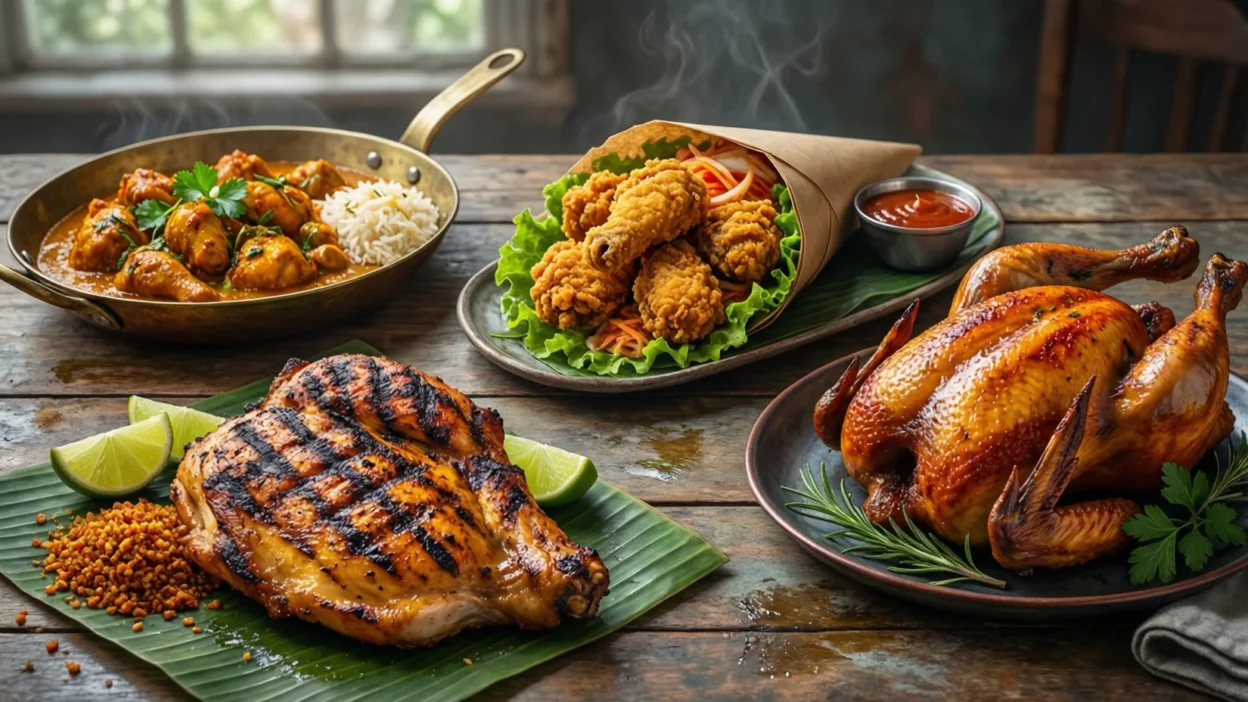
Chicken is one of the most widely eaten foods in the world. Because of this, people mention it daily while cooking, ordering food, shopping, traveling, and sharing recipes.
Moreover, chicken appears in traditional dishes across cultures, which makes the word highly relevant in global conversations. Therefore, learning how to say chicken in different languages helps travelers, food bloggers, chefs, students, and language learners communicate more clearly.
In addition, food vocabulary strengthens cultural understanding and improves real life interactions. As a result, knowing chicken in all languages becomes both practical and valuable.
Below, you will find a carefully organized table showing chicken translations around the world, using correct native phrases and clear example sentences.
| Language | Native Phrase | Example Sentence |
|---|---|---|
| English | Chicken | I cooked chicken for dinner. |
| Spanish | Pollo | Cociné pollo para la cena. |
| French | Poulet | Je mange du poulet. |
| German | Hähnchen | Ich esse Hähnchen. |
| Italian | Pollo | Il pollo è pronto. |
| Portuguese | Frango | O frango está delicioso. |
| Dutch | Kip | Ik kook kip vandaag. |
| Swedish | Kyckling | Jag lagar kyckling. |
| Norwegian | Kylling | Jeg spiser kylling. |
| Danish | Kylling | Kylling smager godt. |
| Finnish | Kana | Kana on valmista. |
| Russian | Курица | Я готовлю курицу. |
| Ukrainian | Курка | Я їм курку. |
| Polish | Kurczak | Gotuję kurczaka. |
| Czech | Kuře | Kuře je hotové. |
| Slovak | Kurča | Varím kurča. |
| Hungarian | Csirke | Csirkét főzök. |
| Romanian | Pui | Gătesc pui. |
| Greek | Κοτόπουλο | Μαγειρεύω κοτόπουλο. |
| Turkish | Tavuk | Tavuk pişiriyorum. |
| Arabic | دجاج | أطبخ دجاجًا. |
| Hebrew | עוף | אני אוכל עוף. |
| Persian | مرغ | مرغ پختم. |
| Urdu | چکن | میں نے چکن پکایا۔ |
| Hindi | चिकन | मैंने चिकन बनाया। |
| Bengali | মুরগি | আমি মুরগি রান্না করেছি। |
| Punjabi | ਚਿਕਨ | ਮੈਂ ਚਿਕਨ ਬਣਾਇਆ। |
| Gujarati | ચિકન | મેં ચિકન બનાવ્યું. |
| Marathi | चिकन | मी चिकन शिजवले. |
| Tamil | கோழி | நான் கோழி சமைத்தேன். |
| Telugu | చికెన్ | నేను చికెన్ వండాను. |
| Kannada | ಕೋಳಿ | ನಾನು ಕೋಳಿ ಬೇಯಿಸಿದೆ. |
| Malayalam | കോഴി | ഞാൻ കോഴി പാകം ചെയ്തു. |
| Nepali | कुखुरा | म कुखुरा पकाउँदैछु। |
| Sinhala | කුකුල් මස් | මම කුකුල් මස් උයනවා. |
| Chinese | 鸡肉 | 我在做鸡肉。 |
| Japanese | 鶏肉 | 鶏肉を料理します。 |
| Korean | 닭고기 | 닭고기를 먹어요. |
| Thai | ไก่ | ฉันทำไก่ |
| Vietnamese | Gà | Tôi nấu gà. |
| Indonesian | Ayam | Saya memasak ayam. |
| Malay | Ayam | Ayam sudah masak. |
| Filipino | Manok | Nagluto ako ng manok. |
| Swahili | Kuku | Ninapika kuku. |
| Afrikaans | Hoender | Ek kook hoender. |
| Zulu | Inkukhu | Ngipheka inkukhu. |
| Somali | Digaag | Waxaan karinayaa digaag. |
| Hausa | Kaza | Ina dafa kaza. |
| Yoruba | Adìẹ | Mo n se adìẹ. |
| Igbo | Ọkụkọ | E siri m ọkụkọ. |
| Amharic | ዶሮ | ዶሮ እበላለሁ። |
| Lao | ໄກ່ | ຂ້ອຍປຸງໄກ່ |
| Khmer | មាន់ | ខ្ញុំចម្អិនមាន់ |
| Mongolian | Тахиа | Би тахиа хийж байна. |
| Kazakh | Тауық | Мен тауық пісірдім. |
| Uzbek | Tovuq | Men tovuq pishirdim. |
| Pashto | چرګ | زه چرګ پخوم. |
| Kurdish | Mirîşk | Ez mirîşk çêdikim. |
| Armenian | Հավ | Ես հավ եմ պատրաստում։ |
| Georgian | ქათამი | ქათამს ვამზადებ. |
| Albanian | Pulë | Po gatuaj pulë. |
| Bosnian | Piletina | Kuham piletinu. |
| Croatian | Piletina | Pripremam piletinu. |
| Serbian | Пилетина | Кувам пилетину. |
| Bulgarian | Пиле | Готвя пиле. |
| Slovenian | Piščanec | Kuham piščanca. |
| Lithuanian | Vištiena | Gaminu vištieną. |
| Latvian | Vista | Es gatavoju vistu. |
| Estonian | Kana | Ma küpsetan kana. |
| Irish | Sicín | Tá sicín á chócaireacht agam. |
| Welsh | Cyw iâr | Rwy’n coginio cyw iâr. |
| Maori | Heihei | Kei te tunu heihei ahau. |
| Hawaiian | Moa | Ke kuke nei au i ka moa. |
| Burmese | ကြက်သား | ကြက်သားချက်နေသည်။ |
| Tibetan | བྱ་ཤ | བྱ་ཤ་བཟོ་བཞིན་ཡོད། |
FAQs
Why is chicken vocabulary important in languages?
Because food words appear frequently in daily conversations worldwide.
Is chicken the same word in all cultures?
No, each language has its own unique term.
Is this useful for travelers?
Yes, especially for ordering food and shopping.
Can students use this list for learning?
Absolutely, it supports practical language learning.
Is this content suitable for SEO?
Yes, it matches informational search intent clearly.
Final Thought
Chicken is a universal food that connects cultures across continents. Therefore, learning how to say chicken in different languages improves daily communication.
Moreover, it helps travelers feel confident while ordering meals. Additionally, it supports cultural curiosity and language growth. Because food brings people together, vocabulary matters.
As a result, simple words create strong connections. In the end, understanding everyday terms builds global awareness. Language starts small, yet it opens big doors.

Mareo Parrin is a multilingual writer at Lingonast.com, specializing in language based content.
He focuses on cultural insights and practical language understanding.
His writing is clear, engaging, and easy to follow.