
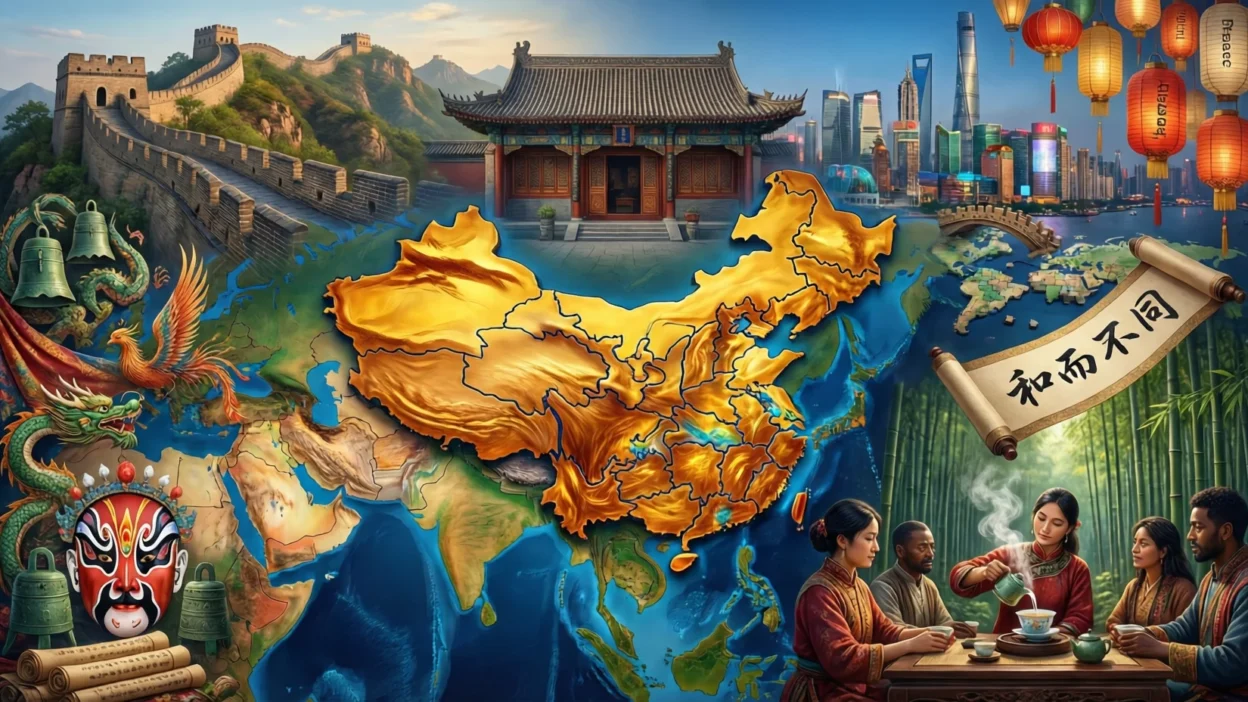
China is one of the most recognized countries in the world. It plays a major role in history, culture, trade, technology, and global politics.
Therefore, learning how to say China in different languages helps travelers, students, writers, and businesses communicate more clearly.
Moreover, each language reflects its own historical contact with China, which influences the native term used. As a result, some words sound similar, while others differ greatly.
Additionally, knowing correct native names improves accuracy and cultural respect. Furthermore, it helps avoid confusion in international writing and translation.
Consequently, this knowledge becomes useful in education, media, and daily conversation. Ultimately, understanding how the world names China shows how languages connect globally.
| Language | Native Phrase | Example Sentence |
|---|---|---|
| English | China | China has a long history. |
| Mandarin Chinese | 中国 | 中国历史悠久。 |
| Cantonese | 中國 | 中國文化豐富。 |
| Spanish | China | China es muy grande. |
| French | Chine | La Chine est ancienne. |
| German | China | China ist mächtig. |
| Italian | Cina | La Cina è famosa. |
| Portuguese | China | A China cresce rápido. |
| Dutch | China | China is groot. |
| Russian | Китай | Китай огромен. |
| Ukrainian | Китай | Китай відомий. |
| Polish | Chiny | Chiny są stare. |
| Czech | Čína | Čína je známá. |
| Slovak | Čína | Čína má históriu. |
| Hungarian | Kína | Kína híres. |
| Romanian | China | China este vastă. |
| Greek | Κίνα | Η Κίνα είναι μεγάλη. |
| Turkish | Çin | Çin çok eski. |
| Arabic | الصين | الصين دولة كبيرة. |
| Hebrew | סין | סין מפורסמת. |
| Persian | چین | چین بزرگ است. |
| Urdu | چین | چین ایک ملک ہے۔ |
| Hindi | चीन | चीन बहुत बड़ा है। |
| Bengali | চীন | চীন বিখ্যাত। |
| Punjabi | ਚੀਨ | ਚੀਨ ਵੱਡਾ ਦੇਸ਼ ਹੈ। |
| Tamil | சீனா | சீனா பிரசித்தம். |
| Telugu | చైనా | చైనా ప్రసిద్ధి. |
| Kannada | ಚೀನಾ | ಚೀನಾ ದೊಡ್ಡದು. |
| Malayalam | ചൈന | ചൈന പ്രശസ്തമാണ്. |
| Marathi | चीन | चीन प्रसिद्ध आहे. |
| Gujarati | ચીન | ચીન મોટું છે. |
| Nepali | चीन | चीन विशाल छ। |
| Sinhala | චීනය | චීනය ප්රසිද්ධයි. |
| Japanese | 中国 | 中国は広い。 |
| Korean | 중국 | 중국은 크다. |
| Thai | จีน | จีนมีประวัติยาวนาน |
| Vietnamese | Trung Quốc | Trung Quốc rất lớn. |
| Indonesian | Tiongkok | Tiongkok terkenal. |
| Malay | China | China negara besar. |
| Filipino | Tsina | Malaki ang Tsina. |
| Swahili | China | China ni kubwa. |
| Afrikaans | China | China is bekend. |
| Somali | Shiinaha | Shiinaha waa weyn. |
| Hausa | Sin | Sin babbar ƙasa ce. |
| Yoruba | Ṣáínà | Ṣáínà tobi. |
| Igbo | China | China buru ibu. |
| Zulu | IShayina | IShayina inkulu. |
| Amharic | ቻይና | ቻይና ታላቅ ናት። |
| Lao | ຈີນ | ຈີນໃຫຍ່ |
| Khmer | ចិន | ចិនធំ |
| Mongolian | Хятад | Хятад том. |
| Kazakh | Қытай | Қытай үлкен. |
| Uzbek | Xitoy | Xitoy mashhur. |
| Tajik | Чин | Чин калон аст. |
| Pashto | چین | چین لوی دی. |
| Kurdish | Çîn | Çîn mezin e. |
| Armenian | Չինաստան | Չինաստանը մեծ է։ |
| Georgian | ჩინეთი | ჩინეთი დიდია. |
| Albanian | Kina | Kina është e madhe. |
| Bosnian | Kina | Kina je velika. |
| Croatian | Kina | Kina je poznata. |
| Serbian | Кина | Кина је велика. |
| Bulgarian | Китай | Китай е голям. |
| Slovenian | Kitajska | Kitajska je velika. |
| Lithuanian | Kinija | Kinija didelė. |
| Latvian | Ķīna | Ķīna ir liela. |
| Estonian | Hiina | Hiina on suur. |
| Finnish | Kiina | Kiina on suuri. |
| Swedish | Kina | Kina är stort. |
| Norwegian | Kina | Kina er kjent. |
| Danish | Kina | Kina er stort. |
| Icelandic | Kína | Kína er stór. |
| Irish | An tSín | Tá an tSín mór. |
| Welsh | Tsieina | Mae Tsieina’n fawr. |
| Basque | Txina | Txina handia da. |
| Catalan | Xina | La Xina és gran. |
| Galician | China | China é enorme. |
| Maltese | Ċina | Iċ-Ċina kbira. |
| Esperanto | Ĉinio | Ĉinio estas granda. |
| Latin | Sina | Sina magna est. |
Why China Has Different Names Worldwide
First, languages adapt foreign country names differently. Therefore, pronunciation and writing vary.
Moreover, history and trade influence naming. Consequently, multiple forms exist globally.
Using the Word China Correctly
In many languages, China refers both to the country and its culture. Meanwhile, some languages change form based on grammar. Therefore, correct usage matters.
Final Thought
In conclusion, learning China in different languages reveals how cultures view one of the world’s oldest civilizations.
Moreover, these names reflect history, language evolution, and global interaction.
Therefore, understanding them improves communication. Additionally, it helps students and writers stay accurate.
As a result, conversations become clearer. Furthermore, cultural respect increases.
Ultimately, one country’s name connects the entire world through language.
FAQs
Is China called the same in all languages?
No, names vary by language and history.
Why do some names sound similar?
Because of shared linguistic roots or borrowing.
Is Zhongguo the official Chinese name?
Yes, it is the native Mandarin name.
Do spelling rules affect the name?
Yes, grammar and scripts change it.
Why learn China in different languages?
It improves global communication and accuracy.

Nick Orsan is a contributor at Lingonast.com, writing about modern language use and communication.
He covers topics related to language trends and everyday expressions.
His work is informative, direct, and reader focused.