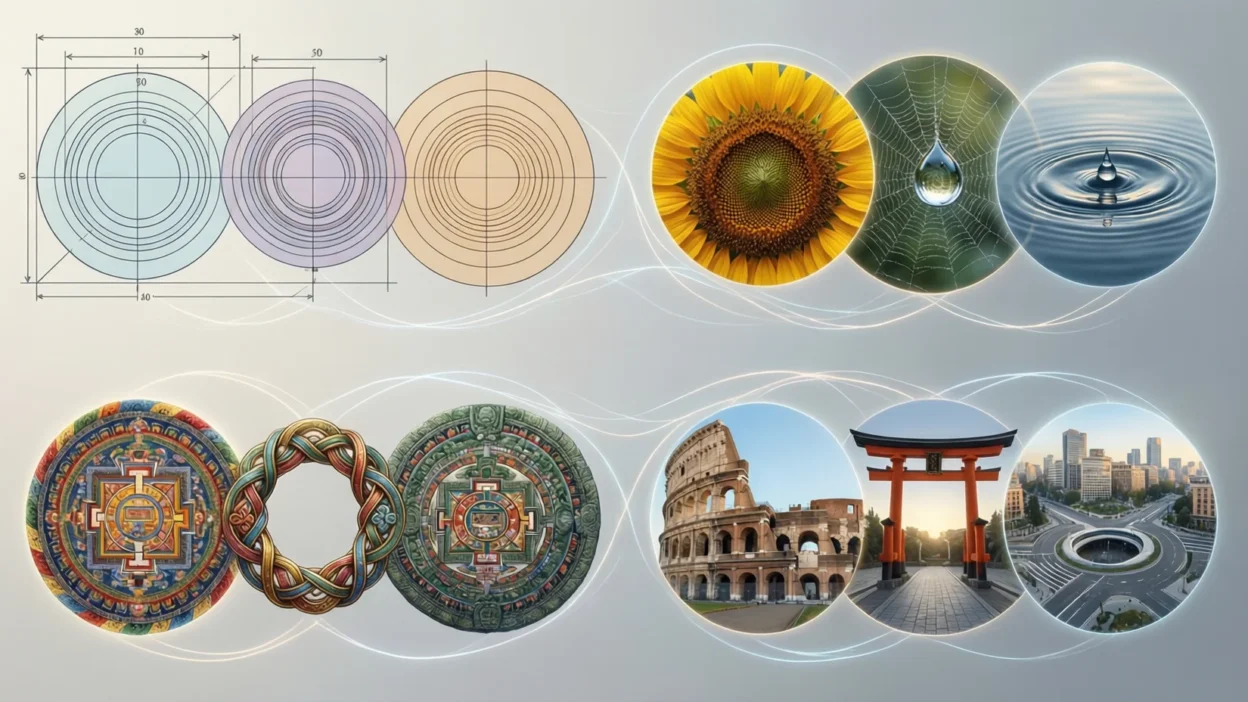
A circle is one of the most universal shapes in the world. It appears in mathematics, design, art, nature, technology, and everyday conversation.
Moreover, people use the word circle to describe objects, movements, groups, symbols, and ideas.
Therefore, learning circle in different languages helps readers understand global texts more clearly.
Additionally, students encounter this word in geometry and science. Meanwhile, artists and designers use it to describe form and balance.
Furthermore, writers and translators often meet the word in both literal and symbolic contexts. As a result, knowing native terms for circle improves accuracy and clarity.
Ultimately, this simple shape connects cultures through shared meaning and visual understanding.
| Language | Native Phrase | Example Sentence |
|---|---|---|
| English | Circle | Draw a circle here. |
| Spanish | Círculo | Dibuja un círculo. |
| French | Cercle | Trace un cercle. |
| German | Kreis | Zeichne einen Kreis. |
| Italian | Cerchio | Disegna un cerchio. |
| Portuguese | Círculo | Faça um círculo. |
| Dutch | Cirkel | Teken een cirkel. |
| Swedish | Cirkel | Rita en cirkel. |
| Norwegian | Sirkel | Tegn en sirkel. |
| Danish | Cirkel | Tegn en cirkel. |
| Finnish | Ympyrä | Piirrä ympyrä. |
| Russian | Круг | Нарисуй круг. |
| Ukrainian | Коло | Намалюй коло. |
| Polish | Koło | Narysuj koło. |
| Czech | Kruh | Nakresli kruh. |
| Slovak | Kruh | Nakresli kruh. |
| Hungarian | Kör | Rajzolj egy kört. |
| Romanian | Cerc | Desenează un cerc. |
| Greek | Κύκλος | Σχεδίασε κύκλο. |
| Turkish | Daire | Bir daire çiz. |
| Arabic | دائرة | ارسم دائرة. |
| Hebrew | מעגל | צייר מעגל. |
| Persian | دایره | یک دایره بکش. |
| Urdu | دائرہ | دائرہ بنائیں۔ |
| Hindi | वृत्त | वृत्त बनाइए। |
| Bengali | বৃত্ত | একটি বৃত্ত আঁকো। |
| Punjabi | ਗੋਲ | ਇੱਕ ਗੋਲ ਬਣਾਓ। |
| Tamil | வட்டம் | வட்டம் வரை. |
| Telugu | వృత్తం | వృత్తం గీయండి. |
| Kannada | ವೃತ್ತ | ವೃತ್ತವನ್ನು ಬಿಡಿ. |
| Malayalam | വൃത്തം | വൃത്തം വരയ്ക്കുക. |
| Marathi | वर्तुळ | वर्तुळ काढा. |
| Gujarati | વર્તુળ | વર્તુળ દોરો. |
| Chinese (Simplified) | 圆形 | 画一个圆形。 |
| Chinese (Traditional) | 圓形 | 畫一個圓形。 |
| Japanese | 円 | 円を描く。 |
| Korean | 원 | 원을 그려요. |
| Thai | วงกลม | วาดวงกลม |
| Vietnamese | Hình tròn | Vẽ hình tròn. |
| Indonesian | Lingkaran | Gambar lingkaran. |
| Malay | Bulatan | Lukis bulatan. |
| Filipino | Bilog | Gumuhit ng bilog. |
| Swahili | Duara | Chora duara. |
| Afrikaans | Sirkel | Teken ’n sirkel. |
| Somali | Wareeg | Sawir wareeg. |
| Hausa | Da’ira | Zana da’ira. |
| Yoruba | Iyika | Fa iyika. |
| Igbo | Okirikiri | Tee okirikiri. |
| Zulu | Indilinga | Dweba indilinga. |
| Amharic | ክብ | ክብ ስራ። |
| Nepali | वृत्त | वृत्त कोर्नुहोस्। |
| Sinhala | වටය | වටය අඳින්න. |
| Lao | ວົງມົນ | ວາດວົງມົນ |
| Khmer | រង្វង់ | គូររង្វង់ |
| Mongolian | Дугуй | Дугуй зур. |
| Kazakh | Шеңбер | Шеңбер сыз. |
| Uzbek | Doira | Doira chiz. |
| Tajik | Доира | Доира каш. |
| Pashto | دايره | دايره رسم کړه. |
| Kurdish | Çember | Çember bikşîne. |
| Armenian | Շրջան | Շրջան նկարիր։ |
| Georgian | წრე | წრე დახატე. |
| Albanian | Rreth | Vizato rreth. |
| Bosnian | Krug | Nacrtaj krug. |
| Croatian | Krug | Nacrtaj krug. |
| Serbian | Круг | Нацртај круг. |
| Bulgarian | Кръг | Начертай кръг. |
| Slovenian | Krog | Nariši krog. |
| Lithuanian | Apskritimas | Nupiešk apskritimą. |
| Latvian | Aplis | Uzzīmē apli. |
| Estonian | Ring | Joonista ring. |
| Icelandic | Hringur | Teiknaðu hring. |
| Irish | Ciorcal | Tarraing ciorcal. |
| Welsh | Cylch | Lluniwch gylch. |
| Basque | Zirkulu | Zirkulu marraztu. |
| Catalan | Cercle | Dibuixa un cercle. |
| Galician | Círculo | Debuxa un círculo. |
| Esperanto | Cirklo | Desegnu cirklon. |
| Latin | Circulus | Circulum trahe. |
Why the Word Circle Is Used Worldwide
First, a circle has no beginning or end. Therefore, many cultures connect it with unity and balance. Moreover, geometry relies heavily on circles.
Additionally, everyday language uses circle to describe groups and motion. Consequently, the word appears across disciplines.
Symbolic Meaning of Circles Across Cultures
In many traditions, circles represent eternity and wholeness. Meanwhile, spiritual practices use circular symbols.
Furthermore, art and architecture rely on circular harmony. As a result, language reflects deeper cultural values. Therefore, learning the word also reveals symbolism.
Final Thought
In conclusion, learning circle in different languages highlights how a simple shape connects the world. Moreover, it appears in science, art, and daily life.
Therefore, understanding native terms improves clarity across subjects. Additionally, it enriches language learning with universal concepts. Consequently, communication becomes more meaningful.
Furthermore, shared shapes create shared understanding. As a result, even basic vocabulary builds cultural bridges. Ultimately, the circle reminds us of global connection.
FAQs
Is circle a common word in all languages?
Yes, every language has a term for this shape.
Is circle used symbolically?
Often, it represents unity and completeness.
Do some languages use the same root word?
Yes, many European languages share similar forms.
Is circle important in education?
Yes, especially in math and science.
Why learn circle in different languages?
It supports global learning and communication.

Nicodemo Thorley is a cultural writer at Lingonast.com, focusing on language and heritage.
He explores how language connects with culture and history.
His articles offer structured and insightful perspectives.