
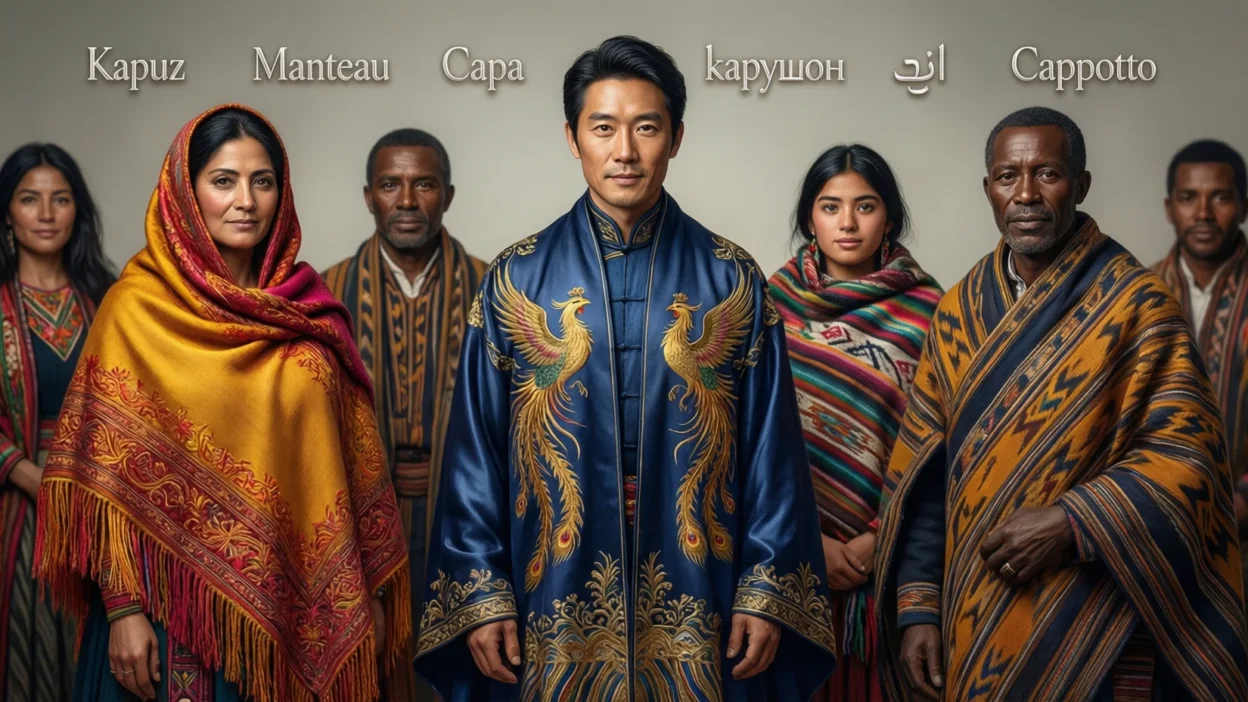
A cloak is a classic and meaningful word used in many cultures. It usually describes a loose outer garment worn over clothes for warmth, protection, or style.
However, a cloak is not just clothing. In stories, history, and traditions, cloaks often represent mystery, power, safety, or even invisibility.
Because of this, the word appears in many languages with rich cultural meaning.
Moreover, learning how to say cloak in different languages is useful for readers, travelers, students, and language learners.
It helps you understand books, movies, history, and fashion across cultures. In addition, this knowledge improves vocabulary in a very simple and practical way.
Therefore, this article is written using easy words, smooth flow, and clear examples so everyone can enjoy and understand it.
How to Say Cloak in Different Languages
| Language | Native Word | Example Sentence |
|---|---|---|
| English | Cloak | He wore a dark cloak. |
| Spanish | Capa | Lleva una capa negra. |
| French | Cape | Il porte une cape. |
| German | Umhang | Er trägt einen Umhang. |
| Italian | Mantello | Indossa un mantello. |
| Portuguese | Capa | Ele usa uma capa. |
| Dutch | Mantel | Hij draagt een mantel. |
| Russian | Плащ | Он носит плащ. |
| Ukrainian | Плащ | Він носить плащ. |
| Polish | Płaszcz | On ma płaszcz. |
| Czech | Plášť | Má plášť. |
| Slovak | Plášť | Nosí plášť. |
| Hungarian | Köpeny | Köpenyt visel. |
| Romanian | Mantia | Poartă o mantie. |
| Bulgarian | Плащ | Той носи плащ. |
| Greek | Μανδύας | Φορά μανδύα. |
| Turkish | Pelerin | Pelerin giyiyor. |
| Arabic | عباءة | يرتدي عباءة. |
| Hebrew | גלימה | הוא לובש גלימה. |
| Persian | شنل | شنل پوشیده است. |
| Urdu | چغہ | وہ چغہ پہنے ہے۔ |
| Hindi | चोगा | वह चोगा पहने है। |
| Bengali | চাদর | সে চাদর পরেছে। |
| Punjabi | ਚੋਗਾ | ਉਸ ਨੇ ਚੋਗਾ ਪਾਇਆ। |
| Marathi | झगा | तो झगा घालतो. |
| Gujarati | ચોગો | તે ચોગો પહેરે છે. |
| Tamil | மேலங்கி | அவன் மேலங்கி அணிந்தான். |
| Telugu | కేప్ | అతను కేప్ వేసుకున్నాడు. |
| Kannada | ಮೇಲಂಗಿ | ಅವನು ಮೇಲಂಗಿ ಧರಿಸಿದ್ದಾನೆ. |
| Malayalam | അങ്കി | അവൻ അങ്കി ധരിച്ചു. |
| Sinhala | සළුව | ඔහු සළුව පැළඳයි. |
| Nepali | ओढनी | उसले ओढनी लगायो। |
| Japanese | マント | マントを着ています。 |
| Chinese | 斗篷 | 他穿着斗篷。 |
| Korean | 망토 | 망토를 입었어요. |
| Vietnamese | Áo choàng | Anh ấy mặc áo choàng. |
| Thai | ผ้าคลุม | เขาใส่ผ้าคลุม |
| Indonesian | Jubah | Dia memakai jubah. |
| Malay | Jubah | Dia memakai jubah. |
| Filipino | Balabal | Suot niya ang balabal. |
| Swahili | Joho | Anavaa joho. |
| Zulu | Ingubo | Ugqoke ingubo. |
| Afrikaans | Mantel | Hy dra ’n mantel. |
| Norwegian | Kappe | Han bruker kappe. |
| Swedish | Kappa | Han bär en kappa. |
| Danish | Kappe | Han har kappe på. |
| Finnish | Viitta | Hän käyttää viittaa. |
| Estonian | Keep | Ta kannab keepi. |
| Latvian | Apmetnis | Viņš valkā apmetni. |
| Lithuanian | Apsiaustas | Jis dėvi apsiaustą. |
| Icelandic | Skikkja | Hann klæðist skikkju. |
| Irish | Clóca | Caitheann sé clóca. |
| Welsh | Mantell | Mae’n gwisgo mantell. |
| Basque | Soingainekoa | Soingainekoa darama. |
| Catalan | Capa | Porta una capa. |
| Galician | Capa | Leva unha capa. |
| Serbian | Плашт | Он носи плашт. |
| Croatian | Plašt | On nosi plašt. |
| Slovenian | Plašč | Nosi plašč. |
How does it help language learners?
Firstly, it improves reading and storytelling understanding. Moreover, it helps with historical and cultural texts. Additionally, it builds strong vocabulary. Therefore, learning this word makes communication richer and clearer.
Frequently Asked Questions
What is a cloak in simple words?
A cloak is a loose outer garment worn over clothes.
Is a cloak different from a coat?
Yes, a cloak is usually open and flowing, unlike a fitted coat.
Is the word cloak used today?
Yes, especially in fashion, stories, and fantasy.
Do all cultures have cloaks?
Many cultures have similar garments with different names.
Why is cloak common in stories?
Because it often represents mystery, protection, or power.
Final Thought
In the end, learning how to say cloak in different languages shows how one simple garment connects history, fashion, and storytelling worldwide.
Although the words change, the idea remains the same.
Therefore, by learning these terms, you gain cultural knowledge, better vocabulary, and a deeper appreciation of global traditions.

Mareo Parrin is a multilingual writer at Lingonast.com, specializing in language based content.
He focuses on cultural insights and practical language understanding.
His writing is clear, engaging, and easy to follow.