
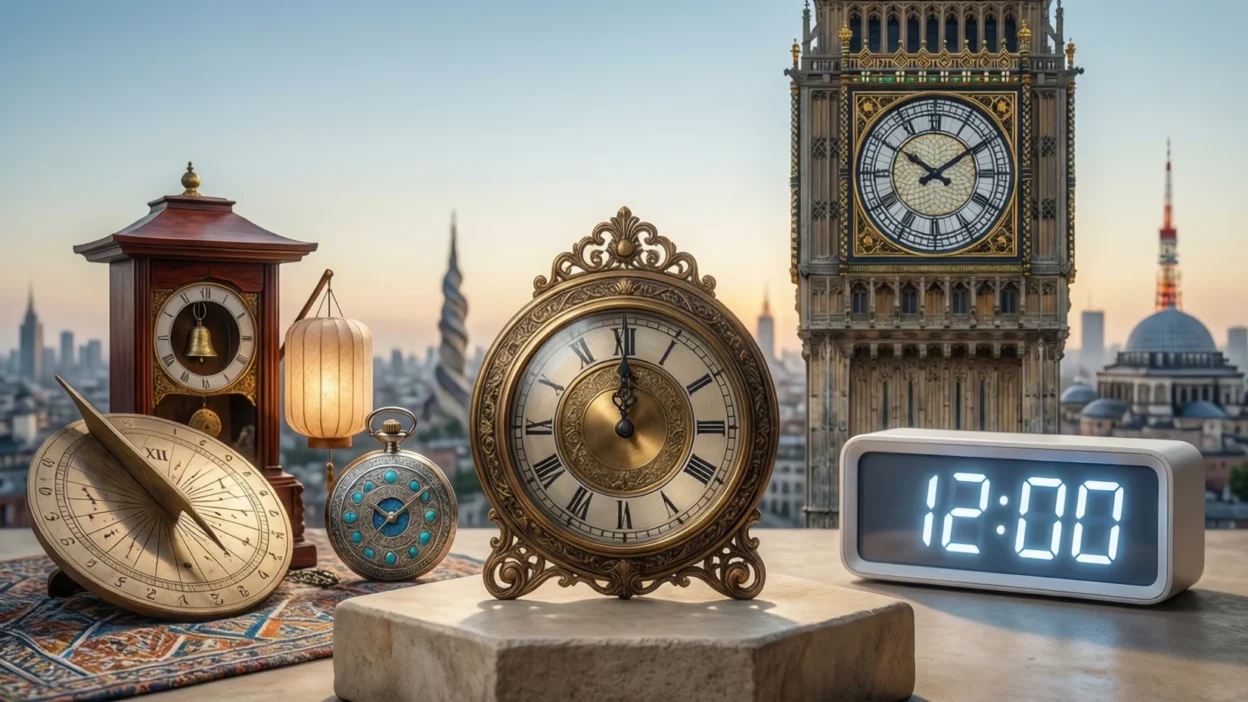
The word clock is one of the most universal terms in human life. Every culture depends on time to organize daily routines, work schedules, education, travel, and social life.
Because of this, learning how to say clock in different languages becomes extremely useful for global communication.
It supports writers who create international content. It also benefits travelers, educators, and businesses that operate across borders.
Moreover, different cultures describe clocks in unique ways. Some languages use one word for both a clock and a watch.
Others distinguish between wall clocks, digital clocks, and traditional timekeeping devices. In many societies, clocks symbolize discipline, responsibility, history, and progress. Therefore, simple translation is not always enough.
Understanding native usage improves clarity and accuracy. As a result, communication feels more natural and culturally respectful worldwide.
| Language | Native Phrase | Example Sentence |
|---|---|---|
| English | Clock | The clock shows the correct time. |
| Spanish | Reloj | El reloj está en la pared. |
| French | Horloge | L’horloge fonctionne bien. |
| German | Uhr | Die Uhr ist sehr alt. |
| Italian | Orologio | L’orologio segna l’ora. |
| Portuguese | Relógio | O relógio parou de funcionar. |
| Dutch | Klok | De klok tikt luid. |
| Swedish | Klocka | Klockan är exakt. |
| Norwegian | Klokke | Klokken ringer tidlig. |
| Danish | Ur | Uret viser tiden korrekt. |
| Finnish | Kello | Kello käy hitaasti. |
| Russian | Часы | Часы висят на стене. |
| Ukrainian | Годинник | Годинник працює добре. |
| Polish | Zegar | Zegar tyka głośno. |
| Czech | Hodiny | Hodiny jsou nové. |
| Slovak | Hodiny | Hodiny idú presne. |
| Hungarian | Óra | Az óra pontos. |
| Romanian | Ceas | Ceasul este stricat. |
| Greek | Ρολόι | Το ρολόι δείχνει την ώρα. |
| Turkish | Saat | Saat duvarda asılı. |
| Arabic | ساعة | الساعة تعمل جيدًا. |
| Hebrew | שעון | השעון מתקתק. |
| Persian | ساعت | ساعت درست کار میکند. |
| Urdu | گھڑی | گھڑی وقت بتاتی ہے۔ |
| Hindi | घड़ी | घड़ी दीवार पर है। |
| Bengali | ঘড়ি | ঘড়িটি চলছে। |
| Punjabi | ਘੜੀ | ਘੜੀ ਸਹੀ ਹੈ। |
| Tamil | கடிகாரம் | கடிகாரம் வேலை செய்கிறது. |
| Telugu | గడియారం | గడియారం బాగుంది. |
| Kannada | ಘಡಿಯಾರ | ಘಡಿಯಾರ ಸಮಯ ತೋರಿಸುತ್ತದೆ. |
| Malayalam | ഘടികാരം | ഘടികാരം പ്രവർത്തിക്കുന്നു. |
| Marathi | घड्याळ | घड्याळ चालू आहे. |
| Gujarati | ઘડિયાળ | ઘડિયાળ બરાબર છે. |
| Chinese (Simplified) | 时钟 | 时钟在墙上。 |
| Chinese (Traditional) | 時鐘 | 時鐘很準。 |
| Japanese | 時計 | 時計が正確です。 |
| Korean | 시계 | 시계가 고장 났다. |
| Thai | นาฬิกา | นาฬิกาแขวนอยู่ |
| Vietnamese | Đồng hồ | Đồng hồ chạy đúng giờ. |
| Indonesian | Jam | Jam dinding rusak. |
| Malay | Jam | Jam menunjukkan masa. |
| Filipino | Orasan | Ang orasan ay bago. |
| Swahili | Saa | Saa iko ukutani. |
| Afrikaans | Horlosie | Die horlosie werk goed. |
| Somali | Saacad | Saacaddu socotaa. |
| Hausa | Agogo | Agogo yana bango. |
| Yoruba | Aago | Aago wa lórí ogiri. |
| Igbo | Elekere | Elekere na-arụ ọrụ. |
| Zulu | Iwashi | Iwashi lisebenza. |
| Amharic | ሰዓት | ሰዓቱ ይሰራል። |
| Nepali | घडी | घडी ठीक छ। |
| Sinhala | ඔරලෝසුව | ඔරලෝසුව හොඳයි. |
| Lao | ໂມງ | ໂມງຢູ່ຝາ |
| Khmer | នាឡិកា | នាឡិកាដំណើរការ |
| Mongolian | Цаг | Цаг зөв явж байна. |
| Kazakh | Сағат | Сағат дұрыс жұмыс істейді. |
| Uzbek | Soat | Soat devorda osilgan. |
| Tajik | Соат | Соат кор мекунад. |
| Pashto | ساعت | ساعت کار کوي. |
| Kurdish | Saet | Saet li dîwarê ye. |
| Armenian | Ժամացույց | Ժամացույցը ճիշտ է։ |
| Georgian | საათი | საათი მუშაობს. |
| Albanian | Orë | Ora është e saktë. |
| Bosnian | Sat | Sat pokazuje vrijeme. |
| Croatian | Sat | Sat radi dobro. |
| Serbian | Сат | Сат је стар. |
| Bulgarian | Часовник | Часовникът е точен. |
| Slovenian | Ura | Ura je nova. |
| Lithuanian | Laikrodis | Laikrodis tikslus. |
| Latvian | Pulkstenis | Pulkstenis darbojas. |
| Estonian | Kell | Kell on seinal. |
| Icelandic | Klukka | Klukkan er rétt. |
| Irish | Clog | Tá an clog nua. |
| Welsh | Cloc | Mae’r cloc yn swnio. |
| Basque | Erloju | Erlojua zaharra da. |
| Catalan | Rellotge | El rellotge funciona. |
| Galician | Reloxo | O reloxo marca a hora. |
| Esperanto | Horloĝo | La horloĝo funkcias. |
| Latin | Horologium | Horologium vetus est. |
Final Thought
Learning clock in different languages goes far beyond memorizing vocabulary. It helps you understand how different cultures perceive time and structure daily life.
In some societies, time represents discipline and precision. In others, it reflects balance and tradition. Therefore, knowing the correct native term improves communication accuracy.
Writers benefit when producing multilingual content. Educators explain time concepts more clearly. Travelers feel confident when speaking locally. Language learners sound more natural and fluent.
Even small words like clock carry cultural weight. Expanding your global vocabulary builds stronger connections.
Understanding time related language helps you communicate with clarity, respect, and confidence worldwide.
FAQs
What does clock mean in most languages?
It usually refers to a device that shows or measures time.
Do some languages use one word for clock and watch?
Yes, many languages use the same term for both.
Is the word clock borrowed in some languages?
Yes, several languages adapt it from European roots.
Why is learning clock translations important?
It improves clarity in time-related communication.
Does clock have cultural significance?
Yes, many cultures associate it with routine, discipline, and history.

Nick Orsan is a contributor at Lingonast.com, writing about modern language use and communication.
He covers topics related to language trends and everyday expressions.
His work is informative, direct, and reader focused.