
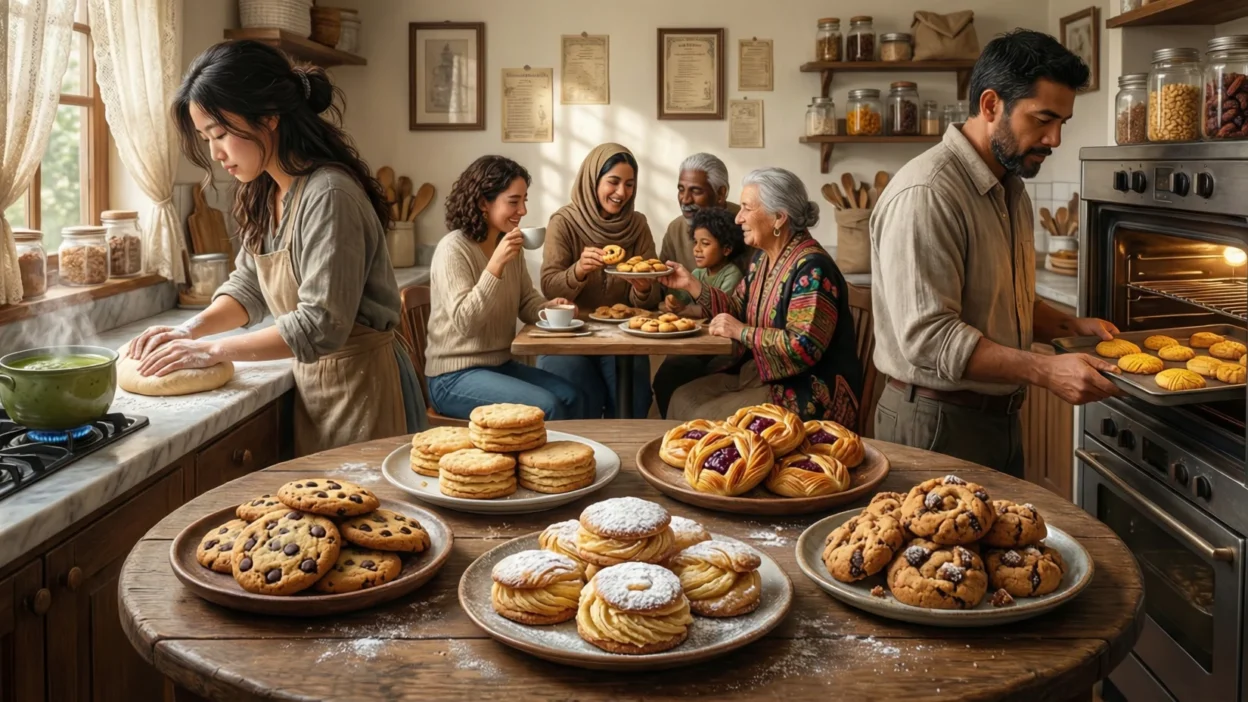
Cookies are loved across the world. People enjoy them at home, in cafés, during celebrations, and as everyday snacks.
Because cookies appear in baking recipes, food blogs, restaurants, and family traditions, learning how to say cookies in different languages becomes very useful.
Moreover, cookies hold emotional value, often connected with comfort, childhood, and sharing.
Therefore, knowing their native names helps travelers, writers, bakers, and food businesses communicate better.
In addition, different cultures prepare cookies in unique styles, which influences language and meaning. As a result, translations reflect both taste and tradition. Ultimately, cookies are more than food; they are a global symbol of sweetness and togetherness.
| Language | Native Phrase | Example Sentence |
|---|---|---|
| English | Cookies | Cookies are freshly baked. |
| Spanish | Galletas | Las galletas están ricas. |
| French | Biscuits | Les biscuits sont délicieux. |
| German | Kekse | Die Kekse sind frisch. |
| Italian | Biscotti | I biscotti sono pronti. |
| Portuguese | Biscoitos | Os biscoitos são doces. |
| Dutch | Koekjes | De koekjes zijn warm. |
| Swedish | Kakor | Kakor är goda. |
| Norwegian | Kjeks | Kjeksene er sprø. |
| Danish | Småkager | Småkagerne er søde. |
| Finnish | Keksit | Keksit ovat hyviä. |
| Icelandic | Smákökur | Smákökur eru ferskar. |
| Russian | Печенье | Печенье вкусное. |
| Ukrainian | Печиво | Печиво свіже. |
| Polish | Ciastka | Ciastka są słodkie. |
| Czech | Sušenky | Sušenky jsou chutné. |
| Slovak | Sušienky | Sušienky sú hotové. |
| Hungarian | Sütemények | Sütemények finomak. |
| Romanian | Biscuiți | Biscuiții sunt proaspeți. |
| Greek | Μπισκότα | Τα μπισκότα είναι γλυκά. |
| Turkish | Kurabiye | Kurabiyeler taze. |
| Arabic | بسكويت | البسكويت لذيذ. |
| Hebrew | עוגיות | העוגיות טעימות. |
| Persian | بیسکویت | بیسکویت تازه است. |
| Urdu | بسکٹ | بسکٹ مزیدار ہیں۔ |
| Hindi | कुकीज़ | कुकीज़ स्वादिष्ट हैं। |
| Bengali | বিস্কুট | বিস্কুট মিষ্টি। |
| Punjabi | ਬਿਸਕੁਟ | ਬਿਸਕੁਟ ਤਾਜ਼ੇ ਹਨ। |
| Tamil | பிஸ்கட் | பிஸ்கட் இனிப்பு. |
| Telugu | బిస్కెట్లు | బిస్కెట్లు రుచిగా ఉన్నాయి. |
| Kannada | ಬಿಸ್ಕಟ್ | ಬಿಸ್ಕಟ್ ಸಿಹಿ. |
| Malayalam | ബിസ്കറ്റ് | ബിസ്കറ്റ് പുതിയത്. |
| Marathi | बिस्किटे | बिस्किटे चविष्ट आहेत. |
| Gujarati | બિસ્કિટ | બિસ્કિટ મીઠા છે. |
| Nepali | बिस्कुट | बिस्कुट मिठो छ। |
| Sinhala | බිස්කට් | බිස්කට් රසයි. |
| Chinese (Simplified) | 饼干 | 饼干很好吃。 |
| Chinese (Traditional) | 餅乾 | 餅乾很香。 |
| Japanese | クッキー | クッキーが甘い。 |
| Korean | 쿠키 | 쿠키가 맛있다. |
| Thai | คุกกี้ | คุกกี้อร่อย |
| Vietnamese | Bánh quy | Bánh quy rất ngon. |
| Indonesian | Kue kering | Kue kering manis. |
| Malay | Biskut | Biskut sedap. |
| Filipino | Biskwit | Masarap ang biskwit. |
| Swahili | Biskuti | Biskuti ni tamu. |
| Afrikaans | Koekies | Koekies is vars. |
| Somali | Buskud | Buskud macaan. |
| Hausa | Biskit | Biskit yana dadi. |
| Yoruba | Biskiti | Biskiti dun. |
| Igbo | Biskit | Biskit dị ụtọ. |
| Zulu | Amabhisikidi | Amabhisikidi amnandi. |
| Amharic | ቢስኩት | ቢስኩት ጣፋጭ ነው። |
| Lao | ຄຸກກີ້ | ຄຸກກີ້ຫວານ |
| Khmer | ខូគី | ខូគីឆ្ងាញ់។ |
| Mongolian | Жигнэмэг | Жигнэмэг амттай. |
| Kazakh | Печенье | Печенье тәтті. |
| Uzbek | Pechenye | Pechenye shirin. |
| Tajik | Печенье | Печенье болаззат аст. |
| Pashto | بسکټ | بسکټ خوندور دی. |
| Kurdish | Biskûît | Biskûît xweş e. |
| Armenian | Թխվածքաբլիթներ | Թխվածքաբլիթները համեղ են։ |
| Georgian | ფუნთუშები | ფუნთუშები გემრიელია. |
| Albanian | Biskota | Biskotat janë të ëmbla. |
| Bosnian | Keksi | Keksi su ukusni. |
| Croatian | Keksi | Keksi su svježi. |
| Serbian | Кекси | Кекси су слатки. |
| Bulgarian | Бисквити | Бисквитите са вкусни. |
| Slovenian | Piškoti | Piškoti so dobri. |
| Lithuanian | Sausainiai | Sausainiai skanūs. |
| Latvian | Cepumi | Cepumi ir saldi. |
| Estonian | Küpsised | Küpsised on head. |
| Irish | Fianáin | Tá fianáin blasta. |
| Welsh | Cwcis | Mae cwcis yn flasus. |
| Basque | Gailetak | Gailetak gozoak dira. |
| Catalan | Galetes | Les galetes són dolces. |
| Galician | Galletas | As galletas son boas. |
| Maltese | Gallettini | Il-gallettini ħelwin. |
| Esperanto | Kuketoj | Kuketoj bongustaj. |
| Latin | Crustula | Crustula dulcia sunt. |
Why Cookies Are Loved Worldwide
Cookies appear in celebrations, snacks, and daily meals. Therefore, they remain universal. Moreover, each culture adds its own flavor. As a result, language reflects baking traditions.
Cookies and Cultural Traditions
Cookies often symbolize hospitality and comfort. Consequently, they appear in holidays and family gatherings. Therefore, learning their names deepens cultural understanding.
FAQs
Are cookies and biscuits the same?
Yes, meaning depends on regional usage.
Do all languages use borrowed words?
No, some have unique native terms.
Are cookies common worldwide?
Yes, almost every culture enjoys them.
Is cookie vocabulary useful for travelers?
Absolutely, especially for food ordering.
Why learn cookies in different languages?
It improves food-related communication.
Final Thought
Cookies bring people together through sweetness and tradition. Therefore, learning cookies in different languages enriches vocabulary and cultural knowledge.
Moreover, it helps travelers, writers, and food lovers connect globally. In addition, it highlights how simple foods influence language.
As a result, words become more meaningful. Ultimately, cookies represent comfort, sharing, and joy across cultures.

Nick Orsan is a contributor at Lingonast.com, writing about modern language use and communication.
He covers topics related to language trends and everyday expressions.
His work is informative, direct, and reader focused.