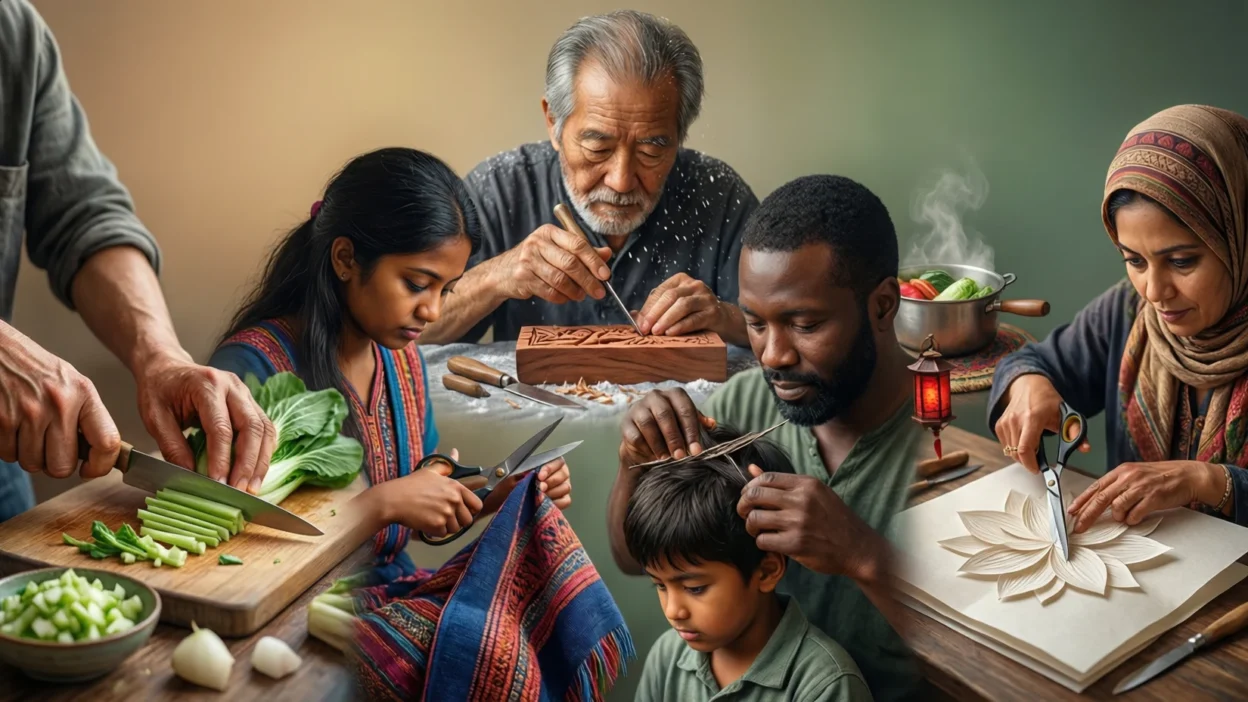
The word cut is simple, yet it carries many meanings across daily life. People use it when talking about cooking, injuries, haircuts, editing, design, construction, and even emotions.
Therefore, learning how to say cut in different languages helps you communicate clearly in practical situations. Moreover, every culture uses its own native term depending on context and action.
As a result, translations can vary in form and usage. Additionally, knowing the correct word improves accuracy in writing and speaking.
Furthermore, travelers, students, translators, and professionals benefit from this knowledge.
Consequently, misunderstandings reduce significantly. Ultimately, one small word becomes globally useful.
| Language | Native Phrase | Example Sentence |
|---|---|---|
| English | Cut | He made a cut. |
| Spanish | Cortar | Voy a cortar. |
| French | Couper | Il coupe le pain. |
| German | Schneiden | Er schneidet Papier. |
| Italian | Tagliare | Taglia la mela. |
| Portuguese | Cortar | Ela vai cortar. |
| Dutch | Snijden | Hij snijdt brood. |
| Swedish | Skära | Hon skär frukt. |
| Norwegian | Kutte | Han kutter tauet. |
| Danish | Skære | Hun skærer ost. |
| Finnish | Leikata | Hän leikkaa kankaan. |
| Icelandic | Skera | Hann sker fisk. |
| Russian | Резать | Он режет хлеб. |
| Ukrainian | Різати | Вона ріже папір. |
| Polish | Ciąć | On tnie drewno. |
| Czech | Řezat | Řeže maso. |
| Slovak | Rezať | Reže chlieb. |
| Hungarian | Vágni | Ő vágja húst. |
| Romanian | Tăia | Taie legume. |
| Greek | Κόβω | Κόβει χαρτί. |
| Turkish | Kesmek | O ipi keser. |
| Arabic | يقطع | يقطع الورق. |
| Hebrew | לחתוך | הוא חותך. |
| Persian | بریدن | او میبرد. |
| Urdu | کاٹنا | وہ کاٹتا ہے۔ |
| Hindi | काटना | वह काटता है। |
| Bengali | কাটা | সে কাটে। |
| Punjabi | ਕੱਟਣਾ | ਉਹ ਕੱਟਦਾ ਹੈ। |
| Tamil | வெட்ட | அவன் வெட்டுகிறான். |
| Telugu | కట్ చేయడం | అతను కట్ చేస్తాడు. |
| Kannada | ಕತ್ತರಿಸು | ಅವನು ಕತ್ತರಿಸುತ್ತಾನೆ. |
| Malayalam | മുറിക്കുക | അവൾ മുറിക്കുന്നു. |
| Marathi | कापणे | तो कापतो. |
| Gujarati | કાપવું | તે કાપે છે. |
| Nepali | काट्नु | उसले काट्छ। |
| Sinhala | කපන්න | ඔහු කපයි. |
| Chinese (Simplified) | 切 | 他切菜。 |
| Chinese (Traditional) | 切 | 他切水果。 |
| Japanese | 切る | 彼は切る。 |
| Korean | 자르다 | 그는 자른다. |
| Thai | ตัด | เขาตัดกระดาษ |
| Vietnamese | Cắt | Anh ấy cắt. |
| Indonesian | Memotong | Dia memotong. |
| Malay | Memotong | Dia memotong kain. |
| Filipino | Putulin | Pinuputol niya. |
| Swahili | Kukata | Anakukata. |
| Afrikaans | Sny | Hy sny vleis. |
| Somali | Jarid | Wuu jarayaa. |
| Hausa | Yanka | Yana yanka. |
| Yoruba | Gé | Ó gé igi. |
| Igbo | Bee | Ọ na-ebe. |
| Zulu | Sika | Uyasika. |
| Amharic | መቁረጥ | እሱ ይቈርጣል። |
| Lao | ຕັດ | ລາວຕັດ |
| Khmer | កាត់ | គាត់កាត់ |
| Mongolian | Зүсэх | Тэр зүснэ. |
| Kazakh | Кесу | Ол кеседі. |
| Uzbek | Kesmoq | U kesadi. |
| Tajik | Буридан | Ӯ мебурад. |
| Pashto | پرې کول | هغه پرې کوي. |
| Kurdish | Birrîn | Ew birrîne. |
| Armenian | Կտրել | Նա կտրում է։ |
| Georgian | დაჭრა | ის ჭრის. |
| Albanian | Pres | Ai pret. |
| Bosnian | Rezati | On reže. |
| Croatian | Rezati | Ona reže. |
| Serbian | Резати | Он реже. |
| Bulgarian | Режа | Той реже. |
| Slovenian | Rezati | Reže papir. |
| Lithuanian | Pjauti | Jis pjauna. |
| Latvian | Griezt | Viņš griež. |
| Estonian | Lõikama | Ta lõikab. |
| Irish | Gearr | Gearrann sé. |
| Welsh | Torri | Mae’n torri. |
| Basque | Moztu | Hark mozten du. |
| Catalan | Tallar | Talla pa. |
| Galician | Cortar | El corta. |
| Maltese | Jaħdem | Hu jaqta’. |
| Esperanto | Tranĉi | Li tranĉas. |
| Latin | Secare | Is secat. |
| Finnish (Formal) | Viiltää | Hän viiltää. |
| Japanese (Formal) | 切断する | 切断する。 |
Why the Word Cut Is Used Everywhere
First, cutting is a basic human action. Therefore, every language has a term for it.
Moreover, tools and daily tasks require it constantly. As a result, the word becomes essential.
Different Meanings of Cut Across Cultures
In some languages, cut applies to food preparation. Meanwhile, others use it for editing or injury. Consequently, context always matters.
Final Thought
In conclusion, learning cut in different languages strengthens practical communication.
Moreover, the word appears in many real life situations. Therefore, knowing native terms avoids confusion.
Additionally, it improves translation accuracy. As a result, learners gain confidence.
Furthermore, cultural understanding grows naturally. Ultimately, one action based word connects people globally through language and daily life.
FAQs
Does cut have the same meaning everywhere?
No, context changes the meaning.
Is cut used figuratively in other languages?
Yes, many languages use it symbolically.
Can one word cover all types of cut?
Sometimes, but many languages vary.
Is cut a verb in all languages?
Mostly, though forms differ.
Why learn cut in different languages?
It helps in travel, work, and daily use.

Nick Orsan is a contributor at Lingonast.com, writing about modern language use and communication.
He covers topics related to language trends and everyday expressions.
His work is informative, direct, and reader focused.