
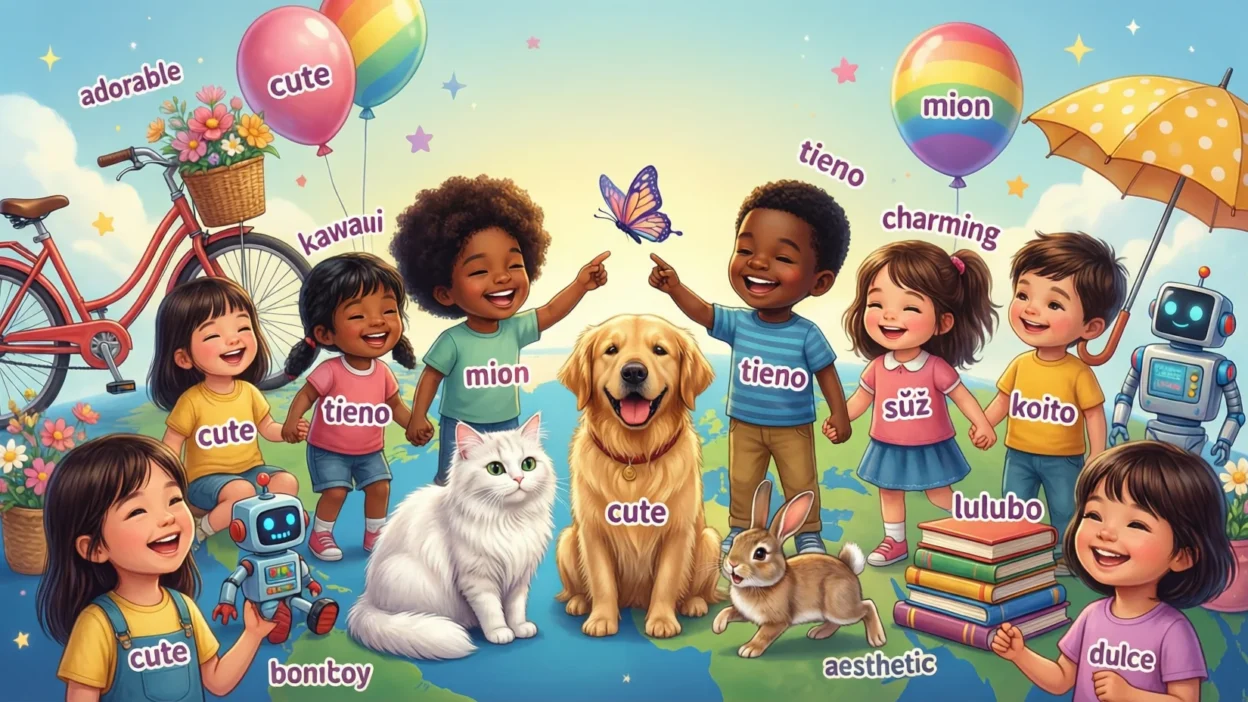
Learning how to say cute in different languages is extremely helpful because it allows you to express affection, admiration, and positivity more naturally.
Therefore this guide is designed for readers who want simple, real, and usable expressions that work in daily conversation, travel, social media captions, and language learning while also matching search intent such as cute in all languages, how to say cute in different languages, cute translations, and cute around the world in a clean and practical format.
| Language | Native Phrase | Native Example Sentence |
|---|---|---|
| English | Cute | That puppy is so cute. |
| Spanish | Lindo | Ese gato es muy lindo. |
| French | Mignon | Ce bébé est mignon. |
| German | Süß | Dieses Kleid ist süß. |
| Italian | Carino | Quel bambino è carino. |
| Portuguese | Fofo | Esse cachorro é fofo. |
| Dutch | Schattig | Dat konijn is schattig. |
| Swedish | Söt | Den här hunden är söt. |
| Norwegian | Søt | Hun ser veldig søt ut. |
| Danish | Sød | Den baby er sød. |
| Finnish | Suloinen | Tämä koira on suloinen. |
| Russian | Милый | Этот кот очень милый. |
| Ukrainian | Милий | Це дуже милий пес. |
| Polish | Uroczy | Ten piesek jest uroczy. |
| Czech | Roztomilý | To dítě je roztomilé. |
| Slovak | Rozkošný | Ten mačiatko je rozkošné. |
| Hungarian | Aranyos | Ez a baba aranyos. |
| Romanian | Drăguț | Câinele este drăguț. |
| Bulgarian | Сладък | Това коте е сладко. |
| Greek | Γλυκός | Αυτό το παιδί είναι γλυκό. |
| Turkish | Sevimli | Bu kedi çok sevimli. |
| Arabic | لطيف | هذا الطفل لطيف. |
| Hebrew | חמוד | הכלב הזה חמוד. |
| Persian | بامزه | این بچه بامزه است. |
| Hindi | प्यारा | यह बच्चा प्यारा है। |
| Urdu | پیارا | یہ بلی بہت پیاری ہے۔ |
| Bengali | মিষ্টি | এই বাচ্চাটা মিষ্টি। |
| Punjabi | ਪਿਆਰਾ | ਇਹ ਬੱਚਾ ਬਹੁਤ ਪਿਆਰਾ ਹੈ। |
| Tamil | முத்தான | இந்த குழந்தை முத்தானது. |
| Telugu | అందమైన | ఈ పిల్ల చాలా అందమైనది. |
| Marathi | गोड | हे मूल खूप गोड आहे. |
| Gujarati | ગમતું | આ બાળક ગમતું છે. |
| Kannada | ಮುದ್ದಾದ | ಈ ಮಗು ಮುದ್ದಾದದ್ದು. |
| Malayalam | ക്യൂട്ട് | ഈ പൂച്ച വളരെ ക്യൂട്ടാണ്. |
| Sinhala | හුරුබුහුටි | මේ බබා හුරුබුහුටි. |
| Thai | น่ารัก | เด็กคนนี้น่ารักมาก |
| Vietnamese | Dễ thương | Em bé này rất dễ thương. |
| Indonesian | Lucu | Anak ini sangat lucu. |
| Malay | Comel | Bayi itu sangat comel. |
| Filipino | Cute | Ang aso ay cute. |
| Chinese (Mandarin) | 可爱 | 这个孩子很可爱。 |
| Japanese | かわいい | この猫はかわいい。 |
| Korean | 귀여운 | 이 강아지는 귀여워요. |
| Mongolian | Хөөрхөн | Энэ муур хөөрхөн. |
| Nepali | प्यारा | यो बच्चा प्यारा छ। |
| Tibetan | སྡུག་པོ | ཕྲུ་གུ་འདི་སྡུག་པོ་རེད། |
| Swahili | Nzuri | Mtoto huyu ni mzuri. |
| Zulu | Mhle | Le ngane mhle kakhulu. |
| Xhosa | Mhle | Umntwana mhle kakhulu. |
| Afrikaans | Ou oulik | Hierdie hond is ou oulik. |
| Hausa | Kyakkyawa | Wannan jariri kyakkyawa ne. |
| Yoruba | Dídùn | Ọmọ yìí dára gan. |
| Igbo | Mara mma | Nwa a mara mma nke ukwuu. |
| Amharic | ቆንጆ | ይህ ሕፃን ቆንጆ ነው። |
| Somali | Qurux badan | Ilmahan waa qurux badan. |
| Maori | Ataahua | He ataahua tēnei pēpi. |
| Hawaiian | Nani | He nani kēia pēpē. |
| Samoan | Aulelei | E aulelei lenei pepe. |
| Tongan | Fakaʻofaʻofa | ʻOku fakaʻofaʻofa ʻa e pēpē. |
| Fijian | Totoka | E totoka na gone. |
| Icelandic | Sætur | Þessi köttur er sætur. |
| Irish | Álainn | Tá an leanbh seo álainn. |
| Scottish Gaelic | Grinn | Tha an leanabh seo grinn. |
| Welsh | Tlwyth | Mae’r babi yn tlwyth. |
| Basque | Polita | Ume hau oso polita da. |
| Catalan | Maco | Aquest nen és molt maco. |
| Galician | Lindo | Este neno é moi lindo. |
| Esperanto | Ĉarma | Tiu hundo estas ĉarma. |
| Latvian | Jauks | Šis kaķis ir jauks. |
| Lithuanian | Mielas | Šis vaikas labai mielas. |
| Estonian | Armas | See laps on armas. |
| Slovenian | Ljubek | Ta otrok je ljubek. |
| Croatian | Sladak | Ovaj pas je sladak. |
| Serbian | Сладак | Ова беба је слатка. |
| Albanian | I lezetshëm | Ky fëmijë është i lezetshëm. |
| Armenian | Սիրուն | Այս երեխան շատ սիրուն է։ |
| Georgian | საყვარელი | ეს ბავშვი ძალიან საყვარელია. |
| Kazakh | Сүйкімді | Бұл бала сүйкімді. |
| Uzbek | Yoqimli | Bu bola juda yoqimli. |
| Pashto | ښکلی | دا ماشوم ډېر ښکلی دی. |
| Kurdish | Şîrîn | Ev zarok pir şîrîn e. |
Final Thought
In conclusion, learning how to say cute in different languages is a simple yet powerful skill because it helps you express warmth, affection, and appreciation more naturally.
Therefore by practicing these real native examples regularly you can communicate more confidently, sound more authentic, and connect emotionally with people across cultures worldwide.
FAQs
What does cute mean in different languages?
Generally, cute means charming, lovable, or attractive, although the emotional tone may vary by culture.
Is the word cute used for people and animals everywhere?
Yes, in most languages cute is commonly used for people, animals, and even objects.
Which language is most famous for the word cute?
Japanese かわいい (kawaii) is globally popular and widely recognized.
Can cute have a romantic meaning?
Sometimes yes, especially when used softly or playfully in personal conversations.
How can I remember cute in many languages easily?
Using short example sentences daily makes memorization faster and more natural.

Mareo Parrin is a multilingual writer at Lingonast.com, specializing in language based content.
He focuses on cultural insights and practical language understanding.
His writing is clear, engaging, and easy to follow.