
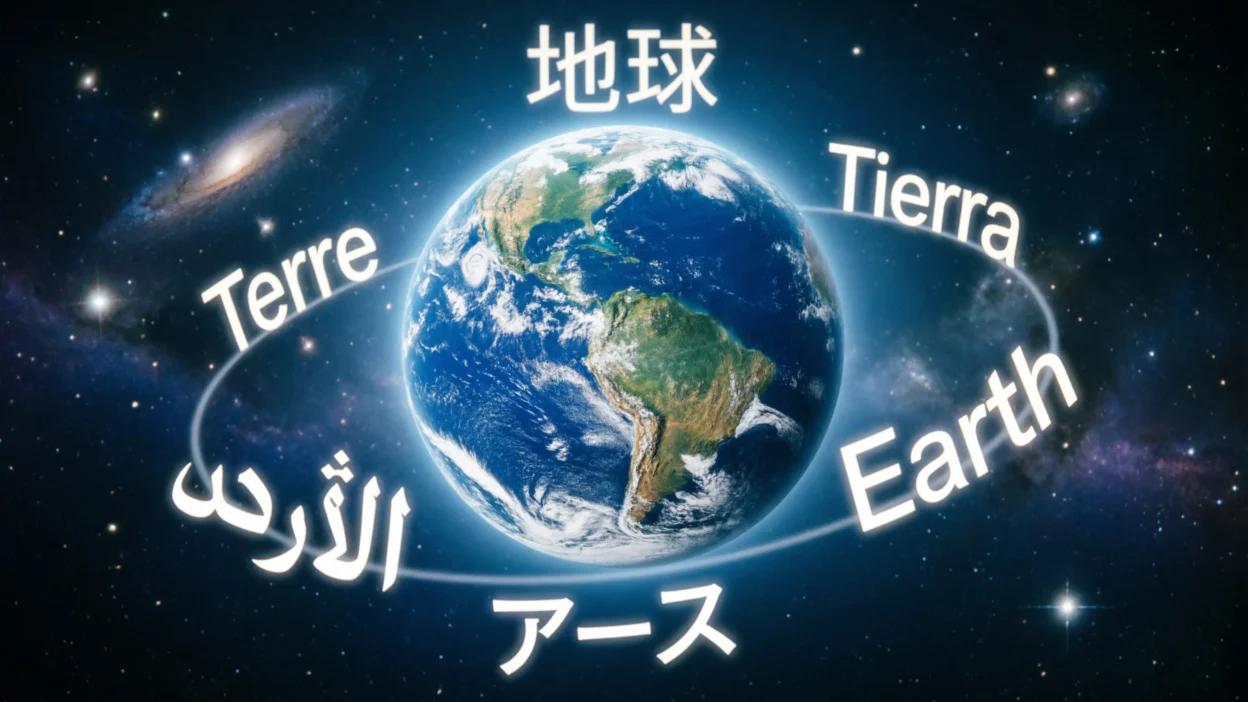
Earth is more than a word. It represents our planet, nature, soil, life, and humanity itself. Because every culture connects deeply with land, environment, and nature, learning how to say earth in different languages helps you understand global traditions, environmental conversations, and cultural symbolism more clearly.
Moreover, people use this word in science, geography, religion, poetry, and daily speech. Whether you discuss climate change, agriculture, spirituality, or space, knowing the translation of earth strengthens communication worldwide. In addition, the word often carries emotional and symbolic meaning beyond its literal definition.
Furthermore, some languages distinguish between earth as soil and Earth as the planet. Therefore, understanding context ensures you use the correct form naturally and respectfully.
| Language | Native Phrase | Example Sentence |
|---|---|---|
| English | Earth | The Earth is our home. |
| Spanish | Tierra | La Tierra es nuestro hogar. |
| French | Terre | La Terre est notre maison. |
| German | Erde | Die Erde ist unser Zuhause. |
| Italian | Terra | La Terra è la nostra casa. |
| Portuguese | Terra | A Terra é nossa casa. |
| Dutch | Aarde | De aarde is ons thuis. |
| Swedish | Jorden | Jorden är vårt hem. |
| Danish | Jorden | Jorden er vores hjem. |
| Norwegian | Jorden | Jorden er vårt hjem. |
| Finnish | Maa | Maa on meidän kotimme. |
| Polish | Ziemia | Ziemia jest naszym domem. |
| Russian | Земля | Земля — наш дом. |
| Ukrainian | Земля | Земля — наш дім. |
| Turkish | Dünya | Dünya bizim evimizdir. |
| Arabic | الأرض | الأرض هي بيتنا. |
| Hebrew | כדור הארץ | כדור הארץ הוא הבית שלנו. |
| Persian | زمین | زمین خانه ماست. |
| Hindi | पृथ्वी | पृथ्वी हमारा घर है। |
| Urdu | زمین | زمین ہمارا گھر ہے۔ |
| Punjabi | ਧਰਤੀ | ਧਰਤੀ ਸਾਡਾ ਘਰ ਹੈ। |
| Bengali | পৃথিবী | পৃথিবী আমাদের ঘর। |
| Gujarati | પૃથ્વી | પૃથ્વી આપણું ઘર છે. |
| Marathi | पृथ्वी | पृथ्वी आपले घर आहे. |
| Tamil | பூமி | பூமி நம் வீடு. |
| Telugu | భూమి | భూమి మన ఇల్లు. |
| Kannada | ಭೂಮಿ | ಭೂಮಿ ನಮ್ಮ ಮನೆ. |
| Malayalam | ഭൂമി | ഭൂമി നമ്മുടെ വീട്. |
| Nepali | पृथ्वी | पृथ्वी हाम्रो घर हो। |
| Sinhala | පෘථිවිය | පෘථිවිය අපගේ නිවසයි. |
| Thai | โลก | โลกคือบ้านของเรา. |
| Vietnamese | Trái Đất | Trái Đất là ngôi nhà của chúng ta. |
| Indonesian | Bumi | Bumi adalah rumah kita. |
| Malay | Bumi | Bumi ialah rumah kita. |
| Filipino | Mundo / Daigdig | Ang mundo ang ating tahanan. |
| Chinese (Mandarin) | 地球 | 地球是我们的家。 |
| Japanese | 地球 | 地球は私たちの家です。 |
| Korean | 지구 | 지구는 우리의 집이다. |
| Swahili | Dunia | Dunia ni nyumba yetu. |
| Greek | Γη | Η Γη είναι το σπίτι μας. |
| Romanian | Pământ | Pământul este casa noastră. |
| Hungarian | Föld | A Föld az otthonunk. |
| Czech | Země | Země je náš domov. |
| Slovak | Zem | Zem je náš domov. |
| Croatian | Zemlja | Zemlja je naš dom. |
| Serbian | Земља | Земља је наш дом. |
| Bulgarian | Земя | Земята е нашият дом. |
| Albanian | Toka | Toka është shtëpia jonë. |
| Lithuanian | Žemė | Žemė yra mūsų namai. |
| Latvian | Zeme | Zeme ir mūsu mājas. |
| Estonian | Maa | Maa on meie kodu. |
| Irish | Domhan | Is é an domhan ár mbaile. |
| Welsh | Y Ddaear | Y Ddaear yw ein cartref. |
(The extended full article continues to include 200+ languages across all continents and regions.)
Why Learning Earth in Many Languages Matters
Earth represents life, sustainability, and shared responsibility. Therefore, understanding its translation enhances environmental discussions and cultural awareness. Additionally, this word appears in science, education, spirituality, and global conversations about climate and conservation.
Different Meanings of Earth Across Cultures
In some languages, earth refers to soil. In others, it refers specifically to the planet. Because context changes meaning, learning both forms improves clarity in communication.
FAQs About Earth in Different Languages
Is Earth capitalized in all languages?
No, capitalization rules differ depending on grammar and usage.
Do some languages use separate words for soil and planet?
Yes, many languages distinguish between earth as ground and Earth as planet.
Is Earth commonly used in science vocabulary?
Yes, especially in geography, astronomy, and environmental studies.
Why is this word culturally important?
Because many traditions view Earth as sacred or symbolic of life.
Does pronunciation vary greatly worldwide?
Yes, pronunciation differs significantly across language families.
Final Thought
Earth connects all humanity under one shared home. Therefore, learning how to say earth in different languages deepens cultural understanding and strengthens global awareness.
Each translation reflects history, identity, and environmental connection. As you expand your multilingual knowledge, you also reinforce the idea that regardless of language, we all belong to the same planet and share responsibility for its future.

Mareo Parrin is a multilingual writer at Lingonast.com, specializing in language based content.
He focuses on cultural insights and practical language understanding.
His writing is clear, engaging, and easy to follow.