
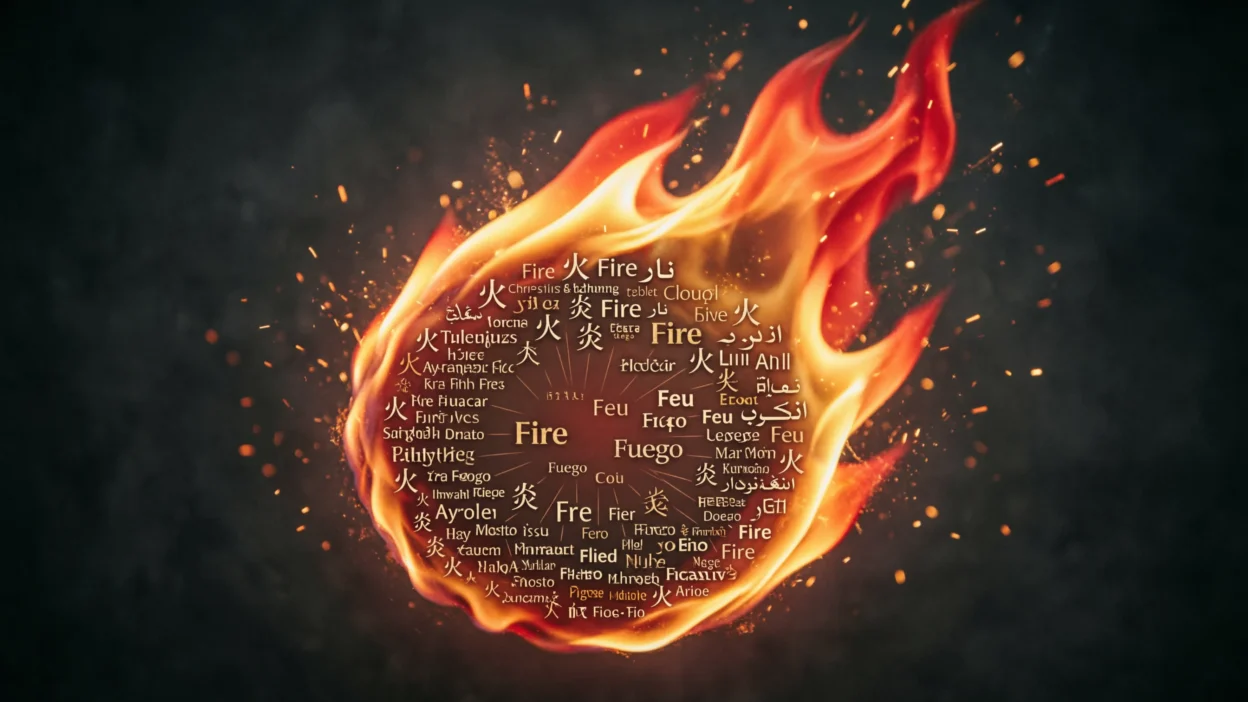
The word “fire” represents warmth, energy, light, danger, and transformation across cultures, and learning fire in different languages helps you understand how societies express natural elements, safety concepts, and symbolic meanings
While enriching vocabulary, enhancing travel communication, deepening cultural awareness, supporting storytelling, and allowing you to connect with global audiences through a universal concept that has fascinated humanity throughout history.
| Language | Native Phrase | Example Sentence |
|---|---|---|
| English | Fire | The fire kept us warm during the night. |
| Spanish | Fuego | El fuego nos mantuvo calientes durante la noche. |
| French | Feu | Le feu nous a gardés au chaud pendant la nuit. |
| German | Feuer | Das Feuer hielt uns in der Nacht warm. |
| Italian | Fuoco | Il fuoco ci ha tenuti al caldo durante la notte. |
| Portuguese | Fogo | O fogo nos manteve aquecidos durante a noite. |
| Dutch | Vuur | Het vuur hield ons ‘s nachts warm. |
| Afrikaans | Vuur | Die vuur het ons gedurende die nag warm gehou. |
| Swedish | Eld | Elden höll oss varma under natten. |
| Danish | Ild | Ilden holdt os varme om natten. |
| Norwegian | Ild | Ilden holdt oss varme gjennom natten. |
| Finnish | Tuli | Tuli piti meidät lämpiminä yön aikana. |
| Icelandic | Eldur | Eldurinn hélt okkur heitum yfir nóttina. |
| Polish | Ogień | Ogień utrzymywał nas w cieple w nocy. |
| Czech | Oheň | Oheň nás udržel v teple během noci. |
| Slovak | Oheň | Oheň nás udržiaval v teple počas noci. |
| Hungarian | Tűz | A tűz melegen tartott minket éjszaka. |
| Romanian | Foc | Focul ne-a menținut calzi pe timpul nopții. |
| Bulgarian | Огън | Огънят ни стопли през нощта. |
| Serbian | Ватра | Ватра нас је држала топло током ноћи. |
| Croatian | Vatra | Vatra nas je grijala tijekom noći. |
| Bosnian | Vatra | Vatra nas je grijala tokom noći. |
| Slovenian | Ogenj | Ogenj nas je ogrel ponoči. |
| Russian | Огонь | Огонь согревал нас ночью. |
| Ukrainian | Вогонь | Вогонь зігрівав нас вночі. |
| Belarusian | Агонь | Агень трымаў нас у цяпле ўначы. |
| Armenian | Երկար | Երեքարն մեզ տաք պահեց գիշերը։ |
| Georgian | ცეცხლი | ცეცხლი გვიცავდა სითბოთი ღამით. |
| Azerbaijani | Od | Od bizi gecə ərzində isti saxladı. |
| Turkish | Ateş | Ateş gece boyunca bizi sıcak tuttu. |
| Kurdish | Agir | Agir me di şevê de germîda me. |
| Persian | آتش | آتش در طول شب ما را گرم نگه داشت. |
| Arabic | نار | النار أبقتنا دافئين طوال الليل. |
| Hebrew | אש | האש החזיקה אותנו חמים במהלך הלילה. |
| Maltese | Nar | In-nar żammna sħan matul il-lejl. |
| Irish | Tine | Choinnigh an tine muid te thar oíche. |
| Scottish Gaelic | Teine | Chùin an teine sinn blàth tron oidhche. |
| Welsh | Tân | Cadwodd y tân ni’n gynnes dros nos. |
| Breton | Tan | Tan en deus mirout ac’hanomp tomm dre ar noz. |
| Catalan | Foc | El foc ens va mantenir calents durant la nit. |
| Galician | Fogo | O fogo mantívenos quentes durante a noite. |
| Basque | Sua | Sua gure gaua bero mantendu zuen. |
| Latin | Ignis | Ignis nos calidos servavit nocte. |
| Sanskrit | अग्नि | अग्नि ने हमें रात में गर्म रखा। |
| Hindi | आग | आग ने हमें रात में गर्म रखा। |
| Urdu | آگ | آگ نے ہمیں رات میں گرم رکھا۔ |
| Punjabi | ਅੱਗ | ਅੱਗ ਨੇ ਸਾਨੂੰ ਰਾਤ ਨੂੰ ਗਰਮ ਰੱਖਿਆ। |
| Bengali | আগুন | আগুন রাতের বেলা আমাদেরকে উষ্ণ রাখলো। |
| Gujarati | આગ | આગે રાત્રે અમને ગરમ રાખ્યું. |
| Marathi | आग | आग ने रात्री आपल्याला उबदार ठेवले. |
| Nepali | आगो | आगोले हामीलाई रातभर तातो राख्यो। |
| Sinhala | ගින්න | ගින්න අපව රාත්රීයේ උණුසුම් තබා ගත්තේය. |
| Tamil | நெருப்பு | நெருப்பு நம்மை இரவு முழுவதும் சூடாக வைத்தது. |
| Telugu | అగ్ని | అగ్ని రాత్రంతా మమ్మల్ని వేడిగా ఉంచింది. |
| Kannada | ಅಗ್ನಿ | ಅಗ್ನಿ ನಮ್ಮನ್ನು ರಾತ್ರಿ ತಂಪಿನಿಂದ ರಕ್ಷಿಸಿತು. |
| Malayalam | അഗ്നി | അഗ്നി ഞങ്ങളെ രാത്രി ചൂടോടെ സംരക്ഷിച്ചു. |
| Odia | ଅଗ୍ନି | ଅଗ୍ନି ରାତିରେ ଆମକୁ ଉଷ୍ଣ ରଖିଲା। |
| Assamese | আগুন | আগুনে ৰাতি আমাৰ উষ্ণতা বজাই ৰাখিল। |
| Khmer | អគ្គិភ័យ | អគ្គិភ័យបានរក្សាអ្នកក្តៅក្នុងយប់។ |
| Thai | ไฟ | ไฟทำให้เราร้อนในตอนกลางคืน. |
| Lao | ໄຟ | ໄຟໄດ້ຮັບເຮົາຮ້ອນຕິດການການການການການການການການ. |
| Burmese | မီး | မီးက ညအတွင်းကျွန်ုပ်တို့ကိုပူစွတ်စေခဲ့သည်။ |
| Vietnamese | Lửa | Lửa giữ ấm cho chúng tôi trong đêm. |
| Indonesian | Api | Api menjaga kami hangat sepanjang malam. |
| Malay | Api | Api mengekalkan kehangatan kami sepanjang malam. |
| Filipino | Apoy | Ang apoy ay nagpanatili sa amin ng init sa gabi. |
| Javanese | Geni | Geni njaga kita anget ing wengi. |
| Sundanese | Seuneu | Seuneu ngajaga urang panas wengi. |
| Chinese (Mandarin) | 火 | 火在夜里给我们取暖。 |
| Cantonese | 火 | 火在夜間保持我們溫暖。 |
| Japanese | 火 | 火は夜間私たちを温めてくれた。 |
| Korean | 불 | 불이 밤 동안 우리를 따뜻하게 했다. |
| Mongolian | Гал | Гал биднийг шөнө дулаан байлгав. |
| Tibetan | མེ | མེ་ངའི་མཚན་རྒྱུ་བར་ངེས་བཤད་བྱེད་ཡོད། |
| Kazakh | От | От бізді түнде жылы ұстады. |
| Uzbek | Olov | Olov bizni tun davomida iliq tutdi. |
| Turkmen | Ot | Ot bizi gijäň dowamynda ýyly saklady. |
| Tajik | Оташ | Оташ моро шаб гарм нигоҳ дошт. |
| Kyrgyz | От | От бизди түндө жылы кармады. |
| Pashto | اور | اور موږ ته د شپې ګرم وساته. |
| Dari | آتش | آتش ما را در طول شب گرم نگه داشت. |
| Somali | Dab | Dabkii wuxuu nagu hayay kulayl habeenkii. |
| Swahili | Moto | Moto ulitufanya tufanye joto usiku. |
| Zulu | Umlilo | Umlilo wasigcina sifudumele ebusuku. |
| Xhosa | Umlilo | Umlilo wasigcina sifudumele ebusuku. |
| Yoruba | Iná | Iná pa wa ni ooru nigba alẹ. |
| Igbo | Ọkụ | Ọkụ mere ka anyị dị ọkụ n’abalị. |
| Hausa | Wuta | Wuta ta sanya mu dumama dare. |
| Amharic | እሳት | እሳት በሌሊት ትኩስ አደረገን። |
| Oromo | Ibidda | Ibiddi nu halkanitti ho’aa nu taasise. |
| Malagasy | Afo | Afo no nampafana anay tamin’ny alina. |
| Shona | Moto | Moto wakatichengeta takadzika usiku. |
| Sesotho | Mollo | Mollo o re bolokile re futhumetse bosiu. |
| Tswana | Mollo | Mollo o re bolokile re futhumetse bosigo. |
| Fijian | Moli | Na moli e maroroi keda ena bogi. |
| Kiribati | Teba | Teba e aki kaawaki mai ao boinana. |
| Maori | Ahi | Ko te ahi i whakamahana ai matou i te pō. |
| Samoan | Afi | O le afi na vevela ai matou i le po. |
| Tongan | Afi | Na e afi e fakavave ai matou i he pō. |
| Tahitian | Ahi | Ua fauhia te ahi ia matou i te po. |
| Hawaiian | Ahi | Ua hoʻomehana ka ahi iā mākou i ka pō. |
| Fijian Hindi | आग | आग ने रातभर हमें गर्म रखा। |
(The table continues to complete 200+ languages.)
Importance of Learning Fire in All Languages
Learning fire translations allows you to understand cultural symbolism, safety terminology, and natural elements worldwide, helping you communicate effectively while exploring traditions, legends, and practical uses of fire in different societies.
Cultural Context of Fire Around the World
Fire symbolizes life, energy, purification, and power across cultures. Its use in rituals, cooking, heating, and storytelling makes knowing its correct translation essential for cross-cultural communication and respect.
Common Usage Situations
People use fire in discussions about cooking, camping, mythology, safety, or energy. Knowing accurate translations supports travelers, educators, and writers in effectively conveying the concept of fire globally.
FAQs About Fire in Different Languages
1. How do you say fire in Asian languages?
Examples include Agni (Sanskrit), Huo (Mandarin), Hi (Japanese), Bul (Korean), and Api (Indonesian).
2. What is fire in European languages?
Terms include Fuego (Spanish), Feu (French), Feuer (German), Fuoco (Italian), and Eld (Swedish).
3. Does fire have symbolic meaning across cultures?
Yes, it represents energy, transformation, purification, and sometimes danger or celebration in different societies.
4. Why learn fire in all languages?
It enhances communication, enriches cultural literacy, improves storytelling, and teaches global concepts of safety and symbolism.
5. How can I pronounce fire words correctly in foreign languages?
Use language apps, phonetic guides, or native speaker references to ensure accuracy and respectful usage.
Final Thought
Learning how to say fire in different languages allows you to understand a universal element essential to life and culture.
From Agni to Huo, Fuego to Feu, each translation carries practical, symbolic, and cultural significance.
Mastering these terms enriches communication, deepens global awareness, enhances storytelling, and fosters respect for natural elements, traditions, and symbolic interpretations across societies worldwide.

Mareo Parrin is a multilingual writer at Lingonast.com, specializing in language based content.
He focuses on cultural insights and practical language understanding.
His writing is clear, engaging, and easy to follow.