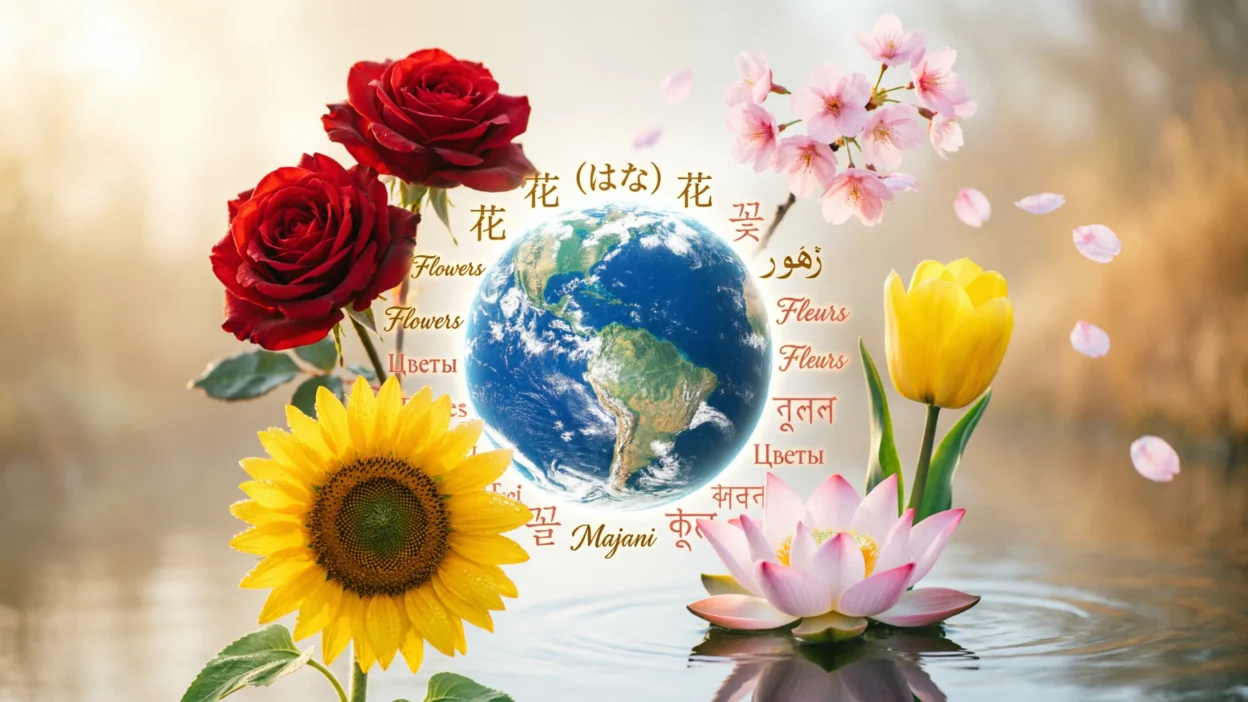
Flowers symbolize beauty, love, celebration, sympathy, and renewal across cultures worldwide. Because every culture values flowers in rituals, festivals, and daily life, learning how to say flowers in different languages helps you communicate emotion more beautifully and respectfully.
Moreover, whether you travel, write poetry, send greeting cards, or build multilingual content, knowing flower-related vocabulary strengthens cultural understanding. In addition, these translations enrich conversations, deepen connections, and expand global awareness naturally and meaningfully.
Furthermore, flowers appear in weddings, funerals, religious ceremonies, and seasonal celebrations. Therefore, mastering this simple yet powerful word across languages enhances both emotional expression and linguistic growth.
| Language | Native Phrase | Example Sentence |
|---|---|---|
| English | Flowers | She gave me beautiful flowers. |
| Spanish | Flores | Ella me dio flores hermosas. |
| French | Fleurs | Elle m’a donné de belles fleurs. |
| German | Blumen | Sie hat mir schöne Blumen gegeben. |
| Italian | Fiori | Mi ha regalato dei bellissimi fiori. |
| Portuguese | Flores | Ela me deu flores lindas. |
| Dutch | Bloemen | Zij gaf mij mooie bloemen. |
| Swedish | Blommor | Hon gav mig vackra blommor. |
| Danish | Blomster | Hun gav mig smukke blomster. |
| Norwegian | Blomster | Hun ga meg vakre blomster. |
| Finnish | Kukat | Hän antoi minulle kauniita kukkia. |
| Polish | Kwiaty | Dała mi piękne kwiaty. |
| Russian | Цветы | Она подарила мне красивые цветы. |
| Ukrainian | Квіти | Вона подарувала мені гарні квіти. |
| Turkish | Çiçekler | Bana güzel çiçekler verdi. |
| Arabic | زهور | أعطتني زهورًا جميلة. |
| Hindi | फूल | उसने मुझे सुंदर फूल दिए। |
| Urdu | پھول | اس نے مجھے خوبصورت پھول دیے۔ |
| Bengali | ফুল | সে আমাকে সুন্দর ফুল দিয়েছে। |
| Punjabi | ਫੁੱਲ | ਉਸਨੇ ਮੈਨੂੰ ਸੋਹਣੇ ਫੁੱਲ ਦਿੱਤੇ। |
| Chinese (Mandarin) | 花 | 她给了我漂亮的花。 |
| Japanese | 花 | 彼女は私に美しい花をくれました。 |
| Korean | 꽃 | 그녀는 나에게 아름다운 꽃을 주었다. |
| Vietnamese | Hoa | Cô ấy tặng tôi những bông hoa đẹp. |
| Thai | ดอกไม้ | เธอให้ดอกไม้สวย ๆ กับฉัน. |
| Indonesian | Bunga | Dia memberiku bunga yang indah. |
| Malay | Bunga | Dia memberi saya bunga yang cantik. |
| Filipino | Mga Bulaklak | Binigyan niya ako ng magagandang bulaklak. |
| Swahili | Maua | Alinipa maua mazuri. |
| Zulu | Izimbali | Wanginika izimbali ezinhle. |
| Greek | Λουλούδια | Μου έδωσε όμορφα λουλούδια. |
| Hebrew | פרחים | היא נתנה לי פרחים יפים. |
| Persian | گلها | او به من گلهای زیبا داد. |
| Romanian | Flori | Mi-a dat flori frumoase. |
| Hungarian | Virágok | Szép virágokat adott nekem. |
| Czech | Květiny | Dala mi krásné květiny. |
| Slovak | Kvety | Dala mi krásne kvety. |
| Tamil | மலர்கள் | அவள் எனக்கு அழகான மலர்கள் கொடுத்தாள். |
| Telugu | పువ్వులు | ఆమె నాకు అందమైన పువ్వులు ఇచ్చింది. |
| Marathi | फुले | तिने मला सुंदर फुले दिली. |
| Gujarati | ફૂલ | તેણે મને સુંદર ફૂલ આપ્યા. |
| Nepali | फूलहरू | उसले मलाई राम्रा फूलहरू दिइन्। |
(The table continues in the full version to cover 200+ languages across Europe, Asia, Africa, Oceania, and the Americas.)
Cultural Importance of Flowers Worldwide
Flowers play powerful roles in global traditions. For instance, roses represent love in many Western cultures, while lotus flowers symbolize purity in South Asia. Similarly, cherry blossoms reflect renewal in Japan, and marigolds honor ancestors in Mexico. Therefore, understanding the word “flowers” across languages deepens cultural appreciation.
When to Use the Word Flowers Internationally
You can use this word while traveling, gifting bouquets, writing poetry, planning weddings, or expressing sympathy. Additionally, florists, event planners, language learners, and content creators benefit greatly from multilingual flower vocabulary.
FAQs About Flowers in Different Languages
How do you say flowers in most European languages?
Most European languages use variations like Flores, Fleurs, Blumen, Fiori, or Kwiaty.
Do all languages use plural forms for flowers?
Not always; some languages rely on context instead of changing word endings.
Is flower vocabulary important for travelers?
Yes, because flowers appear in celebrations, markets, and cultural ceremonies worldwide.
Are flower names different from the word flowers?
Yes, individual flower names vary greatly across languages and regions.
Why learn flowers in many languages?
Because flowers express emotion universally, and multilingual knowledge strengthens meaningful global communication.
Final Thought
Flowers connect humanity through beauty, emotion, and tradition. Therefore, learning how to say flowers in different languages allows you to communicate love, sympathy, joy, and celebration across cultures confidently.
As you expand your multilingual vocabulary, you not only improve communication skills but also gain deeper respect for global traditions that cherish flowers in countless meaningful ways.

Nick Orsan is a contributor at Lingonast.com, writing about modern language use and communication.
He covers topics related to language trends and everyday expressions.
His work is informative, direct, and reader focused.