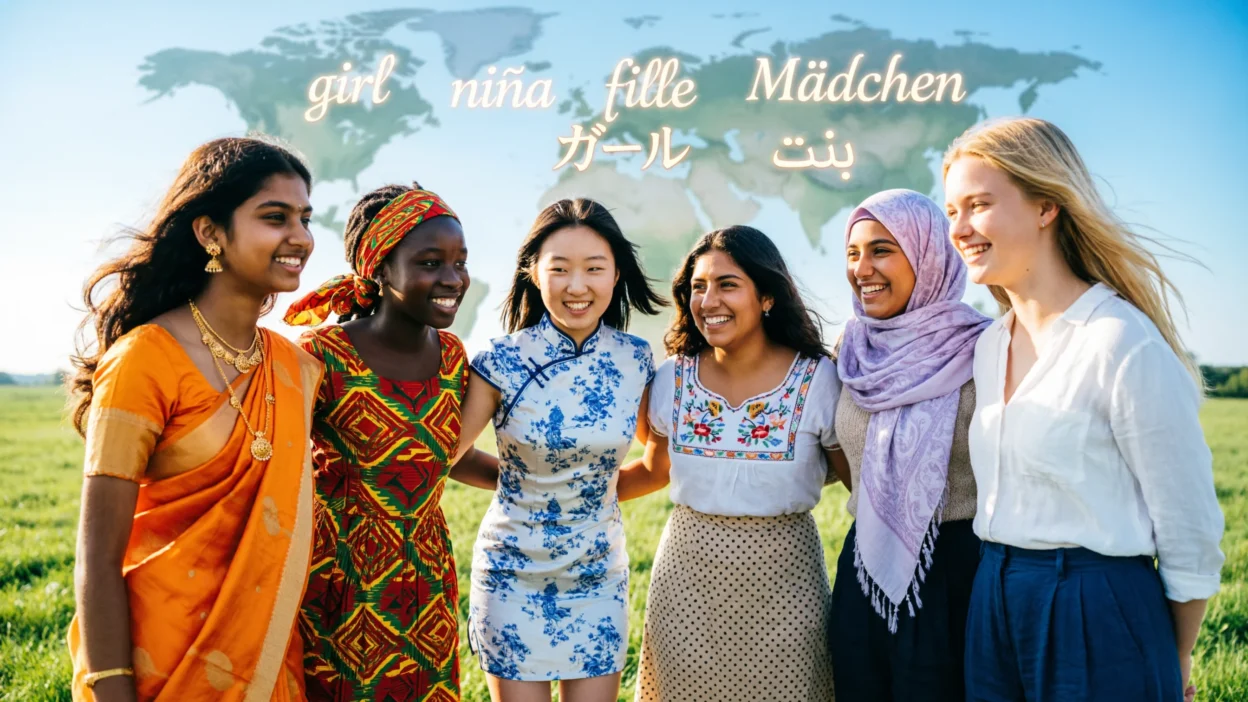
Language builds connection; therefore, learning everyday words improves communication across cultures. Moreover, the word girl appears frequently in conversations, family discussions, education, travel, and storytelling; thus, understanding girl in different languages helps people speak clearly and respectfully.
Additionally, this word allows learners to describe people naturally while building strong vocabulary foundations. Because cultures value language differently, each translation reflects local pronunciation and cultural nuance; consequently, learning these terms increases awareness and confidence.
Furthermore, travelers benefit when asking questions or describing someone politely. Likewise, students, teachers, and writers use these translations to create inclusive and globally relevant content.
As a result, mastering simple words like girl supports fluency, improves comprehension, and makes daily communication easier. Ultimately, learning such universal vocabulary strengthens cultural understanding and enhances meaningful interaction worldwide.
| Language | Native Phrase | Example Sentence |
|---|---|---|
| English | Girl | The girl is happy |
| Spanish | Niña | La niña es feliz |
| French | Fille | La fille est heureuse |
| German | Mädchen | Das Mädchen ist froh |
| Italian | Ragazza | La ragazza è felice |
| Portuguese | Menina | A menina está feliz |
| Dutch | Meisje | Het meisje is blij |
| Russian | Девушка | Девушка счастлива |
| Arabic | فتاة | الفتاة سعيدة |
| Turkish | Kız | Kız mutlu |
| Hindi | लड़की | लड़की खुश है |
| Urdu | لڑکی | لڑکی خوش ہے |
| Bengali | মেয়ে | মেয়েটি খুশি |
| Punjabi | ਕੁੜੀ | ਕੁੜੀ ਖੁਸ਼ ਹੈ |
| Marathi | मुलगी | मुलगी आनंदी आहे |
| Tamil | பெண் குழந்தை | பெண் குழந்தை மகிழ்ச்சியாக உள்ளது |
| Telugu | అమ్మాయి | అమ్మాయి సంతోషంగా ఉంది |
| Kannada | ಹುಡುಗಿ | ಹುಡುಗಿ ಸಂತೋಷವಾಗಿದೆ |
| Malayalam | പെൺകുട്ടി | പെൺകുട്ടി സന്തോഷത്തിലാണ് |
| Gujarati | છોકરી | છોકરી ખુશ છે |
| Nepali | केटी | केटी खुसी छ |
| Sinhala | ගැහැණු ළමයා | ගැහැණු ළමයා සතුටින් |
| Thai | เด็กผู้หญิง | เด็กผู้หญิงมีความสุข |
| Vietnamese | Cô gái | Cô gái vui vẻ |
| Indonesian | Gadis | Gadis itu bahagia |
| Malay | Gadis | Gadis itu gembira |
| Filipino | Babae | Masaya ang babae |
| Chinese | 女孩 | 女孩很开心 |
| Japanese | 女の子 | 女の子は幸せです |
| Korean | 소녀 | 소녀는 행복해요 |
| Greek | Κορίτσι | Το κορίτσι είναι χαρούμενο |
| Polish | Dziewczyna | Dziewczyna jest szczęśliwa |
| Czech | Dívka | Dívka je šťastná |
| Slovak | Dievča | Dievča je šťastné |
| Hungarian | Lány | A lány boldog |
| Romanian | Fată | Fata este fericită |
| Swedish | Flicka | Flickan är glad |
| Norwegian | Jente | Jenta er glad |
| Danish | Pige | Pigen er glad |
| Finnish | Tyttö | Tyttö on iloinen |
| Irish | Cailín | Tá an cailín sona |
| Welsh | Merch | Mae’r ferch yn hapus |
| Afrikaans | Meisie | Die meisie is bly |
| Swahili | Msichana | Msichana ana furaha |
| Zulu | Intombazane | Intombazane iyajabula |
| Xhosa | Intombazana | Intombazana yonwabile |
| Amharic | ሴት ልጅ | ሴት ልጅ ደስ ብሏታል |
| Hebrew | ילדה | הילדה שמחה |
| Persian | دختر | دختر خوشحال است |
| Armenian | Աղջիկ | Աղջիկը ուրախ է |
| Georgian | გოგო | გოგო ბედნიერია |
| Mongolian | Охин | Охин баяртай |
| Hausa | Yarinya | Yarinyar tana farin ciki |
| Yoruba | Ọmọbìnrin | Ọmọbìnrin dun |
| Igbo | Nwaanyị | Nwaanyị nwere obi ụtọ |
| Somali | Gabar | Gabartu way faraxsan |
| Maori | Kōtiro | He kōtiro koa |
| Hawaiian | Kaikamahine | He kaikamahine hauʻoli |
| Latin | Puella | Puella laeta est |
| Esperanto | Knabino | La knabino estas feliĉa |
| Ukrainian | Дівчина | Дівчина щаслива |
| Kazakh | Қыз | Қыз бақытты |
| Uzbek | Qiz | Qiz xursand |
| Azerbaijani | Qız | Qız xoşbəxtdir |
Why Learning “Girl” in Different Languages Matters
Therefore, this word supports respectful communication, storytelling, education, and cross-cultural understanding worldwide.
When to Use This Vocabulary
Moreover, use it during travel, language learning, teaching, writing, and everyday conversations naturally.
How This Improves Language Skills
Consequently, learning common nouns improves fluency, confidence, pronunciation, and sentence-building skills consistently.
FAQs
Is this word appropriate for daily conversation
Yes, it works in neutral and common contexts.
Do some languages have informal versions
Yes, however the listed form remains standard.
Is pronunciation very important
Clarity helps, yet context supports understanding.
Can beginners learn this easily
Yes, it suits early vocabulary learning.
Is it culturally respectful to use
Yes, when used politely and correctly.
Final Thought
Learning how to say girl in different languages helps people communicate clearly, respectfully, and confidently across cultures. Moreover, this word appears in daily conversation, family discussions, education, travel, and storytelling.
Therefore, knowing correct local terms improves understanding and avoids confusion. Additionally, language learners build stronger vocabulary foundations when they practice common nouns early.
Furthermore, using accurate words shows cultural awareness and social sensitivity in real situations.
Ultimately, consistent practice with everyday vocabulary strengthens communication skills, deepens cultural connection, and makes language learning practical, enjoyable, and meaningful worldwide for beginners and advanced learners alike.

Mareo Parrin is a multilingual writer at Lingonast.com, specializing in language based content.
He focuses on cultural insights and practical language understanding.
His writing is clear, engaging, and easy to follow.