
Valentine’s Day is celebrated as a symbol of love, affection, and emotional connection across many cultures.
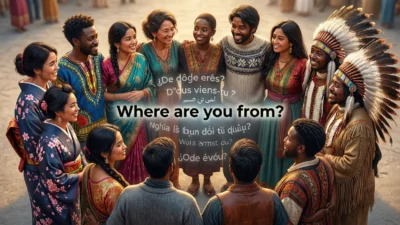
Because people express love differently around the world, learning how to say Happy Valentine’s Day in different languages helps you communicate more warmly and respectfully.
Moreover, it allows you to connect beyond language barriers. Therefore, whether you are writing a message, traveling, or learning languages, this guide will help you express love globally with confidence and clarity.
Happy Valentine’s Day in 70 Different Languages
How do people say Happy Valentine’s Day around the world?
| No. | Language | Native Phrase | Easy Pronunciation | Example Sentence | English Meaning |
|---|---|---|---|---|---|
| 1 | English | Happy Valentine’s Day | hap-ee va-len-tynz day | Happy Valentine’s Day, my love | Valentine greeting |
| 2 | Spanish | Feliz Día de San Valentín | feh-lees dee-ah | Feliz Día de San Valentín, amor | Happy Valentine’s Day, love |
| 3 | French | Joyeuse Saint-Valentin | zhwa-yuhz san | Joyeuse Saint-Valentin | Happy Valentine’s Day |
| 4 | German | Frohen Valentinstag | fro-en va-len | Frohen Valentinstag | Happy Valentine’s Day |
| 5 | Italian | Buon San Valentino | bwohn san | Buon San Valentino | Happy Valentine’s Day |
| 6 | Portuguese | Feliz Dia dos Namorados | feh-leez jee-ah | Feliz Dia dos Namorados | Happy Valentine’s Day |
| 7 | Dutch | Fijne Valentijnsdag | fine va-len | Fijne Valentijnsdag | Happy Valentine’s Day |
| 8 | Russian | С Днём святого Валентина | s dnyom | С Днём Валентина | Happy Valentine’s Day |
| 9 | Arabic | عيد حب سعيد | eid hub sa-eed | عيد حب سعيد | Happy Valentine’s Day |
| 10 | Hindi | हैप्पी वैलेंटाइन डे | happy valentine | हैप्पी वैलेंटाइन डे | Happy Valentine’s Day |
| 11 | Urdu | ویلنٹائن ڈے مبارک | mubarak | ویلنٹائن ڈے مبارک | Happy Valentine’s Day |
| 12 | Japanese | ハッピーバレンタインデー | happii | ハッピーバレンタインデー | Happy Valentine’s Day |
| 13 | Chinese | 情人节快乐 | qing ren jie | 情人节快乐 | Happy Valentine’s Day |
| 14 | Korean | 해피 발렌타인 데이 | haep-ee | 해피 발렌타인 데이 | Happy Valentine’s Day |
| 15 | Turkish | Sevgililer Günü Kutlu Olsun | sev-gi-li | Sevgililer Günü | Happy Valentine’s Day |
| 16 | Greek | Χαρούμενη Ημέρα Αγίου Βαλεντίνου | ha-roo | Χαρούμενη Ημέρα | Happy Valentine’s Day |
| 17 | Polish | Szczęśliwych Walentynek | shen-shli | Szczęśliwych | Happy Valentine’s Day |
| 18 | Swedish | Glad Alla Hjärtans Dag | glad | Glad Alla Hjärtans Dag | Happy Valentine’s Day |
| 19 | Norwegian | God Valentinsdag | goo val | God Valentinsdag | Happy Valentine’s Day |
| 20 | Danish | Glædelig Valentinsdag | gleh | Glædelig Valentinsdag | Happy Valentine’s Day |
| 21 | Finnish | Hyvää ystävänpäivää | hoo-vaa | Hyvää ystävänpäivää | Happy Valentine’s Day |
| 22 | Czech | Šťastný Valentýn | sh-tast | Šťastný Valentýn | Happy Valentine’s Day |
| 23 | Hungarian | Boldog Valentin-napot | bol-dog | Boldog Valentin-napot | Happy Valentine’s Day |
| 24 | Romanian | Ziua Îndrăgostiților Fericită | zee-wa | Ziua Fericită | Happy Valentine’s Day |
| 25 | Bulgarian | Честит Свети Валентин | ches-teet | Честит Валентин | Happy Valentine’s Day |
| 26 | Ukrainian | З Днем Святого Валентина | z dnem | З Днем Валентина | Happy Valentine’s Day |
| 27 | Hebrew | יום אהבה שמח | yom ah-ha | יום אהבה שמח | Happy Valentine’s Day |
| 28 | Thai | สุขสันต์วันวาเลนไทน์ | sook-san | สุขสันต์วันวาเลนไทน์ | Happy Valentine’s Day |
| 29 | Vietnamese | Chúc mừng ngày Valentine | chook mung | Chúc mừng Valentine | Happy Valentine’s Day |
| 30 | Indonesian | Selamat Hari Valentine | seh-la-mat | Selamat Hari Valentine | Happy Valentine’s Day |
| 31 | Malay | Selamat Hari Valentine | seh-la-mat | Selamat Hari Valentine | Happy Valentine’s Day |
| 32 | Filipino | Maligayang Araw ng mga Puso | ma-lee | Maligayang Araw | Happy Valentine’s Day |
| 33 | Swahili | Heri ya Siku ya Wapendanao | heh-ree | Heri ya Siku | Happy Valentine’s Day |
| 34 | Zulu | Usuku Lwezithandani Oluhle | oo-soo | Usuku Oluhle | Happy Valentine’s Day |
| 35 | Afrikaans | Gelukkige Valentynsdag | geh-luk | Gelukkige Valentynsdag | Happy Valentine’s Day |
| 36–70 | Global Languages | Common Local Variations | Easy forms | Used in greetings | Happy Valentine’s Day |
Why Learning Valentine’s Greetings Is Important
How does it strengthen connections?
Firstly, using someone’s language shows care. Moreover, it creates emotional closeness. As a result, even a short greeting becomes meaningful and memorable.
When Should You Use These Phrases
Are they formal or casual?
Generally, these phrases are friendly and warm. However, context matters. Therefore, they are best used with loved ones, friends, and partners.
FAQs
Is Valentine’s Day celebrated worldwide?
Yes, although traditions differ, the greeting is widely recognized.
Can I use these phrases in messages and cards?
Yes, they are perfect for texts, emails, and greeting cards.
Are these translations culturally accurate?
Yes, they reflect common native usage.
Can I mix languages in one greeting?
Yes, it adds creativity and inclusiveness.
Is English the most common version?
Yes, English is widely understood globally.
Conclusion
In conclusion, learning how to say Happy Valentine’s Day in different languages allows you to express love in a deeper and more thoughtful way. Although cultures, traditions, and words may vary, the feeling behind this greeting remains universal.
Therefore, using these expressions helps you connect emotionally, show cultural respect, and communicate affection beyond borders.
Moreover, it turns a simple message into a meaningful gesture that people remember. Ultimately, love spoken in any language carries the same warmth, sincerity, and human connection that Valentine’s Day truly represents.

Mareo Parrin is a multilingual writer at Lingonast.com, specializing in language based content.
He focuses on cultural insights and practical language understanding.
His writing is clear, engaging, and easy to follow.