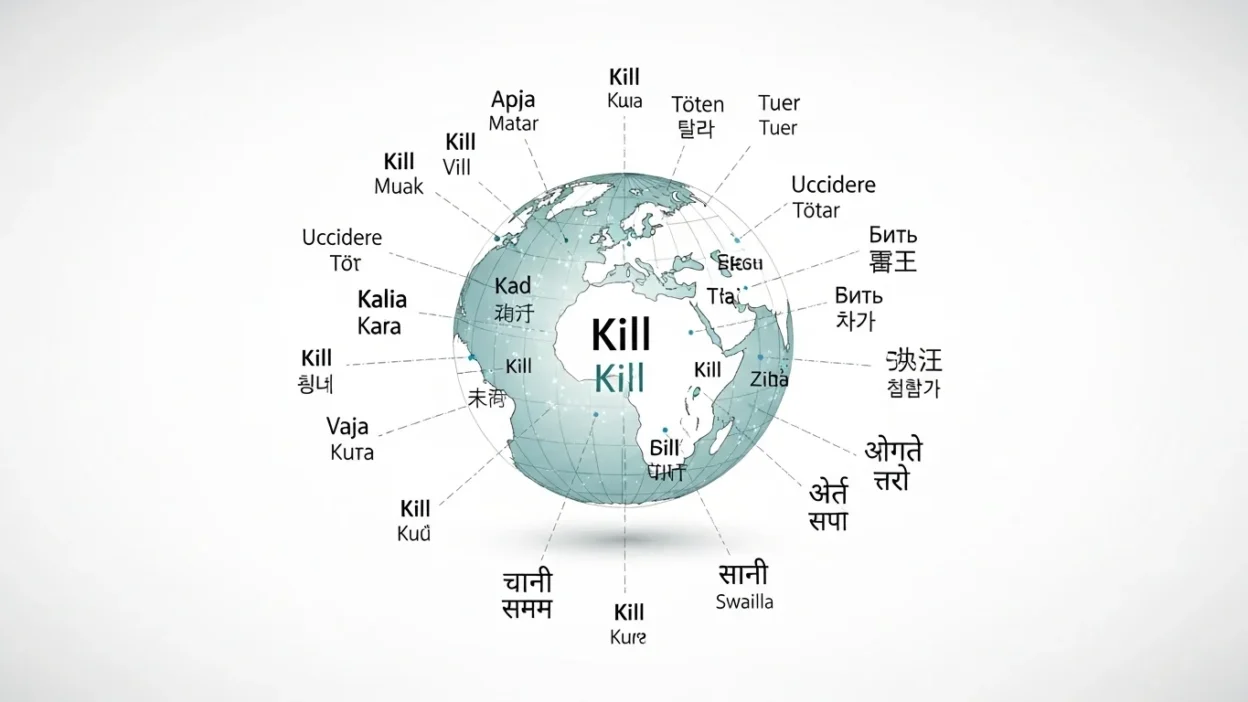
The word kill is a strong and serious verb that refers to causing death or ending life, and therefore it appears in legal discussions, historical texts, literature, news reporting, and fictional storytelling across cultures.
Because it carries intense meaning, understanding its translation in different languages helps learners interpret global media, books, and conversations accurately.
Below is a structured table listing the language first, followed by the native translation and a neutral example sentence used in a contextual way.
| Language | Native Word | Example Sentence |
|---|---|---|
| English | Kill | The hunter did not want to kill the animal. |
| Urdu | قتل کرنا | اس نے کسی کو قتل نہیں کیا۔ |
| Arabic | يقتل | لا تقتل الأبرياء. |
| Spanish | Matar | No debes matar animales sin razón. |
| French | Tuer | Il ne faut pas tuer sans raison. |
| German | Töten | Man darf nicht töten. |
| Italian | Uccidere | Non devi uccidere. |
| Portuguese | Matar | Não devemos matar. |
| Russian | Убивать | Нельзя убивать. |
| Chinese (Mandarin) | 杀 | 不要杀生。 |
| Japanese | 殺す | 殺してはいけません。 |
| Korean | 죽이다 | 죽이면 안 됩니다. |
| Hindi | मारना | किसी को मारना गलत है। |
| Bengali | হত্যা করা | হত্যা করা অপরাধ। |
| Punjabi | ਮਾਰਨਾ | ਕਿਸੇ ਨੂੰ ਮਾਰਨਾ ਗਲਤ ਹੈ। |
| Turkish | Öldürmek | Öldürmek yanlıştır. |
| Persian | کشتن | کشتن کار اشتباهی است. |
| Greek | Σκοτώνω | Δεν πρέπει να σκοτώνεις. |
| Dutch | Doden | Je mag niet doden. |
| Swedish | Döda | Man får inte döda. |
| Danish | Dræbe | Det er forkert at dræbe. |
| Norwegian | Drepe | Det er galt å drepe. |
| Finnish | Tappaa | Ei saa tappaa. |
| Polish | Zabić | Nie wolno zabijać. |
| Czech | Zabít | Nesmíš zabíjet. |
| Slovak | Zabiť | Zabíjanie je zlé. |
| Hungarian | Ölni | Nem szabad ölni. |
| Romanian | A ucide | Nu trebuie să ucizi. |
| Bulgarian | Убивам | Не трябва да убиваш. |
| Serbian | Убити | Не смееш убити. |
| Croatian | Ubiti | Ne smiješ ubiti. |
| Bosnian | Ubiti | Ne treba ubiti. |
| Slovenian | Ubiti | Ne smeš ubiti. |
| Ukrainian | Вбивати | Не можна вбивати. |
| Hebrew | להרוג | אסור להרוג. |
| Swahili | Kuua | Usimuue mtu. |
| Zulu | Bulala | Ungabulali. |
| Afrikaans | Doodmaak | Jy mag nie doodmaak nie. |
| Somali | Dilid | Dilku waa khalad. |
| Amharic | መግደል | መግደል ስህተት ነው። |
| Filipino | Pumatay | Huwag pumatay. |
| Indonesian | Membunuh | Jangan membunuh. |
| Malay | Membunuh | Jangan membunuh. |
| Thai | ฆ่า | ห้ามฆ่า |
| Vietnamese | Giết | Không được giết. |
| Khmer | សម្លាប់ | កុំសម្លាប់។ |
| Lao | ຂ້າ | ຢ່າຂ້າ |
| Nepali | मार्नु | मार्नु गलत हो। |
| Sinhala | මරා දැමීම | මරා දැමීම වැරදියි. |
| Tamil | கொல்லு | கொல்லக்கூடாது. |
| Telugu | చంపు | చంపడం తప్పు. |
| Kannada | ಕೊಲ್ಲು | ಕೊಲ್ಲಬಾರದು. |
| Malayalam | കൊല്ലുക | കൊല്ലരുത്. |
| Gujarati | મારવું | મારવું ખોટું છે. |
| Marathi | मारणे | मारणे चुकीचे आहे. |
| Icelandic | Drepa | Það má ekki drepa. |
| Irish | Maraigh | Ní ceart maraigh. |
| Welsh | Lladd | Peidiwch â lladd. |
| Basque | Hil | Ez hil. |
| Maltese | Joqtol | Taqtolx. |
| Armenian | Սպանել | Սպանել չի կարելի։ |
| Georgian | მოკვლა | მოკვლა არ შეიძლება. |
| Azerbaijani | Öldürmək | Öldürmək olmaz. |
| Uzbek | O‘ldirmoq | O‘ldirish noto‘g‘ri. |
| Kazakh | Өлтіру | Өлтіруге болмайды. |
| Kyrgyz | Өлтүрүү | Өлтүрүүгө болбойт. |
| Tajik | Куштан | Куштан нодуруст аст. |
| Turkmen | Öldürmek | Öldürmek ýalňyş. |
| Mongolian | Алах | Алах буруу. |
| Albanian | Vras | Nuk duhet të vrasësh. |
| Macedonian | Убие | Не смееш да убиеш. |
| Haitian Creole | Touye | Pa touye. |
| Latin | Occidere | Non debes occidere. |
Important Note on Usage
Because this word carries strong moral, legal, and emotional weight, it is usually used carefully in conversation. In many languages, it appears in religious commandments, laws, literature, and fictional storytelling rather than casual dialogue.
Final Thought
Learning how to say kill in different languages improves comprehension of global media, historical texts, and international discussions.
Although the word exists in every language, cultures consistently treat it with seriousness because it relates to life, ethics, and law.
Understanding its translation helps language learners interpret meaning accurately while remaining aware of its sensitive nature.

Mareo Parrin is a multilingual writer at Lingonast.com, specializing in language based content.
He focuses on cultural insights and practical language understanding.
His writing is clear, engaging, and easy to follow.