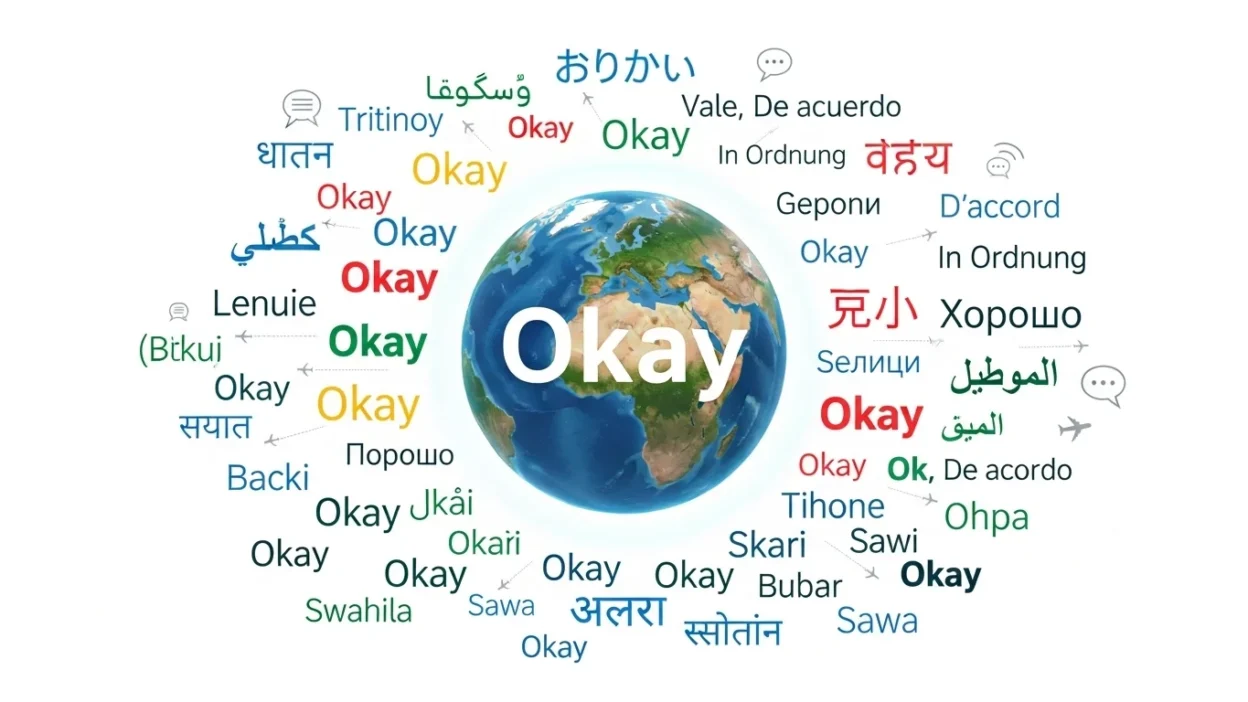
Understanding how to say okay in different languages helps you communicate agreement, reassurance, and acceptance across cultures.
Because “okay” is one of the most frequently used words in daily conversation, learning its equivalent in other languages improves travel experiences, professional communication, and cultural awareness.
Moreover, this simple word can express approval, confirmation, or comfort depending on context.
Therefore, knowing how people say “okay” worldwide makes your interactions smoother and more natural. Below is a clear table showing the language first, then the native word, followed by a practical example sentence.
| Language | Native Word | Example Sentence |
|---|---|---|
| English | Okay | Okay, I understand. |
| Urdu | ٹھیک ہے | ٹھیک ہے، میں سمجھ گیا۔ |
| Arabic | حسنًا | حسنًا، أنا أفهم. |
| Spanish | Está bien | Está bien, lo entiendo. |
| French | D’accord | D’accord, je comprends. |
| German | In Ordnung | In Ordnung, ich verstehe. |
| Italian | Va bene | Va bene, capisco. |
| Portuguese | Está bem | Está bem, eu entendo. |
| Russian | Хорошо | Хорошо, я понимаю. |
| Chinese (Mandarin) | 好的 | 好的,我明白了。 |
| Japanese | 大丈夫 | 大丈夫、分かりました。 |
| Korean | 괜찮아요 | 괜찮아요, 이해했어요. |
| Hindi | ठीक है | ठीक है, मैं समझ गया। |
| Bengali | ঠিক আছে | ঠিক আছে, আমি বুঝেছি। |
| Punjabi | ਠੀਕ ਹੈ | ਠੀਕ ਹੈ, ਮੈਂ ਸਮਝ ਗਿਆ। |
| Turkish | Tamam | Tamam, anladım. |
| Persian | باشه | باشه، فهمیدم. |
| Greek | Εντάξει | Εντάξει, καταλαβαίνω. |
| Dutch | Oké | Oké, ik begrijp het. |
| Swedish | Okej | Okej, jag förstår. |
| Danish | Okay | Okay, jeg forstår. |
| Norwegian | Greit | Greit, jeg forstår. |
| Finnish | Okei | Okei, ymmärrän. |
| Polish | W porządku | W porządku, rozumiem. |
| Czech | Dobře | Dobře, rozumím. |
| Slovak | Dobre | Dobre, rozumiem. |
| Hungarian | Rendben | Rendben, értem. |
| Romanian | Bine | Bine, înțeleg. |
| Bulgarian | Добре | Добре, разбирам. |
| Serbian | У реду | У реду, разумем. |
| Croatian | U redu | U redu, razumijem. |
| Bosnian | U redu | U redu, razumijem. |
| Slovenian | V redu | V redu, razumem. |
| Ukrainian | Добре | Добре, я розумію. |
| Hebrew | בסדר | בסדר, אני מבין. |
| Swahili | Sawa | Sawa, ninaelewa. |
| Zulu | Kulungile | Kulungile, ngiyaqonda. |
| Afrikaans | Goed | Goed, ek verstaan. |
| Somali | Hagaag | Hagaag, waan fahmay. |
| Amharic | እሺ | እሺ፣ አስተዋልሁ። |
| Filipino | Sige | Sige, naiintindihan ko. |
| Indonesian | Oke | Oke, saya mengerti. |
| Malay | Baiklah | Baiklah, saya faham. |
| Thai | โอเค | โอเค ฉันเข้าใจ |
| Vietnamese | Được | Được, tôi hiểu. |
| Khmer | ត្រូវហើយ | ត្រូវហើយ ខ្ញុំយល់ហើយ។ |
| Lao | ຕົກລົງ | ຕົກລົງ ຂ້ອຍເຂົ້າໃຈ |
| Nepali | ठीक छ | ठीक छ, मैले बुझेँ। |
| Sinhala | හරි | හරි, මට තේරුණා. |
| Tamil | சரி | சரி, எனக்கு புரிகிறது. |
| Telugu | సరే | సరే, నాకు అర్థమైంది. |
| Kannada | ಸರಿ | ಸರಿ, ನನಗೆ ಅರ್ಥವಾಗಿದೆ. |
| Malayalam | ശരി | ശരി, എനിക്ക് മനസ്സിലായി. |
| Gujarati | ઠીક છે | ઠીક છે, હું સમજ્યો. |
| Marathi | ठीक आहे | ठीक आहे, मला समजले. |
| Icelandic | Allt í lagi | Allt í lagi, ég skil. |
| Irish | Ceart go leor | Ceart go leor, tuigim. |
| Welsh | Iawn | Iawn, rwy’n deall. |
| Basque | Ados | Ados, ulertzen dut. |
| Maltese | Tajjeb | Tajjeb, nifhem. |
| Armenian | Լավ է | Լավ է, ես հասկանում եմ։ |
| Georgian | კარგი | კარგი, მესმის. |
| Azerbaijani | Yaxşı | Yaxşı, başa düşdüm. |
| Uzbek | Mayli | Mayli, tushundim. |
| Mongolian | За | За, би ойлголоо. |
| Albanian | Mirë | Mirë, e kuptoj. |
| Macedonian | Во ред | Во ред, разбирам. |
| Haitian Creole | Dakò | Dakò, mwen konprann. |
| Latin | Bene | Bene, intellego. |
Why Learning “Okay” in Different Languages Matters
First, “okay” is essential for daily communication. Moreover, it helps confirm understanding and agreement quickly. In addition, using the local version of “okay” shows cultural respect and builds smoother interactions. Therefore, mastering this simple word enhances both travel and global communication experiences.
Conclusion
Learning how to say okay in different languages improves your confidence in conversations and strengthens cross cultural connections.
Because this word is used constantly in everyday life, knowing its local equivalent allows you to respond naturally and clearly.
Moreover, practicing it in sentences helps retention and pronunciation. Ultimately, even a small word like okay can create clearer communication and stronger human understanding worldwide.

Mareo Parrin is a multilingual writer at Lingonast.com, specializing in language based content.
He focuses on cultural insights and practical language understanding.
His writing is clear, engaging, and easy to follow.