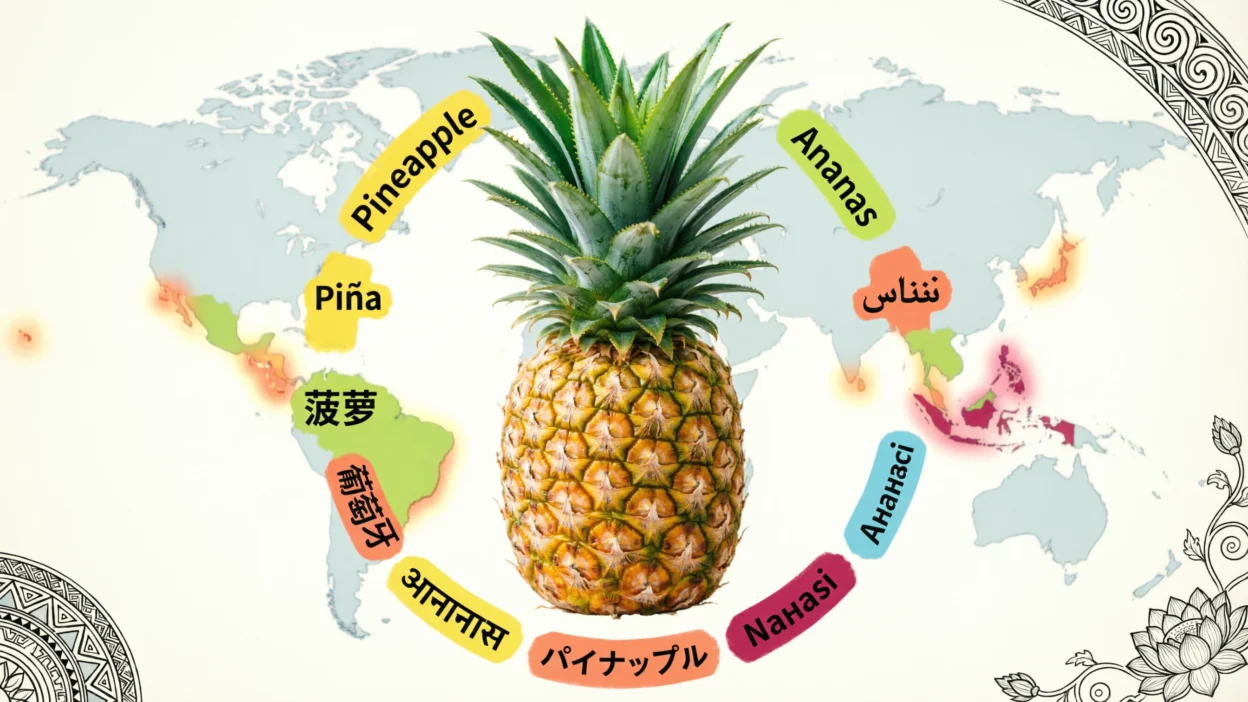
When you learn how to say pineapple in different languages, you expand your vocabulary while also discovering fascinating cultural and linguistic patterns.
Because pineapple spread globally through trade and exploration, many languages adopted similar words, while others created unique names.
Therefore, when you explore pineapple translations around the world, you not only learn new words but also understand historical language influence. Below, you will find a structured table in the exact order requested: Language, Native Word, Example Sentence.
| Language | Native Word | Example Sentence |
|---|---|---|
| English | Pineapple | I bought a fresh pineapple. |
| Spanish | Piña | Compré una piña fresca. |
| French | Ananas | J’ai acheté un ananas frais. |
| German | Ananas | Ich habe eine frische Ananas gekauft. |
| Italian | Ananas | Ho comprato un ananas fresco. |
| Portuguese | Abacaxi | Eu comprei um abacaxi fresco. |
| Russian | Ананас | Я купил свежий ананас. |
| Chinese (Mandarin) | 菠萝 | 我买了一个新鲜的菠萝。 |
| Japanese | パイナップル | 新鮮なパイナップルを買いました。 |
| Korean | 파인애플 | 나는 신선한 파인애플을 샀다. |
| Arabic | أناناس | اشتريت أناناسًا طازجًا. |
| Hindi | अनानास | मैंने ताज़ा अनानास खरीदा। |
| Urdu | انناس | میں نے تازہ انناس خریدا۔ |
| Bengali | আনারস | আমি একটি টাটকা আনারস কিনেছি। |
| Punjabi | ਅਨਾਨਾਸ | ਮੈਂ ਤਾਜਾ ਅਨਾਨਾਸ ਖਰੀਦਿਆ। |
| Turkish | Ananas | Taze bir ananas aldım. |
| Dutch | Ananas | Ik heb een verse ananas gekocht. |
| Greek | Ανανάς | Αγόρασα έναν φρέσκο ανανά. |
| Polish | Ananas | Kupiłem świeżego ananasa. |
| Danish | Ananas | Jeg købte en frisk ananas. |
| Swedish | Ananas | Jag köpte en färsk ananas. |
| Norwegian | Ananas | Jeg kjøpte en fersk ananas. |
| Finnish | Ananas | Ostin tuoreen ananaksen. |
| Hungarian | Ananász | Vettem egy friss ananászt. |
| Romanian | Ananas | Am cumpărat un ananas proaspăt. |
| Bulgarian | Ананас | Купих пресен ананас. |
| Croatian | Ananas | Kupio sam svježi ananas. |
| Serbian | Ананас | Купио сам свеж ананас. |
| Hebrew | אננס | קניתי אננס טרי. |
| Vietnamese | Dứa | Tôi đã mua một quả dứa tươi. |
| Indonesian | Nanas | Saya membeli nanas segar. |
| Filipino (Tagalog) | Pinya | Bumili ako ng sariwang pinya. |
| Swahili | Nanasi | Nimenunua nanasi safi. |
| Zulu | Uphayinaphu | Ngithenge uphayinaphu omusha. |
| Somali | Cananaaska | Waxaan iibsaday cananaas cusub. |
| Yoruba | Ope oyinbo | Mo ra ope oyinbo tuntun. |
| Igbo | Painiapulu | Azụrụ m painiapulu ọhụrụ. |
| Hausa | Abarba | Na sayi abarba sabuwa. |
| Persian (Farsi) | آناناس | من آناناس تازه خریدم. |
| Nepali | अनानास | मैले ताजा अनानास किनेँ। |
| Tamil | அன்னாசி | நான் புதிய அன்னாசி வாங்கினேன். |
| Telugu | అనాస | నేను తాజా అనాస కొనుగోలు చేశాను. |
| Kannada | ಅನಾನಸ್ | ನಾನು ತಾಜಾ ಅನಾನಸ್ ಕೊಂಡೆ. |
| Malayalam | അനനാസ് | ഞാൻ പുതിയ അനനാസ് വാങ്ങി. |
| Marathi | अननस | मी ताजा अननस विकत घेतला. |
| Gujarati | અનાનસ | મેં તાજું અનાનસ ખરીદ્યું. |
| Thai | สับปะรด | ฉันซื้อสับปะรดสด |
| Malay | Nanas | Saya membeli nanas segar. |
| Estonian | Ananass | Ostsin värske ananassi. |
| Lithuanian | Ananasas | Nusipirkau šviežią ananasą. |
| Latvian | Ananass | Es nopirku svaigu ananasu. |
| Irish | Anann | Cheannaigh mé anann úr. |
| Welsh | Pîn-afal | Prynais bîn-afal ffres. |
| Basque | Anana | Anana freskoa erosi dut. |
| Maltese | Ananas | Xtrajt ananas frisk. |
| Armenian | Արքայախնձոր | Գնել եմ թարմ արքայախնձոր։ |
| Georgian | ანანასი | ვიყიდე ახალი ანანასი. |
| Azerbaijani | Ananas | Təzə ananas aldım. |
| Uzbek | Ananas | Men yangi ananas sotib oldim. |
| Mongolian | Хан боргоцой | Би шинэ хан боргоцой авсан. |
| Icelandic | Ananas | Ég keypti ferskan ananas. |
| Albanian | Ananas | Bleva një ananas të freskët. |
| Macedonian | Ананас | Купив свеж ананас. |
| Bosnian | Ananas | Kupio sam svježi ananas. |
| Slovenian | Ananas | Kupil sem svež ananas. |
| Haitian Creole | Anana | Mwen achte yon anana fre. |
| Latin | Ananas | Emi ananas recens. |
Why Learning Pineapple in Different Languages Matters
First, food vocabulary helps you travel confidently. Moreover, since pineapple appears in global cuisine, knowing its name in different languages makes shopping and ordering easier. Therefore, you avoid confusion while also improving communication. In addition, noticing that many languages use “ananas” reveals shared trade history. As a result, language learning becomes both practical and fascinating.
Conclusion
When you learn pineapple in different languages, you strengthen everyday vocabulary while also exploring cultural connections shaped by trade and history.
Furthermore, because food terms appear frequently in conversation, you quickly apply these translations in real situations.
Therefore, consistent practice improves memory and pronunciation naturally.
Ultimately, one simple fruit name opens the door to better communication, deeper cultural awareness, and stronger global understanding.

Mareo Parrin is a multilingual writer at Lingonast.com, specializing in language based content.
He focuses on cultural insights and practical language understanding.
His writing is clear, engaging, and easy to follow.