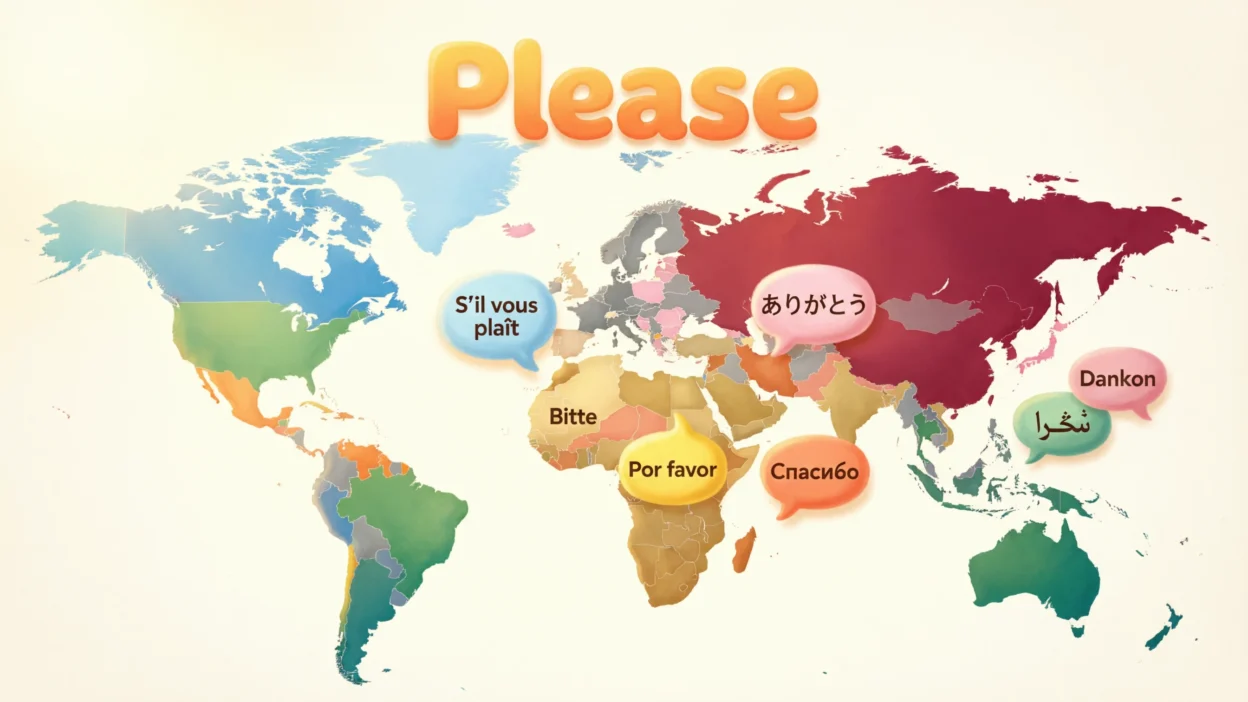
When you learn how to say please in different languages, you immediately improve your politeness and global communication skills. Because “please” expresses respect, humility, and kindness, it plays a powerful role in everyday conversations.
Whether you travel, study languages, or speak with international clients, knowing please translations helps you build trust and positive impressions. Therefore, this guide presents clear translations so you can confidently say please around the world.
Below, you will find the table structured exactly as requested: Language, Native Word, Example Sentence.
| Language | Native Word | Example Sentence |
|---|---|---|
| English | Please | Please help me. |
| Spanish | Por favor | Por favor, ayúdame. |
| French | S’il vous plaît | S’il vous plaît, aidez-moi. |
| German | Bitte | Bitte helfen Sie mir. |
| Italian | Per favore | Per favore, aiutami. |
| Portuguese | Por favor | Por favor, ajude-me. |
| Russian | Пожалуйста | Пожалуйста, помогите мне. |
| Chinese (Mandarin) | 请 | 请帮我。 |
| Japanese | お願いします | 手伝ってください、お願いします。 |
| Korean | 제발 | 제발 도와주세요. |
| Arabic | من فضلك | من فضلك ساعدني. |
| Hindi | कृपया | कृपया मेरी मदद करें। |
| Urdu | براہ کرم | براہ کرم میری مدد کریں۔ |
| Bengali | অনুগ্রহ করে | অনুগ্রহ করে আমাকে সাহায্য করুন। |
| Punjabi | ਕਿਰਪਾ ਕਰਕੇ | ਕਿਰਪਾ ਕਰਕੇ ਮੇਰੀ ਮਦਦ ਕਰੋ। |
| Turkish | Lütfen | Lütfen bana yardım et. |
| Dutch | Alstublieft | Alstublieft, help mij. |
| Greek | Παρακαλώ | Παρακαλώ βοηθήστε με. |
| Polish | Proszę | Proszę, pomóż mi. |
| Danish | Vær venlig | Vær venlig at hjælpe mig. |
| Swedish | Snälla | Snälla hjälp mig. |
| Norwegian | Vær så snill | Vær så snill å hjelpe meg. |
| Finnish | Ole hyvä | Ole hyvä ja auta minua. |
| Hungarian | Kérem | Kérem, segítsen nekem. |
| Romanian | Vă rog | Vă rog să mă ajutați. |
| Bulgarian | Моля | Моля, помогнете ми. |
| Croatian | Molim | Molim, pomozi mi. |
| Serbian | Молим | Молим, помозите ми. |
| Hebrew | בבקשה | בבקשה תעזור לי. |
| Vietnamese | Làm ơn | Làm ơn giúp tôi. |
| Indonesian | Tolong | Tolong bantu saya. |
| Filipino (Tagalog) | Pakiusap | Pakiusap, tulungan mo ako. |
| Swahili | Tafadhali | Tafadhali nisaidie. |
| Zulu | Ngiyacela | Ngiyacela ungisize. |
| Somali | Fadlan | Fadlan i caawi. |
| Yoruba | Jọ̀wọ́ | Jọ̀wọ́ ran mi lọwọ. |
| Igbo | Biko | Biko nyere m aka. |
| Hausa | Don Allah | Don Allah taimake ni. |
| Persian (Farsi) | لطفاً | لطفاً به من کمک کنید. |
| Nepali | कृपया | कृपया मलाई सहयोग गर्नुहोस्। |
| Tamil | தயவு செய்து | தயவு செய்து எனக்கு உதவுங்கள். |
| Telugu | దయచేసి | దయచేసి నాకు సహాయం చేయండి. |
| Kannada | ದಯವಿಟ್ಟು | ದಯವಿಟ್ಟು ನನಗೆ ಸಹಾಯ ಮಾಡಿ. |
| Malayalam | ദയവായി | ദയവായി എന്നെ സഹായിക്കുക. |
| Marathi | कृपया | कृपया माझी मदत करा. |
| Gujarati | કૃપા કરીને | કૃપા કરીને મારી મદદ કરો. |
| Thai | กรุณา | กรุณาช่วยฉันด้วย |
| Malay | Sila | Sila bantu saya. |
| Estonian | Palun | Palun aita mind. |
| Lithuanian | Prašau | Prašau padėkite man. |
| Latvian | Lūdzu | Lūdzu palīdziet man. |
| Irish | Le do thoil | Le do thoil cabhraigh liom. |
| Welsh | Os gwelwch yn dda | Os gwelwch yn dda helpwch fi. |
| Basque | Mesedez | Mesedez lagundu nazazu. |
| Maltese | Jekk jogħġbok | Jekk jogħġbok għinni. |
| Armenian | Խնդրում եմ | Խնդրում եմ օգնեք ինձ։ |
| Georgian | გთხოვთ | გთხოვთ დამეხმარეთ. |
| Azerbaijani | Zəhmət olmasa | Zəhmət olmasa mənə kömək edin. |
| Uzbek | Iltimos | Iltimos menga yordam bering. |
| Mongolian | Гуйя | Гуйя надад туслаач. |
| Icelandic | Vinsamlegast | Vinsamlegast hjálpaðu mér. |
| Albanian | Ju lutem | Ju lutem më ndihmoni. |
| Macedonian | Те молам | Те молам помогни ми. |
| Bosnian | Molim | Molim, pomozi mi. |
| Slovenian | Prosim | Prosim, pomagaj mi. |
| Haitian Creole | Tanpri | Tanpri ede m. |
| Latin | Quaeso | Quaeso me adiuva. |
Why Learning “Please” in Different Languages Matters
First, polite language builds strong relationships. Moreover, when you say please in someone’s native language, you instantly show respect. Therefore, even a simple word improves social interactions. In addition, travelers benefit because locals respond more positively. As a result, mastering please in different languages strengthens both communication and cultural understanding.
Conclusion
When you learn please in different languages, you actively improve your communication skills while also expressing kindness across cultures.
Because politeness creates trust, your interactions become smoother and more respectful.
Furthermore, as you practice these translations in daily conversations, you gain confidence and fluency. Therefore, consistent use helps you connect globally while maintaining cultural sensitivity.
Ultimately, one simple polite word can transform conversations and create meaningful human connections everywhere.

Nicodemo Thorley is a cultural writer at Lingonast.com, focusing on language and heritage.
He explores how language connects with culture and history.
His articles offer structured and insightful perspectives.