
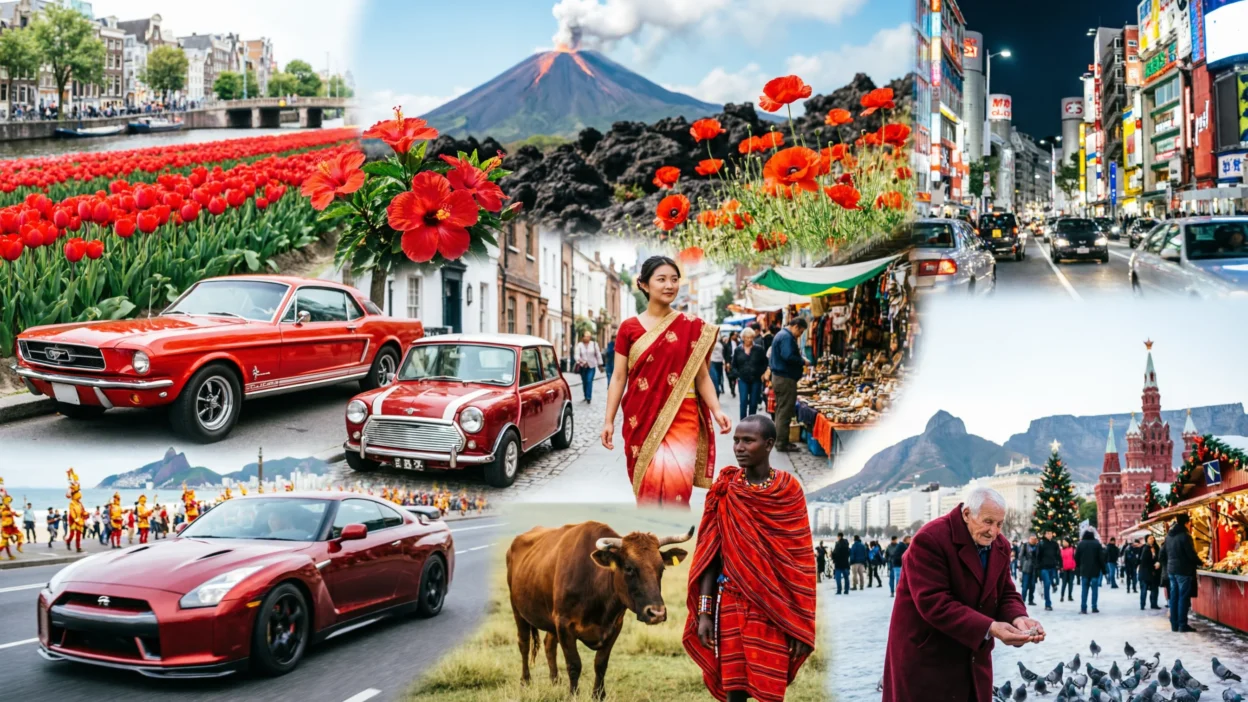
Because colors influence communication and culture, knowing how to say red in different languages improves clarity, connection, and expression.
Moreover, red represents energy, passion, danger, and celebration; therefore, learning translations allows people to describe objects, emotions, and art naturally.
In addition, travelers, students, teachers, and writers gain practical vocabulary for conversations, instructions, and storytelling. Furthermore, examples paired with translations strengthen memory, comprehension, and confidence, so learners remember words faster.
Consequently, knowing red around the world supports cultural awareness and global communication. Meanwhile, practical usage ensures the vocabulary is useful daily.
Also, mastering red in all languages encourages exploration of more words while creating smoother multilingual interactions worldwide.
| Language | Native Phrase | Example Sentence |
|---|---|---|
| English | Red | The car is red. |
| Spanish | Rojo | La flor es roja. |
| French | Rouge | La pomme est rouge. |
| German | Rot | Das Kleid ist rot. |
| Italian | Rosso | Il vino è rosso. |
| Portuguese | Vermelho | O semáforo está vermelho. |
| Dutch | Rood | De jas is rood. |
| Swedish | Röd | Bilen är röd. |
| Norwegian | Rød | Huset er rødt. |
| Danish | Rød | Æblet er rødt. |
| Finnish | Punainen | Kukka on punainen. |
| Russian | Красный | Флаг красный. |
| Ukrainian | Червоний | Червоний м’яч. |
| Polish | Czerwony | Samochód jest czerwony. |
| Czech | Červený | Květ je červený. |
| Slovak | Červený | Auto je červené. |
| Hungarian | Piros | A ruha piros. |
| Romanian | Roșu | Pantofii sunt roșii. |
| Bulgarian | Червен | Червената роза е красива. |
| Greek | Κόκκινο | Το φόρεμα είναι κόκκινο. |
| Turkish | Kırmızı | Elma kırmızı. |
| Arabic | أحمر | التفاح أحمر. |
| Hebrew | אדום | האוטו אדום. |
| Persian | قرمز | سیب قرمز است. |
| Urdu | سرخ | گلاب سرخ ہے۔ |
| Hindi | लाल | गुलाब लाल है। |
| Bengali | লাল | ফুলটি লাল। |
| Punjabi | ਲਾਲ | ਗੱਡੀ ਲਾਲ ਹੈ। |
| Tamil | சிவப்பு | சட்டை சிவப்பு. |
| Telugu | ఎరుపు | పువ్వు ఎరుపు. |
| Kannada | ಕೆಂಪು | ಹೂವು ಕೆಂಪು. |
| Malayalam | ചുവപ്പ് | പുഷ്പം ചുവപ്പ്. |
| Marathi | लाल | फुल लाल आहे. |
| Gujarati | લાલ | ગુલાબ લાલ છે. |
| Sinhala | රතු | මල රතුයි. |
| Thai | สีแดง | ดอกไม้สีแดง |
| Vietnamese | Đỏ | Lá cờ đỏ. |
| Indonesian | Merah | Mobil merah. |
| Malay | Merah | Bunga merah. |
| Filipino | Pula | Ang mansanas ay pula. |
| Chinese | 红色 | 裙子是红色。 |
| Japanese | 赤 | 花は赤い。 |
| Korean | 빨간색 | 사과는 빨갛다. |
| Mongolian | Улаан | Машин улаан байна. |
| Nepali | रातो | फूल रातो छ। |
| Swahili | Nyekundu | Gari ni nyekundu. |
| Zulu | Bomvu | Imoto ibomvu. |
| Xhosa | Bomvu | Ingubo ibomvu. |
| Afrikaans | Rooi | Die bal is rooi. |
| Hausa | Ja | Motar ja ce. |
| Yoruba | Pupa | Ile pupa ni. |
| Igbo | Uhie | Akwụkwọ uhie dị. |
| Somali | Cas | Baabuurka waa cas. |
| Amharic | ቀይ | መኪና ቀይ ነው. |
| Malagasy | Mena | Fiara mena. |
| Maori | Whero | Te waka whero. |
| Hawaiian | ʻulaʻula | Ka kaʻa ʻulaʻula. |
Why Learning Red Translations Matters
Because red appears everywhere—in signs, clothes, flags, and art—knowing its translations improves global understanding and daily communication. Moreover, mastering this word enables people to describe surroundings, give instructions, and express emotions clearly while connecting culturally.
How to Use Red in Daily Life
Using red in conversation about traffic signals, fashion, school, or design ensures clarity. Furthermore, it enhances vocabulary for learners, travelers, teachers, and writers, promoting smooth interaction worldwide.
FAQs
Is red the same in every language?
No, each language has its own word and pronunciation for red.
Does learning red improve vocabulary retention?
Yes, pairing examples with translations strengthens memory and comprehension.
Is pronunciation important?
Absolutely, correct pronunciation ensures clear communication in real situations.
Does red have the same cultural meaning everywhere?
Mostly yes, though some cultures associate it with luck, danger, or celebration.
Can beginners learn red quickly?
Yes, it is a basic, universally useful word for learners of all levels.
Final Thought
Learning how to say red in different languages improves communication, cultural awareness, and confidence globally. Moreover, it allows people to describe objects, emotions, and signs effectively.
Consequently, travelers, students, teachers, and writers gain practical vocabulary that is easy to remember. Furthermore, real-life examples support memory retention and natural usage, while multilingual learning promotes cross-cultural understanding.
Therefore, mastering red accelerates learning of additional colors, strengthens conversational skills, and ensures smooth interactions worldwide.
Ultimately, this simple word connects people instantly, making global communication practical, engaging, and meaningful for everyone everywhere.

Nicodemo Thorley is a cultural writer at Lingonast.com, focusing on language and heritage.
He explores how language connects with culture and history.
His articles offer structured and insightful perspectives.