
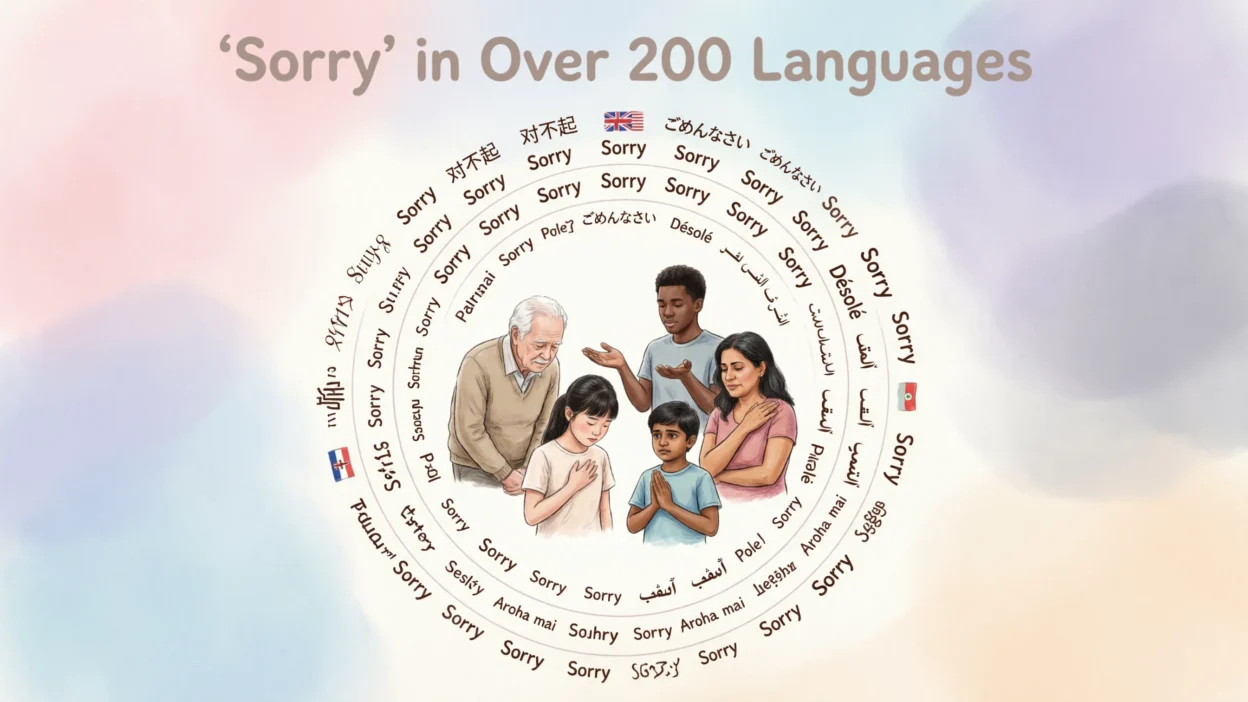
The word sorry plays a powerful role in human communication because it expresses regret, empathy, politeness, and responsibility in everyday interactions across cultures.
Whether someone apologizes for a mistake, inconvenience, misunderstanding, or accident, this simple word helps repair relationships and restore harmony.
Therefore, learning how to say sorry in different languages strengthens emotional intelligence, improves cross-cultural communication, and builds respectful global connections.
Below is a structured table listing the language first, followed by the native phrase and a simple everyday example sentence.
| Language | Native Phrase | Example Sentence |
|---|---|---|
| English | Sorry | I am sorry for being late. |
| Urdu | معاف کیجیے | دیر سے آنے پر معاف کیجیے۔ |
| Arabic | آسف | أنا آسف على التأخير. |
| Spanish | Lo siento | Lo siento por llegar tarde. |
| French | Désolé | Je suis désolé pour le retard. |
| German | Entschuldigung | Entschuldigung für die Verspätung. |
| Italian | Mi dispiace | Mi dispiace per il ritardo. |
| Portuguese | Desculpa | Desculpa pelo atraso. |
| Russian | Извините | Извините за опоздание. |
| Chinese (Mandarin) | 对不起 | 对不起,我迟到了。 |
| Japanese | ごめんなさい | ごめんなさい、遅れました。 |
| Korean | 미안합니다 | 늦어서 미안합니다. |
| Hindi | माफ कीजिए | देर से आने के लिए माफ कीजिए। |
| Bengali | দুঃখিত | দেরির জন্য দুঃখিত। |
| Punjabi | ਮਾਫ਼ ਕਰਨਾ | ਦੇਰ ਲਈ ਮਾਫ਼ ਕਰਨਾ। |
| Turkish | Özür dilerim | Geciktiğim için özür dilerim. |
| Persian | متاسفم | بابت تاخیر متاسفم. |
| Greek | Συγγνώμη | Συγγνώμη για την καθυστέρηση. |
| Dutch | Sorry | Sorry voor de vertraging. |
| Swedish | Förlåt | Förlåt för förseningen. |
| Danish | Undskyld | Undskyld for forsinkelsen. |
| Norwegian | Unnskyld | Unnskyld for forsinkelsen. |
| Finnish | Anteeksi | Anteeksi myöhästymisestä. |
| Polish | Przepraszam | Przepraszam za spóźnienie. |
| Czech | Promiňte | Promiňte za zpoždění. |
| Slovak | Prepáčte | Prepáčte za meškanie. |
| Hungarian | Sajnálom | Sajnálom a késést. |
| Romanian | Îmi pare rău | Îmi pare rău pentru întârziere. |
| Bulgarian | Съжалявам | Съжалявам за закъснението. |
| Serbian | Извини | Извини због кашњења. |
| Croatian | Oprosti | Oprosti zbog kašnjenja. |
| Bosnian | Izvini | Izvini zbog kašnjenja. |
| Slovenian | Oprosti | Oprosti za zamudo. |
| Ukrainian | Вибачте | Вибачте за запізнення. |
| Hebrew | סליחה | סליחה על האיחור. |
| Swahili | Samahani | Samahani kwa kuchelewa. |
| Zulu | Ngiyaxolisa | Ngiyaxolisa ngokubambezeleka. |
| Afrikaans | Jammer | Jammer vir die vertraging. |
| Somali | Waan ka xumahay | Waan ka xumahay daahitaanka. |
| Amharic | ይቅርታ | ለዘገይቼ ይቅርታ። |
| Filipino | Paumanhin | Paumanhin sa pagkahuli. |
| Indonesian | Maaf | Maaf terlambat. |
| Malay | Maaf | Maaf atas kelewatan. |
| Thai | ขอโทษ | ขอโทษที่มาสาย |
| Vietnamese | Xin lỗi | Xin lỗi vì đến muộn. |
| Khmer | សុំទោស | សុំទោសដែលយឺត។ |
| Lao | ຂໍໂທດ | ຂໍໂທດທີ່ມາຊ້າ |
| Nepali | माफ गर्नुहोस् | ढिलो आएकोमा माफ गर्नुहोस्। |
| Sinhala | සමාවෙන්න | ප්රමාදයට සමාවෙන්න. |
| Tamil | மன்னிக்கவும் | தாமதத்திற்கு மன்னிக்கவும். |
| Telugu | క్షమించండి | ఆలస్యానికి క్షమించండి. |
| Kannada | ಕ್ಷಮಿಸಿ | ತಡವಾದುದಕ್ಕೆ ಕ್ಷಮಿಸಿ. |
| Malayalam | ക്ഷമിക്കണം | വൈകിയതിന് ക്ഷമിക്കണം. |
| Gujarati | માફ કરશો | મોડા માટે માફ કરશો. |
| Marathi | माफ करा | उशिरा आल्याबद्दल माफ करा. |
| Icelandic | Fyrirgefðu | Fyrirgefðu fyrir seinkunina. |
| Irish | Tá brón orm | Tá brón orm as a bheith déanach. |
| Welsh | Mae’n ddrwg gen i | Mae’n ddrwg gen i am fod yn hwyr. |
| Basque | Barkatu | Barkatu berandu heltzeagatik. |
| Maltese | Jiddispjaċini | Jiddispjaċini għad-dewmien. |
| Armenian | Ներողություն | Ներողություն ուշացման համար։ |
| Georgian | ბოდიში | ბოდიში დაგვიანებისთვის. |
| Azerbaijani | Bağışlayın | Bağışlayın gecikməyə görə. |
| Uzbek | Kechirasiz | Kechirasiz kechikkanim uchun. |
| Kazakh | Кешіріңіз | Кешіріңіз кешіккенім үшін. |
| Kyrgyz | Кечириңиз | Кечириңиз кечиккеним үчүн. |
| Tajik | Бубахшед | Бубахшед барои дер кардан. |
| Turkmen | Bagyşlaň | Bagyşlaň gijä galanym üçin. |
| Mongolian | Уучлаарай | Уучлаарай хоцорсонд. |
| Albanian | Më fal | Më fal për vonesën. |
| Macedonian | Извини | Извини за доцнењето. |
| Haitian Creole | Eskize | Eskize pou reta a. |
| Latin | Paenitet | Paenitet me morae. |
Why “Sorry” Is Important Across Cultures
Apologizing shows humility, respect, and emotional maturity. In many cultures, saying sorry promptly prevents misunderstandings and strengthens relationships. Moreover, some languages differentiate between formal and informal apologies, which highlights cultural etiquette and social structure.
Common Situations to Use Sorry
People commonly use sorry when arriving late, making mistakes, interrupting conversations, expressing sympathy, or asking someone to repeat something. Therefore, mastering this word in multiple languages improves both travel communication and professional interaction.
Final Thought
Learning how to say sorry in different languages enhances cross-cultural understanding because apologies play a vital role in maintaining harmony and trust.
Although pronunciation and grammar vary widely, the intention behind the word remains universally meaningful.
By understanding how different societies express regret and politeness, you strengthen empathy, communication skills, and global awareness in both personal and professional environments.

Nicodemo Thorley is a cultural writer at Lingonast.com, focusing on language and heritage.
He explores how language connects with culture and history.
His articles offer structured and insightful perspectives.