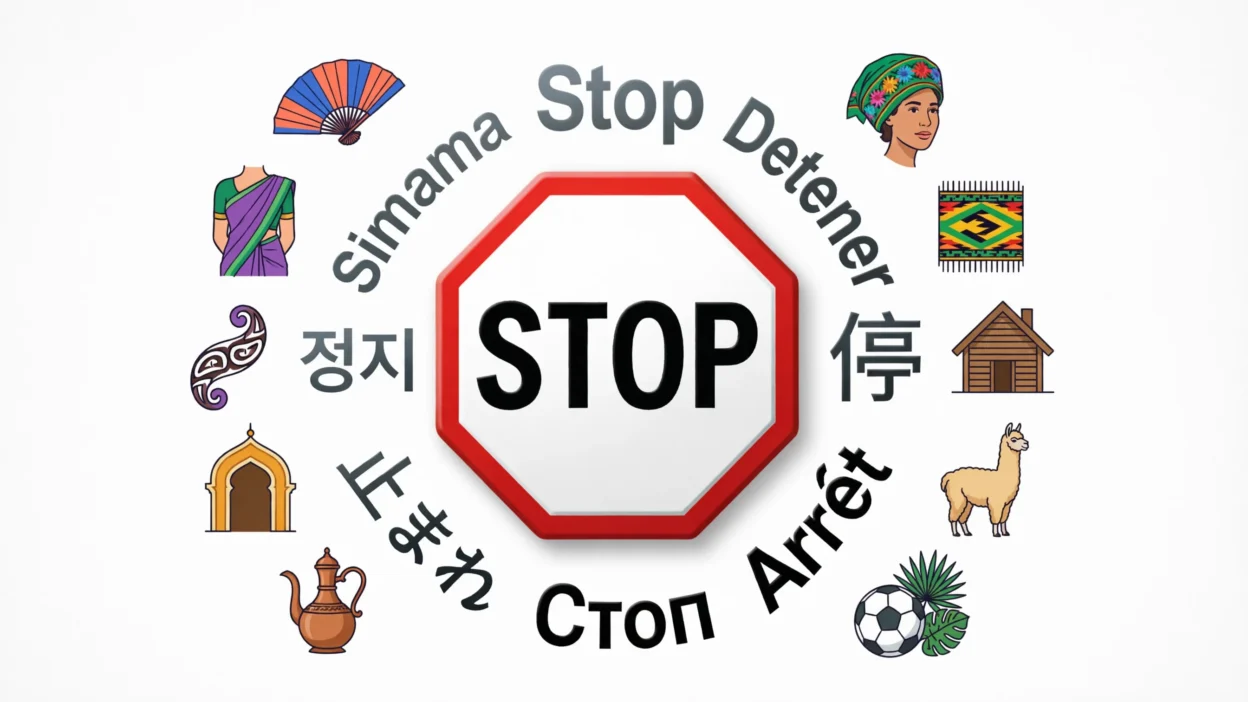
Because communication relies on clarity, learning how to say stop in different languages becomes essential for daily life, travel, safety, and respect. Moreover, this word carries strong meaning because it often signals urgency, boundaries, or protection.
Therefore, understanding stop in different languages helps people react quickly and correctly. Additionally, learners searching for stop in all languages usually want accurate translations with real usage. As a result, this guide focuses on natural phrases instead of textbook-only words.
Furthermore, knowing how to say stop around the world improves confidence during conversations. Meanwhile, simple examples help memory retention and pronunciation accuracy.
Also, this topic supports travelers, students, parents, teachers, and content creators equally. Consequently, readers gain practical language skills instead of memorization stress.
Most importantly, every phrase here reflects real-life usage. Overall, this introduction prepares you to understand how a single powerful word connects cultures, prevents problems, and improves global communication clearly and effectively.
| Language | Native Phrase | Example Sentence |
|---|---|---|
| English | Stop | Stop right there. |
| Spanish | Alto | Alto, no corras. |
| French | Arrête | Arrête maintenant. |
| German | Stopp | Stopp bitte. |
| Italian | Fermati | Fermati subito. |
| Portuguese | Pare | Pare agora. |
| Dutch | Stop | Stop hier. |
| Swedish | Stanna | Stanna där. |
| Norwegian | Stopp | Stopp nå. |
| Danish | Stop | Stop med det. |
| Finnish | Seis | Seis heti. |
| Russian | Стоп | Стоп сейчас. |
| Ukrainian | Стій | Стій тут. |
| Polish | Stop | Stop natychmiast. |
| Czech | Zastav | Zastav se. |
| Slovak | Stoj | Stoj tam. |
| Hungarian | Állj | Állj meg. |
| Romanian | Oprește | Oprește-te. |
| Bulgarian | Стоп | Стоп веднага. |
| Greek | Σταμάτα | Σταμάτα εδώ. |
| Turkish | Dur | Dur şimdi. |
| Arabic | توقف | توقف هنا. |
| Hebrew | עצור | עצור מיד. |
| Persian | توقف کن | توقف کن حالا. |
| Urdu | رکو | رکو یہاں۔ |
| Hindi | रुको | रुको अभी। |
| Bengali | থামো | থামো এখন। |
| Punjabi | ਰੁਕੋ | ਰੁਕੋ ਇੱਥੇ। |
| Tamil | நில் | நில் இங்கே. |
| Telugu | ఆగు | ఆగు వెంటనే. |
| Kannada | ನಿಲ್ಲು | ನಿಲ್ಲು ಇಲ್ಲಿ. |
| Malayalam | നിൽക്കൂ | നിൽക്കൂ ഇവിടെ. |
| Marathi | थांब | थांब आत्ता. |
| Gujarati | રોકો | રોકો અત્યારે. |
| Sinhala | නවත්වන්න | නවත්වන්න දැන්. |
| Thai | หยุด | หยุดเดี๋ยวนี้ |
| Vietnamese | Dừng lại | Dừng lại ngay. |
| Indonesian | Berhenti | Berhenti sekarang. |
| Malay | Berhenti | Berhenti sekarang. |
| Filipino | Tigil | Tigil muna. |
| Chinese | 停止 | 停止现在。 |
| Japanese | 止まれ | 止まれ今。 |
| Korean | 멈춰 | 멈춰 지금. |
| Mongolian | Зогс | Зогс одоо. |
| Nepali | रोक | रोक यहाँ। |
| Swahili | Simama | Simama hapo. |
Meaning and Power of the Word Stop
Because stop signals action, people use it to protect boundaries, ensure safety, and control situations worldwide.
When to Use Stop in Daily Life
Although simple, this word fits emergencies, parenting, traffic, sports, and serious conversations.
Why Learning Stop in Different Languages Matters
Since quick understanding saves time and prevents harm, learning this word holds global importance.
FAQs
How do you say stop in different languages?
You say stop using words like alto, dur, arrêtê, and pare depending on the language.
Is stop the same word in every language?
No, each language uses its own native form.
Is stop used in emergencies worldwide?
Yes, many cultures recognize stop as a warning word.
Does pronunciation matter when saying stop?
Yes, clear pronunciation improves immediate understanding.
Can stop sound rude in some cultures?
Tone matters, so polite delivery reduces offense.
Final Thought
Learning how to say stop in different languages improves safety, clarity, and communication across cultures.
Moreover, this small word carries powerful meaning because it protects people and boundaries. Therefore, mastering it helps travelers, parents, and learners respond quickly.
Additionally, understanding real examples builds confidence. As a result, communication becomes more effective and respectful. Ultimately, knowing stop around the world empowers better interaction everywhere.

Nicodemo Thorley is a cultural writer at Lingonast.com, focusing on language and heritage.
He explores how language connects with culture and history.
His articles offer structured and insightful perspectives.