
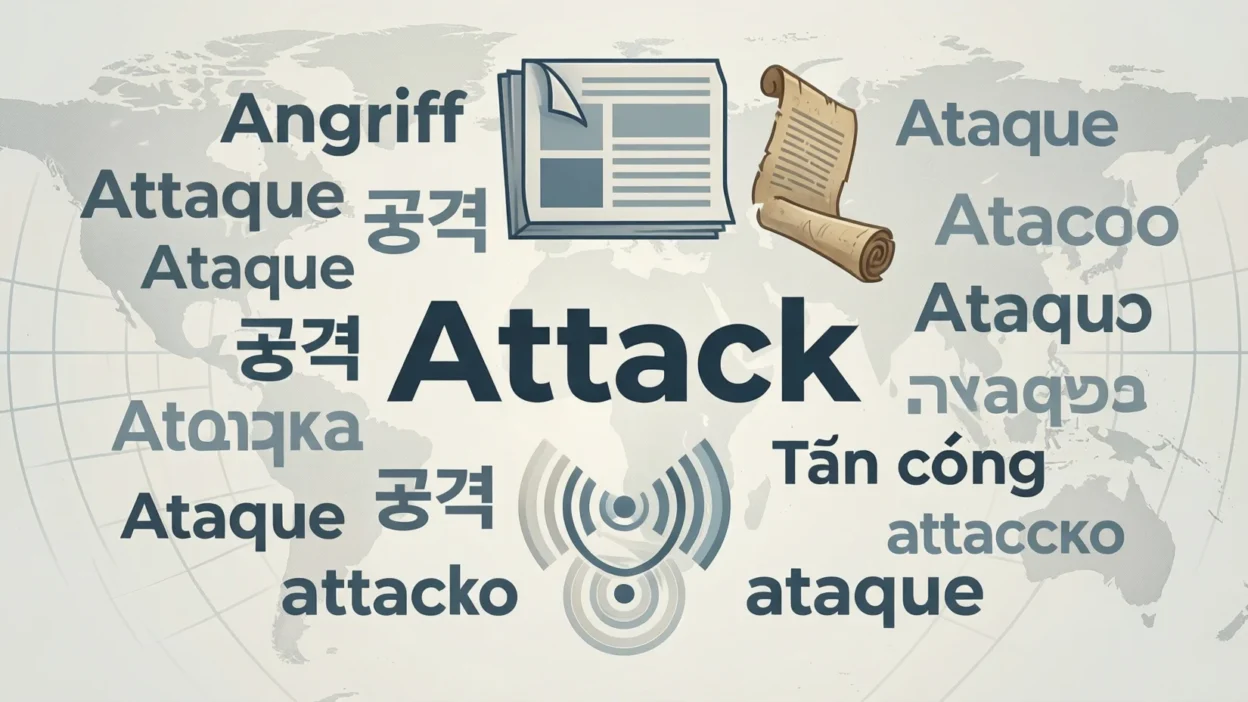
Attack in different languages is an important word to understand, especially for language learners, translators, writers, journalists, and travelers.
The word attack is commonly used in news, history, self defense discussions, sports, medicine, and even everyday speech.
Therefore, knowing how this word is expressed across languages helps improve comprehension and communication.
Moreover, understanding its usage prevents misunderstandings, since the word can carry serious or symbolic meaning depending on context.
In addition, while attack often refers to physical harm, it can also describe verbal criticism, sudden illness, or aggressive actions in sports and debates. As a result, learning this word globally is both practical and educational.
Attack in 90+ Different Languages
How is the word “attack” expressed around the world?
| No. | Language | Native Word | Easy Pronunciation | Example Sentence | English Meaning |
|---|---|---|---|---|---|
| 1 | English | Attack | uh-tak | The attack was sudden. | Violent action |
| 2 | Spanish | Ataque | a-ta-ke | El ataque fue rápido | The attack was quick |
| 3 | French | Attaque | a-tak | L’attaque était forte | The attack was strong |
| 4 | German | Angriff | an-grif | Der Angriff begann | The attack began |
| 5 | Italian | Attacco | a-ta-ko | L’attacco è iniziato | The attack started |
| 6 | Portuguese | Ataque | a-ta-ki | O ataque parou | The attack stopped |
| 7 | Dutch | Aanval | aan-val | De aanval begon | The attack began |
| 8 | Russian | Атака | a-ta-ka | Атака началась | The attack started |
| 9 | Arabic | هجوم | hu-joom | بدأ الهجوم | The attack began |
| 10 | Hindi | हमला | hum-la | हमला अचानक हुआ | The attack was sudden |
| 11 | Urdu | حملہ | hum-la | حملہ شدید تھا | The attack was severe |
| 12 | Japanese | 攻撃 | ko-ge-ki | 攻撃が始まった | The attack started |
| 13 | Chinese | 攻击 | gong-jee | 攻击开始了 | The attack started |
| 14 | Korean | 공격 | gong-gyeok | 공격이 시작됐다 | The attack began |
| 15 | Turkish | Saldırı | sal-du-ruh | Saldırı başladı | The attack began |
| 16 | Greek | Επίθεση | e-pee-the-si | Η επίθεση άρχισε | The attack began |
| 17 | Polish | Atak | a-tak | Atak był nagły | The attack was sudden |
| 18 | Swedish | Attack | a-tak | Attacken började | The attack began |
| 19 | Norwegian | Angrep | ang-rep | Angrepet startet | The attack started |
| 20 | Danish | Angreb | ang-greb | Angrebet skete | The attack happened |
| 21 | Finnish | Hyökkäys | hyok-kays | Hyökkäys alkoi | The attack began |
| 22 | Czech | Útok | oo-tok | Útok začal | The attack began |
| 23 | Hungarian | Támadás | taa-ma-dash | A támadás indult | The attack started |
| 24 | Romanian | Atac | a-tak | Atacul a început | The attack began |
| 25 | Bulgarian | Атака | a-ta-ka | Атаката започна | The attack began |
| 26 | Ukrainian | Атака | a-ta-ka | Атака почалась | The attack began |
| 27 | Hebrew | התקפה | hat-ka-fa | ההתקפה החלה | The attack began |
| 28 | Thai | การโจมตี | gan joam tee | การโจมตีเริ่ม | The attack began |
| 29 | Vietnamese | Tấn công | tan kong | Cuộc tấn công bắt đầu | The attack began |
| 30 | Indonesian | Serangan | se-rang-an | Serangan terjadi | The attack occurred |
| 31 | Malay | Serangan | se-rang-an | Serangan bermula | The attack began |
| 32 | Filipino | Pag-atake | pag-a-ta-ke | Ang pag-atake ay bigla | The attack was sudden |
| 33 | Swahili | Shambulio | sham-boo-lee-o | Shambulio lilianza | The attack began |
| 34 | Zulu | Ukuhlasela | oo-khu-la-se-la | Ukuhlasela kwaqala | The attack began |
| 35 | Afrikaans | Aanval | aan-val | Die aanval begin | The attack began |
| 36 | Persian | حمله | ham-leh | حمله شروع شد | The attack started |
| 37 | Bengali | আক্রমণ | a-kro-mon | আক্রমণ শুরু | The attack started |
| 38 | Tamil | தாக்குதல் | thaa-ku-thal | தாக்குதல் தொடங்கியது | The attack began |
| 39 | Punjabi | ਹਮਲਾ | hum-la | ਹਮਲਾ ਹੋਇਆ | The attack happened |
| 40 | Nepali | आक्रमण | aak-ra-man | आक्रमण भयो | The attack happened |
| 41 | Marathi | हल्ला | hal-la | हल्ला झाला | The attack occurred |
| 42 | Gujarati | હુમલો | hum-lo | હુમલો થયો | The attack happened |
| 43 | Telugu | దాడి | daa-di | దాడి జరిగింది | The attack occurred |
| 44 | Kannada | ದಾಳಿ | daa-li | ದಾಳಿ ಆರಂಭವಾಯಿತು | The attack began |
| 45 | Malayalam | ആക്രമണം | a-kra-ma-nam | ആക്രമണം തുടങ്ങി | The attack began |
| 46 | Sinhala | ප්රහාරය | pra-haa-ra-ya | ප්රහාරය ඇරඹිණි | The attack began |
| 47 | Pashto | برید | ba-reed | برید وشو | The attack happened |
| 48 | Kurdish | Êriş | eh-rish | Êriş dest pê kir | The attack began |
| 49 | Somali | Weerar | way-rar | Weerar bilaabmay | The attack began |
| 50 | Amharic | ጥቃት | ti-kat | ጥቃቱ ጀመረ | The attack began |
| 51 | Lao | ການໂຈມຕີ | gan jom tee | ການໂຈມຕີເລີ່ມ | The attack began |
| 52 | Khmer | ការវាយប្រហារ | ka-vay pra-har | ការវាយប្រហារចាប់ផ្តើម | The attack began |
| 53 | Burmese | တိုက်ခိုက်မှု | taik-kite | တိုက်ခိုက်မှုစတင် | The attack began |
| 54 | Mongolian | Дайралт | die-ralt | Дайралт эхэлсэн | The attack began |
| 55 | Icelandic | Árás | ow-raas | Árás hófst | The attack began |
| 56 | Irish | Ionsaí | in-see | Thosaigh an ionsaí | The attack began |
| 57 | Welsh | Ymosodiad | uh-mo-so-dee-ad | Dechreuodd yr ymosodiad | The attack began |
| 58 | Scottish Gaelic | Ionnsaigh | in-sigh | Thòisich an ionnsaigh | The attack began |
| 59 | Basque | Eraso | eh-ra-so | Erasoa hasi zen | The attack began |
| 60 | Catalan | Atac | a-tak | L’atac va començar | The attack began |
| 61 | Serbian | Напад | na-pad | Напад је почео | The attack began |
| 62 | Croatian | Napad | na-pad | Napad je počeo | The attack began |
| 63 | Slovak | Útok | oo-tok | Útok začal | The attack began |
| 64 | Slovenian | Napad | na-pad | Napad se je začel | The attack began |
| 65 | Estonian | Rünnak | run-nak | Rünnak algas | The attack began |
| 66 | Latvian | Uzbrukums | uz-broo-kums | Uzbrukums sākās | The attack began |
| 67 | Lithuanian | Ataka | a-ta-ka | Ataka prasidėjo | The attack began |
| 68 | Albanian | Sulm | soolm | Sulmi filloi | The attack began |
| 69 | Armenian | Հարձակում | har-tsa-koom | Հարձակումը սկսվեց | The attack began |
| 70 | Georgian | შეტევა | she-te-va | შეტევა დაიწყო | The attack began |
| 71 | Kazakh | Шабуыл | sha-bool | Шабуыл басталды | The attack began |
| 72 | Uzbek | Hujum | hoo-joom | Hujum boshlandi | The attack began |
| 73 | Azerbaijani | Hücum | hoo-jum | Hücum başladı | The attack began |
| 74 | Haitian Creole | Atak | a-tak | Atak la te kòmanse | The attack began |
| 75 | Yoruba | Ikọlu | ee-ko-loo | Ikọlu bẹrẹ | The attack began |
| 76 | Igbo | Mwakpo | mwa-kpo | Mwakpo malitere | The attack began |
| 77 | Hausa | Hari | ha-ree | Hari ya fara | The attack began |
| 78 | Maori | Whakaeke | fa-ka-e-ke | I timata te whakaeke | The attack began |
| 79 | Samoan | Osofaiga | o-so-fi-ga | Na amata le osofaiga | The attack began |
| 80 | Tongan | Osi | o-see | Naʻe kamata ʻae osi | The attack began |
| 81 | Fijian | Vakacaca | va-ka-tha-tha | Vakacaca tekivu | The attack began |
| 82 | Xhosa | Uhlaselo | oo-hla-se-lo | Uhlaselo luqalile | The attack began |
| 83 | Shona | Kurwisa | koo-ree-sa | Kurwisa kwakatanga | The attack began |
| 84 | Malagasy | Fanafihana | fa-na-fee-ha-na | Fanafihana nanomboka | The attack began |
| 85 | Tajik | Ҳамла | ham-la | Ҳамла оғоз шуд | The attack began |
| 86 | Turkmen | Hüjüm | hoo-jum | Hüjüm başlady | The attack began |
| 87 | Maltese | Attakk | at-takk | L-attakk beda | The attack began |
| 88 | Luxembourgish | Ugrëff | oo-gref | Den Ugrëff huet ugefaang | The attack began |
| 89 | Corsican | Attaccu | a-tak-koo | L’attaccu hà cuminciatu | The attack began |
| 90 | Galician | Ataque | a-ta-ke | O ataque comezou | The attack began |
| 91 | Esperanto | Atako | a-ta-ko | La atako komenciĝis | The attack began |
| 92 | Tibetan | འཇབ་རྒོལ | jab-gol | འཇབ་རྒོལ་འགོ་ཚུགས | The attack began |
Why Learning the Word “Attack” Is Important
How does this word help understanding?
Firstly, it improves comprehension of news, history, and safety information. Moreover, it helps writers and learners understand tone and seriousness. Therefore, knowing this word across languages builds stronger global awareness.
FAQs
Does “attack” always mean violence?
No, it can also be used metaphorically, such as criticism or illness.
Is this word formal or informal?
It is neutral and used in many contexts.
Is pronunciation important?
Yes, especially due to the seriousness of the word.
Can this word appear in sports?
Yes, it often describes offensive play.
Should learners understand context carefully?
Absolutely, context changes meaning greatly.
Conclusion
In conclusion, learning attack in different languages is essential for understanding global communication, news, and serious discussions.
Although the word often carries strong meaning, it is widely used across many fields, from history to sports.
Moreover, knowing these translations helps avoid confusion and improves clarity when reading or speaking internationally.
Therefore, mastering this word strengthens both language skills and cultural awareness.

Foster Hollis is a language and culture writer with a strong interest in how people communicate across borders. At Lingonast, he focuses on cultural insights and language based articles that help readers understand global traditions in a simple, engaging way.