
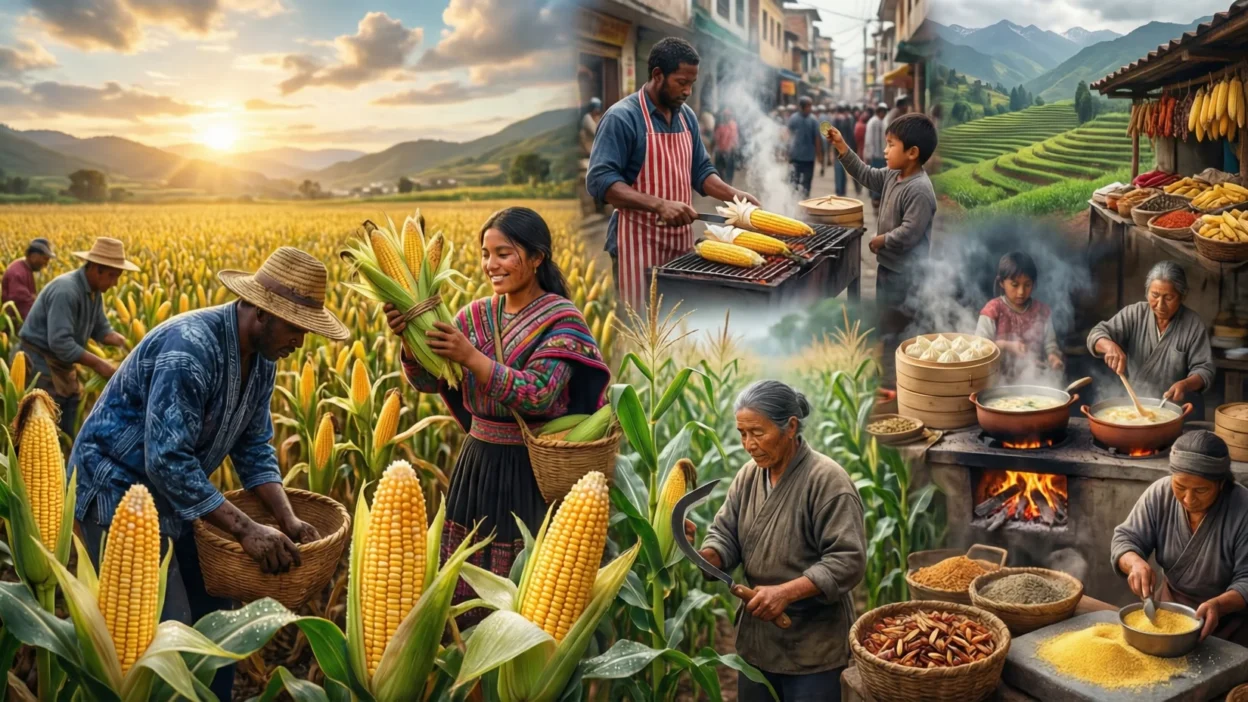
Corn is one of the most widely grown and consumed crops in the world. People use it daily as food, animal feed, cooking oil, flour, and even fuel.
Because corn appears in traditional dishes, street food, agriculture, and trade, learning how to say corn in different languages becomes very useful. Moreover, corn holds cultural importance in many regions, especially in the Americas, Africa, and Asia.
Therefore, knowing its native names helps travelers, food writers, students, and researchers communicate clearly.
In addition, corn often appears in markets, recipes, and farming conversations.
As a result, understanding its translations improves both practical language skills and cultural awareness. Ultimately, this simple word connects food, culture, and history across the globe.
| Language | Native Phrase | Example Sentence |
|---|---|---|
| English | Corn | Corn is growing in the field. |
| Spanish | Maíz | El maíz está fresco. |
| French | Maïs | Le maïs est mûr. |
| German | Mais | Der Mais wächst gut. |
| Italian | Mais | Il mais è pronto. |
| Portuguese | Milho | O milho está cozido. |
| Dutch | Maïs | De maïs is zoet. |
| Swedish | Majs | Majs är gott. |
| Norwegian | Mais | Maisen er klar. |
| Danish | Majs | Majs bruges ofte. |
| Finnish | Maissi | Maissi kasvaa täällä. |
| Icelandic | Maís | Maís er algengt. |
| Russian | Кукуруза | Кукуруза растёт. |
| Ukrainian | Кукурудза | Кукурудза стигла. |
| Polish | Kukurydza | Kukurydza jest żółta. |
| Czech | Kukuřice | Kukuřice roste. |
| Slovak | Kukurica | Kukurica je sladká. |
| Hungarian | Kukorica | Kukorica érik. |
| Romanian | Porumb | Porumbul este gata. |
| Greek | Καλαμπόκι | Το καλαμπόκι ψήνεται. |
| Turkish | Mısır | Mısır taze. |
| Arabic | ذرة | الذرة مفيدة. |
| Hebrew | תירס | התירס מתוק. |
| Persian | ذرت | ذرت تازه است. |
| Urdu | مکئی | مکئی تیار ہے۔ |
| Hindi | मक्का | मक्का पक चुका है। |
| Bengali | ভুট্টা | ভুট্টা সুস্বাদু। |
| Punjabi | ਮੱਕੀ | ਮੱਕੀ ਪੱਕੀ ਹੈ। |
| Tamil | மக்காச்சோளம் | மக்காச்சோளம் வளர்கிறது. |
| Telugu | మొక్కజొన్న | మొక్కజొన్న పండింది. |
| Kannada | ಜೋಳ | ಜೋಳ ಬೆಳೆದಿದೆ. |
| Malayalam | ചോളം | ചോളം ഉപയോഗിക്കുന്നു. |
| Marathi | मका | मका चांगला आहे. |
| Gujarati | મકાઈ | મકાઈ તાજી છે. |
| Nepali | मकै | मकै पाकेको छ। |
| Sinhala | බඩ ඉරිඟු | බඩ ඉරිඟු සූදානම්. |
| Chinese (Simplified) | 玉米 | 玉米成熟了。 |
| Chinese (Traditional) | 玉米 | 玉米很好吃。 |
| Japanese | トウモロコシ | トウモロコシが甘い。 |
| Korean | 옥수수 | 옥수수가 익었다. |
| Thai | ข้าวโพด | ข้าวโพดหวาน |
| Vietnamese | Ngô | Ngô đang lớn. |
| Indonesian | Jagung | Jagung segar. |
| Malay | Jagung | Jagung manis. |
| Filipino | Mais | Mais ay luto na. |
| Swahili | Mahindi | Mahindi yameiva. |
| Afrikaans | Mielies | Mielies groei goed. |
| Somali | Galley | Galley waa bisil. |
| Hausa | Masara | Masara ta girma. |
| Yoruba | Agbado | Agbado dun. |
| Igbo | Ọka | Ọka dị mma. |
| Zulu | Umbila | Umbila uvuthiwe. |
| Amharic | በቆሎ | በቆሎ በሰለ። |
| Lao | ຂ້າວໂພດ | ຂ້າວໂພດສຸກ |
| Khmer | ពោត | ពោតឆ្ងាញ់។ |
| Mongolian | Эрдэнэ шиш | Эрдэнэ шиш боловсорсон. |
| Kazakh | Жүгері | Жүгері піскен. |
| Uzbek | Makkajoʻxori | Makkajoʻxori yetildi. |
| Tajik | Ҷуворимакка | Ҷуворимакка расид. |
| Pashto | جوار | جوار پخ شوی. |
| Kurdish | Mısır | Mısır taze ye. |
| Armenian | Եգիպտացորեն | Եգիպտացորենը պատրաստ է։ |
| Georgian | სიმინდი | სიმინდი დამწიფდა. |
| Albanian | Misër | Misri u pjek. |
| Bosnian | Kukuruz | Kukuruz je zreo. |
| Croatian | Kukuruz | Kukuruz raste. |
| Serbian | Кукуруз | Кукуруз је зрео. |
| Bulgarian | Царевица | Царевицата е узряла. |
| Slovenian | Koruza | Koruza zori. |
| Lithuanian | Kukurūzai | Kukurūzai auga. |
| Latvian | Kukurūza | Kukurūza gatava. |
| Estonian | Mais | Mais kasvab. |
| Irish | Arbhar Indiach | Tá arbhar réidh. |
| Welsh | Ŷd ŷd | Mae’r ŷd yn aeddfed. |
| Basque | Arto | Artoa heldu da. |
| Catalan | Blat de moro | El blat és bo. |
| Galician | Millo | O millo medra. |
| Maltese | Qamħirrum | Il-qamħirrum lest. |
| Esperanto | Maizo | Maizo kreskas. |
| Latin | Frumentum Indicum | Frumentum maturum est. |
Why Corn Is Important Worldwide
Corn feeds millions of people daily. Therefore, its name appears often in markets and kitchens.
Moreover, it supports economies and farming communities. As a result, learning its translations improves global understanding.
Corn in Culture and Cuisine
Many cultures rely on corn for staple dishes. Consequently, language reflects its importance. From bread to snacks, corn shapes traditions. Ultimately, vocabulary follows food culture.
FAQs
Is corn the same as maize?
Yes, corn and maize refer to the same crop.
Do all languages use a native word for corn?
No, some borrow from other languages.
Is corn common in daily conversation?
Yes, especially in food and farming contexts.
Why is corn important globally?
It supports food, trade, and agriculture.
Is corn used beyond food?
Yes, in fuel, industry, and animal feed.
Final Thought
Corn is more than just a crop. It represents nourishment, tradition, and survival across cultures.
Therefore, learning corn in different languages expands both vocabulary and cultural awareness. Moreover, it helps in travel, writing, and education. In addition, it highlights how food shapes language.
As a result, even simple words gain global meaning. Ultimately, understanding such terms brings people closer through shared experiences.

Nicodemo Thorley is a cultural writer at Lingonast.com, focusing on language and heritage.
He explores how language connects with culture and history.
His articles offer structured and insightful perspectives.