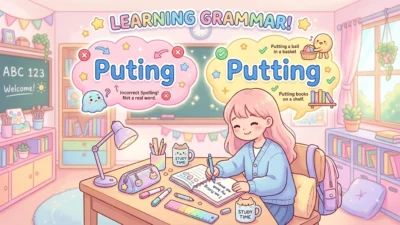

Recently, something happened while I was chatting with a friend, and countrys vs countries became the topic that left me questioning the correct usage.
The term Country’s or Countries suddenly popped up, and honestly, I was not sure what it meant or what it really meant in that context. For a moment, I kept thinking that I was missing something important. The topic felt confusing, and I was slightly confused about how to reply without choosing the wrong way or making myself sound clueless.
The experience led me to look into the issue more closely. After I decided to research it, I began to understand the correct meaning and proper usage.
While exploring countrys vs countries, I gradually figured out the key difference between country’s and countries. As I learned more, everything started to make sense, and everything became easier to follow. Along the way, I gained useful knowledge and a stronger understanding of the topic.
What I realized is that learning this distinction can help writers avoid awkward moments in everyday conversations, online chats, and on social media. Now I feel more confident when responding in the right way, and my communication skills have improved whenever I see Country’s or Countries used in writing or discussion.
Quick Answer
The correct spelling is countries.
- Countries = Correct
- Countrys = Incorrect
The word countries is the plural form of country.
Examples:
- Many countries participated in the international summit.
- Several countries have unique cultural traditions.
The spelling countrys is not considered correct in standard English.
What Does Countries Mean?
The word countries is the plural form of the noun country.
A country is a nation, state, or territory with its own government, people, and borders.
Examples:
- European countries attract millions of tourists each year.
- Some countries have multiple official languages.
- Developing countries often face different economic challenges than developed nations.
When referring to more than one country, you should always use countries.
Why Is Countrys Incorrect?
The mistake comes from misunderstanding a common English spelling rule.
Many nouns ending in a consonant followed by y change the y to i before adding -es to form the plural.
For example:
| Singular | Plural |
|---|---|
| Country | Countries |
| City | Cities |
| Baby | Babies |
| Family | Families |
| Party | Parties |
Because of this rule:
- Country → Countries
- Not Country → Countrys
This is why countrys is considered a spelling error.
Countrys vs Countries Comparison Table
| Feature | Countries | Countrys |
| Correct English Spelling | Yes | No |
| Accepted in Dictionaries | Yes | No |
| Proper Plural Form | Yes | No |
| Used in Academic Writing | Yes | No |
| Used in Professional Writing | Yes | No |
| Standard English Grammar | Yes | No |
The table clearly shows that countries is the only correct plural form.
Understanding the Grammar Rule
The spelling rule is straightforward.
When a noun ends with:
- A consonant + y
The y changes to i, and -es is added.
Examples:
- Country → Countries
- Story → Stories
- Lady → Ladies
- Colony → Colonies
However, when a noun ends with:
- A vowel + y
You usually just add s.
Examples:
- Boy → Boys
- Toy → Toys
- Day → Days
Because country ends with the consonant r followed by y, the correct plural becomes countries.
Country’s vs Countries: Another Common Confusion
Many people also confuse country’s with countries.
These words are not interchangeable.
Country’s
Country’s is the singular possessive form.
It means something belongs to one country.
Examples:
- The country’s economy grew rapidly.
- The country’s national anthem was played.
Countries
Countries is the plural form.
Examples:
- Several countries signed the agreement.
- Different countries have different laws.
A helpful reminder:
- Country’s = Belongs to one country
- Countries = More than one country
Examples of Countries in Sentences
Seeing correct usage in context makes it easier to remember.
Travel Examples
- I have visited several countries in Europe.
- Many countries welcome international tourists.
Education Examples
- Students studied the capitals of different countries.
- The project compared healthcare systems across multiple countries.
Business Examples
- The company operates in over twenty countries.
- Economic policies vary between countries.
Everyday Examples
- Some countries drive on the left side of the road.
- Different countries celebrate holidays differently.
Common Mistakes Writers Make
Understanding common errors can help you avoid them.
Mistake 1: Writing Countrys
Incorrect:
- Several countrys participated.
Correct:
- Several countries participated.
Mistake 2: Confusing Country’s With Countries
Incorrect:
- Many country’s joined the conference.
Correct:
- Many countries joined the conference.
Mistake 3: Forgetting the Y-to-I Rule
Some writers simply add s without changing the y.
Remember:
- Country → Countries
- City → Cities
- Party → Parties
Mistake 4: Relying on Sound Instead of Grammar
Because “countries” and “countrys” may sound similar when spoken quickly, writers sometimes choose the wrong spelling when typing.
American vs British English
Many spelling questions involve differences between American and British English.
Examples include:
- Color vs Colour
- Center vs Centre
- Organize vs Organise
However, countrys vs countries is not one of those differences.
Both American English and British English use:
- Countries (Correct)
Neither variety of English accepts countrys as the standard spelling.
This means you can confidently use countries whether you’re writing for readers in the United States, the United Kingdom, Canada, Australia, or elsewhere.
Related Words and Forms
Learning related forms strengthens your grammar skills.
| Form | Example |
| Country | My country is beautiful. |
| Countries | Many countries participated. |
| Country’s | The country’s flag is red. |
| Countries’ | The countries’ leaders met. |
Notice how each form serves a different purpose.
Tips to Remember the Correct Spelling
If you often confuse these forms, these memory tricks can help.
- Country ends in a consonant + y.
- Change y to i.
- Add es.
- Country → Countries.
- Never simply add s to create the plural.
Easy formula:
Country + ies = Countries
This simple rule works every time.
Why Correct Spelling Matters
Correct spelling improves clarity and professionalism.
Using the proper form:
- Makes writing easier to understand.
- Improves academic performance.
- Creates a professional impression.
- Builds reader trust.
- Prevents misunderstandings.
Even a small spelling mistake can distract readers from your message.
Frequently Asked Questions
Is countrys a real word?
No. Countrys is considered a spelling mistake in standard English.
Which is correct: countrys or countries?
Countries is the correct plural form of country.
Why does country become countries?
Because nouns ending in a consonant + y typically change y to i and add -es.
Is countries used in British English?
Yes. British English uses countries, just like American English.
What is the difference between country’s and countries?
Country’s shows possession, while countries is the plural form.
Can I use countrys in formal writing?
No. Formal, academic, and professional writing should always use countries.
What is the plural of country?
The correct plural is countries.
How can I remember the correct spelling?
Remember the rule: consonant + y becomes ies in the plural.
Summary
The debate around countrys vs countries has a clear answer. Countries is the correct plural form, while countrys is a spelling mistake. The reason is simple: nouns ending in a consonant followed by y typically change the y to i before adding -es.
It’s also important to distinguish between country’s and countries. The first shows possession, while the second refers to more than one country.
Understanding this difference will help you write more accurately and confidently in both casual and professional situations.

Nick Orsan is a contributor at Lingonast.com, writing about modern language use and communication.
He covers topics related to language trends and everyday expressions.
His work is informative, direct, and reader focused.