Many English learners hear the phrase “take it or leave it” and wonder what it actually means. Unlike many grammar comparisons, this expression is an idiom rather than a choice between two correct words.
So, if you want to understand and use this common English phrase naturally, you need to know its meaning, examples, and appropriate contexts. In this guide, you’ll learn everything you need to know about “take it or leave it.”
Quick Answer
✨ Here’s the simple meaning:
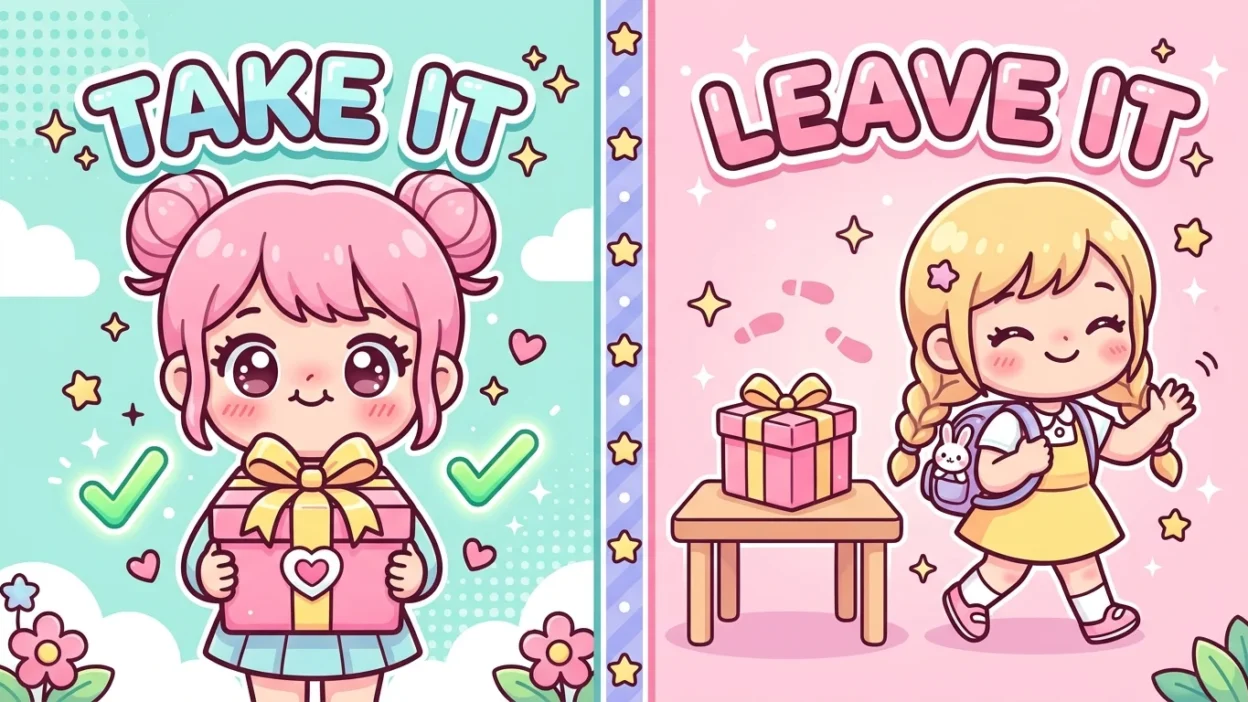
- ✅ Take it or leave it = accept the offer as it is or reject it completely
👉 Easy trick:
- No negotiation
- No changes
- Accept it or refuse it
🌟 Examples:
- That’s my final price—take it or leave it. ✔
- We can’t make any changes. Take it or leave it. ✔
What Does “Take It or Leave It” Mean?
First of all, “take it or leave it” means that someone is offering something on fixed terms. Therefore, the other person can either accept the offer or reject it.
In other words, there is no room for bargaining or discussion.
Common Uses:
- Business negotiations
- Sales offers
- Personal decisions
- Final proposals
Examples:
- The seller said, “That’s the lowest price. Take it or leave it.”
- The company offered the position on a take-it-or-leave-it basis.
- I can’t change the schedule, so take it or leave it.
👉 So, the phrase signals a final decision.
When Should You Use “Take It or Leave It”?
People often use this expression when they do not want to negotiate further.
Examples:
- This is our best offer. Take it or leave it.
- The restaurant doesn’t allow substitutions—take it or leave it.
- That’s my opinion. Take it or leave it.
👉 Therefore, the phrase often sounds firm and decisive.
Is “Take It or Leave It” Rude?
Not always. However, the tone matters greatly.
Can Sound Polite:
- I’m afraid that’s our final offer. Take it or leave it.
Can Sound Harsh:
- Take it or leave it. I don’t care what you choose.
👉 So, use the phrase carefully in professional situations.
Similar Expressions
You can also express a similar idea with:
- Final offer
- No negotiation
- As is
- Accept it or reject it
- Non-negotiable
Examples:
- The item is sold as is.
- This price is non-negotiable.
Common Mistakes to Avoid
Although the phrase is simple, some learners misunderstand its purpose.
❌ Incorrect Meaning:
- Take it or leave it means think about it later.
✔ Correct Meaning:
- Take it or leave it means accept it now or reject it.
❌ Incorrect Use:
- Take it or leave it, but we can discuss more options tomorrow.
✔ Better:
- Take it or leave it; this is the final offer.
👉 Therefore, the phrase usually ends negotiation.
Easy Trick to Remember
Whenever you hear:
Take it or leave it
Think:
✅ Accept it
OR
✅ Reject it
❌ Don’t expect changes
Because of this simple idea, the meaning becomes easy to remember.
American vs British English
Interestingly, both American and British English use “take it or leave it” with the same meaning. Therefore, you can use it confidently in either variety of English.
Real-Life Examples
In Shopping:
- The seller wouldn’t lower the price. It was take it or leave it.
At Work:
- The company presented a take-it-or-leave-it contract.
In Daily Life:
- That’s my final decision—take it or leave it.
Why This Matters
Although this phrase seems simple, native speakers use it frequently. When you understand it correctly:
- You improve listening skills
- You understand negotiations better
- You sound more natural in conversations
As a result, your English becomes more fluent and practical.
FAQs
What does take it or leave it mean?
It means accept an offer exactly as presented or reject it completely.
Is take it or leave it an idiom?
Yes, it is a common English idiom.
Does the phrase sound rude?
Sometimes, depending on the speaker’s tone and context.
Can I use it in business situations?
Yes, but use it carefully because it can sound very firm.
Does it mean the offer is final?
Usually, yes. It often indicates no further negotiation.
What is the easiest way to remember it?
Think: accept it as it is or walk away.
Final Thoughts
Now you clearly understand the meaning of “take it or leave it.” This common idiom tells someone to accept an offer exactly as presented or reject it altogether. Because the phrase often signals a final decision, it usually leaves little room for negotiation.
As you continue learning English, recognizing common idioms like this one will help you understand native speakers more easily. So, the next time you hear “take it or leave it,” you’ll know exactly what it means.

Nick Orsan is a contributor at Lingonast.com, writing about modern language use and communication.
He covers topics related to language trends and everyday expressions.
His work is informative, direct, and reader focused.