Many English learners confuse “savor” and “saver” because the words sound similar. However, they have completely different meanings and grammatical roles. Therefore, using one instead of the other can change your sentence entirely.
So, if you want clear and natural English, you need to understand the difference between these two commonly confused words.
Quick Answer
✨ Here’s the simple rule:
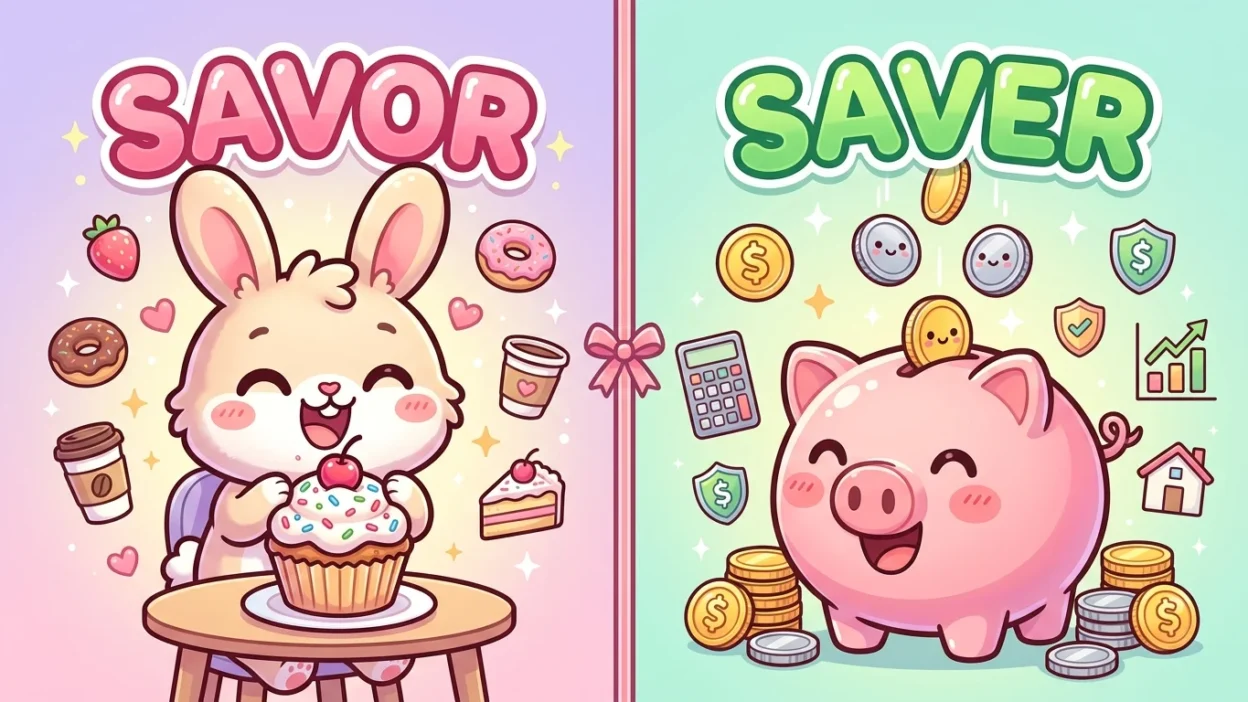
- ✅ Savor = to enjoy, appreciate, or taste fully
- ✅ Saver = a person or thing that saves
👉 Easy trick:
- Savor = enjoy
- Saver = save
🌟 Examples:
- Savor every moment of your vacation. ✔
- The goalkeeper was the team’s saver. ✔
What Does “Savor” Mean?
First of all, “savor” is usually a verb that means to enjoy something fully or appreciate it deeply. It can also refer to enjoying the taste or smell of something.
Common Uses:
- Enjoying experiences
- Appreciating moments
- Tasting food
Examples:
- Savor every bite of the cake.
- She savored the peaceful evening.
- Take time to savor your success.
👉 So, whenever you mean enjoy deeply, use “savor.”
What Does “Saver” Mean?
On the other hand, “saver” is a noun that refers to a person or thing that saves.
Common Uses:
- Someone who saves money
- A person who rescues others
- Products that save time or energy
Examples:
- He is a careful saver.
- That app is a real time-saver.
- The firefighter became a lifesaver.
👉 So, whenever you mean someone or something that saves, use “saver.”
Key Differences Between “Savor” and “Saver”
| Word | Part of Speech | Meaning |
|---|---|---|
| Savor | Verb (usually) | Enjoy fully |
| Saver | Noun | Person or thing that saves |
Common Mistakes to Avoid
Even though the words sound alike, they are not interchangeable.
❌ Incorrect:
- Savor your money for the future.
✔ Correct: Save your money for the future.
❌ Incorrect:
- He is a great savor of money.
✔ Correct: He is a great saver of money.
❌ Incorrect:
- I saver every moment with my family.
✔ Correct: I savor every moment with my family.
👉 So, always check whether you mean enjoying or saving.
Easy Trick to Remember
Whenever you feel unsure, remember:
- Savor = flavor and enjoyment
- Saver = save and protection
👉 Another clue:
- Savor often appears with food, experiences, and memories.
- Saver often appears with money, time, or rescue.
Because of this trick, you can tell them apart instantly.
American vs British English
Interestingly, the meanings remain the same in both American and British English. However, British English often spells “savor” as “savour.”
Examples:
- American English: savor
- British English: savour
Meanwhile, “saver” stays the same in both varieties.
Real-Life Examples
Using Savor:
- Savor the moment.
- She savored every sip of coffee.
- They savored their victory.
Using Saver:
- The discount card is a money-saver.
- He is a regular saver.
- The goalkeeper was a match-saver.
Why This Matters
Although the words differ by only one letter, their meanings are completely different. When you choose the correct word:
- You improve clarity
- You avoid misunderstandings
- You sound more natural
As a result, your English becomes more accurate and professional.
FAQs
Which is correct: savor or saver?
Both are correct, but they have different meanings.
What does savor mean?
It means to enjoy, appreciate, or taste something fully.
What does saver mean?
It means a person or thing that saves.
Is savor a noun?
Yes, but it most commonly appears as a verb in everyday English.
Is savor spelled differently in British English?
Yes, British English usually spells it as “savour.”
Final Thoughts
Now you clearly understand the difference between “savor” and “saver.” While “savor” means to enjoy or appreciate something deeply, “saver” refers to a person or thing that saves.
As you continue improving your vocabulary, remember this simple rule: savor experiences, saver saves things. Therefore, you can use both words confidently in the correct context.

Mareo Parrin is a multilingual writer at Lingonast.com, specializing in language based content.
He focuses on cultural insights and practical language understanding.
His writing is clear, engaging, and easy to follow.